🌍 WHERE IS SOLAN IN HIMACHAL PRADESH?
Nestled gracefully between the hills of the lower Himalayas, Solan stands as one of Himachal Pradesh’s most strategically positioned and economically vibrant districts. Often referred to as the “Mushroom City of India” and sometimes called the “Gateway to Himachal”, Solan forms the first major industrial and commercial entry point from the plains of Haryana and Punjab into the hill state. Its geographical positioning, climatic balance, and seamless road and rail connectivity have transformed Solan from a quiet hill town into a high-potential industrial and logistics powerhouse.
Geographically, Solan lies between Chandigarh and Shimla on National Highway NH-5, making it a critical transit corridor for goods moving between North India’s industrial belts and the hill economy. The town sits at an average elevation of around 1,500 meters, offering moderate climate conditions that are highly suitable for pharmaceutical manufacturing, food processing, packaging, and cold-chain logistics. This unique climatic and locational advantage has made Solan a preferred destination for both manufacturing units and logistics operators.
From an economic perspective, Solan is widely recognized today as the Pharmaceutical Capital of Himachal Pradesh. Global and Indian pharmaceutical majors have established large-scale manufacturing plants across industrial areas such as Baddi, Barotiwala, Nalagarh, and Parwanoo, which fall within the greater Solan industrial region. Alongside pharma, Solan has witnessed massive expansion in FMCG, cosmetics, chemicals, packaging, engineering goods, food processing, and plastics manufacturing. Each of these industries depends heavily on efficient goods transportation, warehousing, cold-chain movement, and pan-India freight connectivity.
Historically, Solan was a modest agricultural and trading settlement. Over the past two decades, however, it has undergone a dramatic economic transformation. The introduction of Industrial Incentive Policies, proximity to Chandigarh’s business ecosystem, and improved road infrastructure triggered a surge of industrial investments. What followed was the rapid emergence of transport companies, fleet operators, warehouse developers, packing units, freight forwarders, and multi-modal logistics providers—all aligning to serve the expanding industrial output.
Today, Solan plays a dual role in India’s logistics map. On one side, it serves as a manufacturing export base, dispatching goods to metros such as Delhi, Mumbai, Pune, Ahmedabad, Bengaluru, Chennai, and Hyderabad. On the other side, it functions as a supply gateway into hilly regions, transporting construction material, consumer goods, food supplies, fuel, and industrial equipment to upper Himachal districts. This dual movement of outbound industrial freight and inbound essential cargo keeps Solan’s transport ecosystem active throughout the year.
The district also benefits from rail connectivity via Kalka–Shimla broad-gauge integration points and proximity to major freight hubs in Chandigarh and Ambala, enabling multi-modal movement of high-value and time-sensitive cargo. This makes Solan not just a manufacturing location, but also a logistics coordination center for North India’s hill supply chains.
In today’s rapidly evolving supply chain environment, Solan has become a symbol of how geography, industry, and transport infrastructure converge to create sustainable economic growth. With rising industrial output, increasing freight volumes, and expanding national distribution needs, Solan’s role in India’s goods transportation and logistics sector continues to grow stronger with every passing year.
🏗️ HOW INDUSTRIALIZATION CHANGED SOLAN’S ECONOMY
The economic transformation of Solan is one of the most remarkable industrial success stories in Himachal Pradesh. What was once a quiet hill district dependent largely on agriculture, horticulture, and small-scale trading has evolved, within two decades, into a high-output industrial and logistics-driven economy. This transition did not occur overnight—it unfolded through a structured wave of policy-driven industrialization, infrastructure development, and private-sector investment.
The turning point in Solan’s economic journey began with the central and state government industrial incentive policies introduced in the early 2000s. Tax exemptions, infrastructure subsidies, and land development benefits attracted large pharmaceutical, FMCG, chemicals, packaging, and engineering companies to the Solan belt—particularly in Baddi, Barotiwala, Nalagarh, and Parwanoo. These industrial clusters quickly became some of the largest manufacturing hubs in North India, creating an unprecedented demand for continuous raw material inflow and finished goods outflow.
With manufacturing output rising rapidly, transportation and logistics converted from a support function into a core economic pillar of Solan. Thousands of truck movements began operating daily—carrying bulk chemicals, pharma formulations, packaging material, machinery, construction supplies, and FMCG goods to every major city in India. As a result, Solan witnessed the structured growth of fleet owners, transport contractors, warehouse developers, freight brokers, crane operators, container operators, and cold-chain logistics providers.
Industrialization also triggered a major migration and workforce expansion cycle. Skilled professionals, factory workers, drivers, warehouse staff, safety officers, and logistics planners migrated from Punjab, Haryana, Uttar Pradesh, Rajasthan, Bihar, and Uttarakhand. This workforce migration boosted residential construction, real estate demand, retail activity, education services, and urban infrastructure, further strengthening Solan’s local economy.
One of the most critical economic impacts of industrialization has been the formalization of trade and transport operations. Earlier, transport activities were largely informal and seasonal. Today, Solan operates on structured logistics contracts, scheduled freight movements, compliance-driven operations, and digital freight tracking systems. This shift has increased financial transparency, insurance coverage, GST-driven documentation, and corporate supply-chain discipline across the entire region.
The pharmaceutical industry, in particular, transformed Solan into a high-value freight corridor. Unlike traditional bulk goods, pharma logistics requires temperature-controlled transport, real-time tracking, document compliance, and time-sensitive delivery schedules. This led to the rise of cold-chain logistics networks, reefer trucks, insulated warehouses, and pharma-compliant transport protocols—elevating Solan’s logistics ecosystem to national standards.
Industrialization also diversified Solan’s economic dependencies. Earlier, income generation was tied heavily to seasonal agriculture and small commerce. Today, the economy is driven by round-the-clock industrial production, 24×7 warehousing activity, continuous truck dispatch operations, and inter-state freight connectivity. This has made Solan’s economy more resilient to seasonal disruptions and more integrated with national supply chains.
Equally important is the multiplier effect of industrialization on supporting sectors. Diesel supply stations, tyre markets, spare-parts hubs, repair workshops, RTO services, insurance providers, finance companies, driver hostels, and food supply chains all expanded in parallel with transport growth. Together, these allied industries now generate thousands of direct and indirect employment opportunities.
Today, Solan stands as a model example of how industrialization, when aligned with transportation infrastructure, creates sustained regional prosperity. Manufacturing without logistics cannot scale—and Solan’s success lies in how both evolved together. The continuous rhythm of factories producing, trucks moving, warehouses storing, and markets consuming defines the modern economic identity of Solan.
With industrial output still growing and new infrastructure projects underway, Solan’s economy is no longer local—it is now a national logistics-driven growth engine.
📊 Decade-Wise Industrial & Logistics Growth of Solan District
| Decade | Key Development Phase | Major Industries Introduced | Transport & Logistics Impact | Economic Outcome |
|---|---|---|---|---|
| 1980–1990 | Early Commercial Growth | Horticulture, Small Trading, Handicrafts | Local trucks, seasonal transport | Limited regional trade |
| 1990–2000 | Infrastructure Foundation | Food Processing, Light Engineering | Inter-district goods movement begins | Growth of small transporters |
| 2000–2010 | Industrial Policy Boom | Pharma, FMCG, Packaging, Chemicals | Rapid rise of FTL & LTL truck demand | Solan becomes industrial destination |
| 2010–2020 | Logistics Maturity Phase | Bulk Drugs, Auto Ancillaries, Plastics | Cold chain, warehousing, containerization | National supply-chain integration |
| 2020–Present | Digital & Multi-Modal Era | Pharma Exports, E-commerce, Engineering | GPS tracking, reefer trucks, ODC logistics | Solan becomes North India logistics hub |
💫STORY OF SOLAN’S INDUSTRIAL RISE
There was a time when Solan’s mornings began with the rhythm of orchard workers, small shop owners opening their shutters, and farmers transporting produce in modest tempos to nearby mandis. The hills were silent, the roads lightly traveled, and the economy moved at a slow, predictable pace. Few could imagine that within a single generation, these same winding roads would carry thousands of container trucks, tankers, trailers, reefers, and heavy machinery, powering one of North India’s most dynamic industrial and logistics ecosystems.
Solan’s industrial rise is not just a story of factories and figures—it is the story of people who dared to transform destiny through enterprise, discipline, and vision.
When the first pharmaceutical and FMCG plants were announced in the Solan belt during the early 2000s, local landowners were unsure, youth were hesitant, and transporters were unprepared. Roads were narrow, loading was manual, fleet sizes were small, and logistics knowledge was limited. But opportunity has a way of awakening ambition. Young drivers became fleet owners. Small godowns evolved into organized warehouses. Helpers learned documentation. Mechanics turned into logistics technicians. What followed was a grassroots transformation of an entire community into a professional industrial workforce.
As industries expanded, transport became the silent hero of Solan’s success. Raw materials started arriving from Gujarat, Maharashtra, Tamil Nadu, and Andhra Pradesh. Medicines, syrups, tablets, cosmetics, packaging material, and engineering goods began moving out to every corner of India. Every factory gate became a dispatch point; every highway became a corridor of progress. Day and night, trucks rolled forward—not just with cargo, but with dreams of stability, growth, and prosperity for thousands of families.
For the migrant workforce, Solan became more than a workplace—it became a second home. Drivers from Punjab found steady routes. Warehouse supervisors from Bihar found long-term employment. Engineers from Haryana built career paths. Women entered the workforce in packaging units, labs, and quality control departments. Restaurants, hostels, auto services, tyre markets, repair workshops, and driver rest homes multiplied—each becoming a small but powerful contributor to Solan’s expanding economic heartbeat.
There were challenges too. Landslides, traffic bottlenecks, compliance pressures, safety risks, fluctuating fuel prices, and demanding clients tested the resilience of transport operators. But instead of retreating, the Solan logistics community evolved. Fleet modernization, digital tracking, cold-chain adoption, ODC capability, safety training, insurance coverage, and structured contracts became part of daily operations. Transport shifted from survival mode to strategic professionalism.
Behind every container that leaves Solan today lies a story—of a factory worker completing a night shift, of a driver navigating mountain curves with discipline, of a warehouse team racing against time to meet dispatch deadlines, and of logistics planners coordinating routes across multiple states. These unseen efforts form the true foundation of Solan’s industrial strength.
Today, when one looks at Solan’s skyline dotted with industrial units, logistics yards, warehouses, and transport offices, it reflects more than infrastructure—it reflects confidence. Confidence that this hill district is no longer confined by geography. Confidence that goods manufactured here will reach national and global markets with reliability. And confidence that the future will carry even bigger opportunities.
Solan’s industrial rise is not the achievement of a few corporations—it is the result of collective courage, discipline, hard work, and logistics-driven connectivity. From orchards to over-dimensional cargo, from local trade to pan-India dispatch, Solan’s journey stands as a living example of how transportation transforms territory into opportunity.
🚛 WHY THE TRANSPORTATION SECTOR IS GROWING RAPIDLY IN SOLAN
The rapid growth of Solan’s transportation sector is not accidental—it is the direct outcome of structural industrial expansion, rising production volumes, and Solan’s increasing integration with national and international supply chains. Today, transportation in Solan is no longer a supporting service; it is a strategic industry in itself, powering manufacturing, trade, employment, and investment across the region.
One of the primary growth drivers is continuous industrial output across pharmaceuticals, FMCG, chemicals, packaging, engineering goods, and food processing. Unlike seasonal industries, these sectors operate 365 days a year, generating a non-stop requirement for raw material inbound logistics and finished goods outbound distribution. Every production cycle triggers multiple transport movements—supplier trucks, inter-plant transfers, distribution vehicles, and export cargo carriers—creating a highly active freight ecosystem.
Another powerful catalyst is Solan’s gateway location. Positioned between the industrial plains of Haryana and Punjab and the hill districts of Himachal Pradesh, Solan naturally evolved into a logistics transit corridor. Goods moving uphill toward Shimla, Kinnaur, Kullu, and Lahaul-Spiti pass through the Solan belt. At the same time, industrial cargo moving from Solan toward Delhi NCR, Rajasthan, Gujarat, Maharashtra, Karnataka, and Tamil Nadu flows through national freight corridors. This two-way movement keeps fleet utilization consistently high.
The pharmaceutical and cold-chain dependency further accelerates growth. Medicines, vaccines, syrups, injectables, and temperature-sensitive formulations require precise, time-bound, and temperature-controlled transport systems. This has resulted in sustained growth of reefer trucks, insulated containers, GDP-certified supply chains, and compliance-driven logistics services, making Solan a specialized cold-chain logistics hub.
Infrastructure development has also played a decisive role. Continuous upgrades of NH-5, bypass roads, industrial access corridors, warehouse zones, truck yards, and fuel stations have reduced transit times and improved fleet efficiency. Better infrastructure directly translates into higher freight volumes, faster turnaround, reduced damage, and improved safety standards—all of which attract more logistics investments.
From a commercial perspective, corporate supply chain outsourcing models have strengthened the transport market. Manufacturing companies now rely on dedicated fleet contracts, third-party logistics (3PL), and end-to-end logistics management instead of fragmented local shipping. This shift has increased long-term transport contracts, assured freight loads, and stable revenue cycles for professional transport operators.
The growth of e-commerce, retail distribution, and pharma exports has added another layer of demand. Solan-based units now supply directly to national distribution centers, export clearing points, airports, and seaports. This has expanded the scope of logistics from simple road transport to multi-modal freight planning involving road, rail, and air connectivity.
Importantly, policy-driven compliance under GST, E-way bills, fastag integration, and electronic documentation has formalized freight movement. Transport has become faster, more traceable, and financially secure. This predictability encourages new fleet investments, driver recruitment, and warehouse expansion.
Employment generation is another key outcome. Each transport truck supports a chain of jobs—drivers, mechanics, warehouse labor, safety officers, documentation staff, fuel vendors, tyre suppliers, and logistics coordinators. As freight volume grows, employment growth follows in parallel—making transportation one of the largest indirect employment generators in Solan.
In summary, Solan’s transportation sector is growing because its industries are growing, its location is strategic, its infrastructure is strengthening, and its supply chains are becoming nationally integrated. Every factory expansion adds trucks. Every new warehouse adds drivers. Every export order adds logistics planning.
Transportation is no longer just moving goods in Solan—it is moving the economic future of the entire region forward.
Perfect. Continuing with SECTION 6 as promised — this is a core authority section with a clean Markdown chart + corporate industry analysis for WordPress publishing.
📊 SECTION 6 – SOLAN TRANSPORT & LOGISTICS INDUSTRY: OVERVIEW & IMPORTANCE
(Market Structure, Core Segments & Economic Contribution)
The transportation and logistics industry in Solan has evolved into one of the most strategic economic pillars of the district. What once operated as a fragmented support activity has now transformed into a professionally structured, contract-driven, multi-modal logistics ecosystem serving pharmaceuticals, FMCG, chemicals, food processing, construction, engineering, and export-oriented units.
Today, Solan’s logistics sector operates across five major verticals — Full Truck Load (FTL), Part Load (LTL), Over-Dimensional Cargo (ODC), Cold Chain Logistics, and Multi-Modal Transport (Road–Rail–Air). Each vertical directly supports industrial productivity, distribution efficiency, and national supply-chain reliability.
The importance of this sector goes far beyond freight movement. It influences industrial output cycles, production planning, export schedules, inventory control, employment generation, infrastructure investment, and regional trade competitiveness. A manufacturing unit in Solan can only scale if its logistics backbone is reliable, economical, and compliant — and this is precisely what has driven massive professionalization in the local transport ecosystem.
🧭 Core Segments of Solan’s Transport & Logistics Industry
| Logistics Segment | Primary Usage in Solan | Key Industries Served | Cargo Nature | Economic Importance |
|---|---|---|---|---|
| Full Truck Load (FTL) | Bulk factory dispatches | Pharma, FMCG, Packaging, Engineering | Finished goods, raw material | Backbone of inter-state freight |
| Part Load (LTL) | Small & medium shipments | Retail, Distributors, SMEs | Cartons, pallets, mixed cargo | Enables low-cost distribution |
| ODC & Heavy Haulage | Machinery & project cargo | Power, Cement, Infra, Pharma plants | Heavy, oversized cargo | Supports industrial expansion |
| Cold Chain Logistics | Temperature-sensitive transport | Pharma, Food Processing, Dairy | Injectables, vaccines, perishables | Preserves product integrity |
| Multi-Modal Transport | Long-distance & export cargo | Export units, e-commerce, pharma | High-value freight | Reduces cost & transit time |
🏗️ Why This Industry is Economically Critical for Solan
1️⃣ Direct Contribution to Industrial Productivity
Every factory in Solan depends on daily inbound raw material and outbound finished goods transport. Any disruption in logistics immediately impacts production output, worker utilization, and client delivery timelines. This makes transport a core production partner, not just a service vendor.
2️⃣ National & Export Market Connectivity
Solan-based manufacturers supply products to all major metro cities and export gateways. Without professional long-haul trucking, container transport, cold-chain systems, and freight forwarding coordination, Solan’s products would not reach national or global markets competitively.
3️⃣ Employment Multiplier Effect
One logistics truck generates employment across:
- Drivers & co-drivers
- Warehouse labor & supervisors
- Documentation & billing staff
- Mechanics & technicians
- Fuel, tyre & spare-parts vendors
This layered employment makes logistics one of the largest indirect job creators in Solan.
4️⃣ Infrastructure Growth Trigger
The rise of organized logistics has triggered:
- Development of truck terminals & logistics parks
- Expansion of warehousing zones
- Growth of fuel stations, repair hubs, tyre markets
- Improvement in bypass roads & industrial access corridors
5️⃣ Financial Formalization & Compliance
With GST, E-way bills, FASTag, digital freight invoices, cargo insurance, and ERP-based fleet management, Solan’s logistics industry now operates in a fully formalized commercial structure, increasing banking access, investment confidence, and contract stability.
🚛 Strategic Importance for the Next Decade
Looking ahead, Solan’s logistics sector is poised for:
- Higher export orientation
- Cold-chain capacity expansion
- ODC & project logistics growth
- Rail-linked freight movement
- Electric cargo & green logistics adoption
Transportation is no longer a background activity in Solan. It is the circulatory system of the district’s economic engine — powering industries, employment, trade, and infrastructure in unison.
Solan Shimla Himachal Pradesh City Short Introduction :-
Solan district lies in the Indian state of Himachal Pradesh. The largest Municipal Council of Himachal Pradesh lie 46 kilometres south of state capital, Shimla. Solan was the capital of the erstwhile princely state, Baghat.
Solan also referred to as “Mushroom city of India”. Because of the vast mushroom farming that takes places in that area. Moreover, The Directorate of Mushroom Research (DMR) is situated at Chambaghat. This led to the increase in the transport business in the Solan district. ABCC is a major company in market. ABCC Company provides top-level transport service Solan –Shimla Himachal to the customers. From the point of loading to the point of delivery regular check is made to the goods.
So there is need for transportation of the production of mushroom to desired areas. Our company ABCC provides full assurance to their customers for the proper transportation of goods. We try to serve our best duties to our customers. OOG (Out of Gauge) transportation services Solan –Shimla Himachal are also provided by our firm. We ensure safe transfer of goods from place A to place B. We understand the client demands and provide our formidable services.
Oversize Heavy Haulage Oversize Load Transportation Himachal Pradesh :-
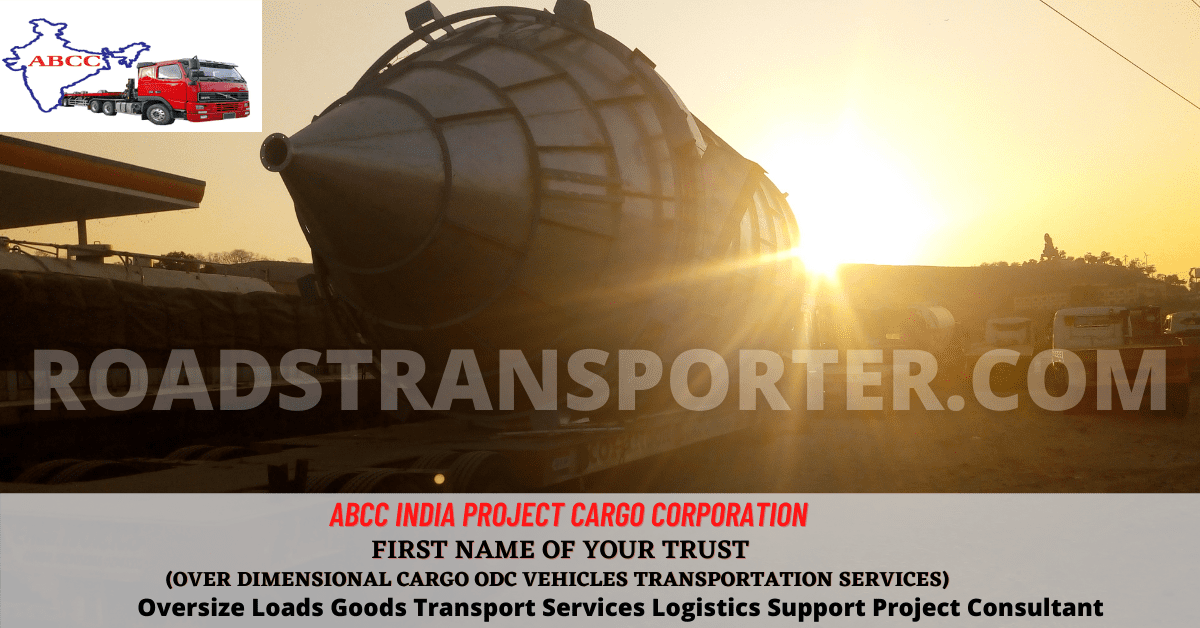
ODC (Over Dimensional Cargo) transportation services Solan –Shimla Himachal are also strapping facility of our company. We have core speciality in ODC transportation and ranks among few of such specialized service providers. And special focus is made on the quality and security of goods that are to be transported. We tend to follow all the proclamations that are set by the Ministry of Road Transport and Highway.
Solan is also crowned as the “City of Red Gold”. It is famous for its bulk production of tomatoes. This gives the district a new industry to be looked upon. Our company take special consideration of oversize heavy cargo Solan –Shimla Himachal . It refers to overweight load. That exceeds the standard or ordinary legal size or weight limits for a specified road portion, highway or other transport. The transportation and distribution of the commodities turn out to be a matter of great concern for the dealing with the hassle free transfer of goods.
The town of Solan is situated between Chandigarh and Shimla. This led to increase in scope of industrial development of the district. ABCC is a leading company in the transportation field and serve its customers with the pre-eminent facilities.
ODC Cargo Consignment Transportation Solan Shimla Himachal Pradesh :-
Our company also has ODC (Over Dimensional Cargo) permission Solan –Shimla Himachal . This ensures that the company is chief in itself. As all the guidelines generated by the government are followed by the company.
Solan district was built by British and is a recognised UNESCO World Heritage site. It gets barely snowfall during winters. It is third among the Municipal Corporation of Himachal Pradesh after Shimla and Dharamshala. District administrative and Centre Government offices are located in the city. This led to the increase in the functional part of the city and ultimately results in the development of the city.
Solan as being a developing town comes up with new opportunities. Cash Crop Solan is hub of horticulture produce marketing .Tomatoes, kiwi, plums, mushrooms, apples and seasonal vegetables are among major economic activities. ABCC regulates the transport of goods as per the customer demand.
The truck transportation service Solan –Shimla Himachal provided by ABCC Company is significant in itself. Trucks are the easy carrier of goods. For fast delivery of goods truck transportation is supreme. ABCC has a well-being truck transportation network over a wide area .Solan is education hub of Himachal Pradesh. With many educational institutions it offers employment opportunities to a large number of people.
The container transportation services Solan –Shimla Himachal are chief speciality of ABCC Company. We transfer container goods over wide area. This makes the distribution of the goods over far-off places. This ultimately led to more profit earning in every aspect. The facilities of health, education, commercial and other industrial units facilitate people from all around towns.
Solan is an industrial hub of Himachal Pradesh. It is very well known for its Pharmaceutical industry. Transportation service Solan Himachal Pradesh To all India Urban Remote & Metro location is an important thing of concern. Also there are a large number of small and medium size industrial units. This all led to the economic growth of the state. We understand the time to be a precious commodity. We try our level best so that our customer should not face any problem.
Why choose heavy road transportation Solan Shimla Himachal pradesh :-
Our Company ABCC is very sincere towards the process of loading, unloading, storing and transporting. Regular checks are made by our professionals so as to ensure proper delivery of goods. With increase in the growth rate, there is also increase in the transportation and import – export of goods. Our Company ABCC provides supreme services to its clients.
The modular hydraulic axle trailer transportation services Solan –Shimla Himachal are also provided by our company at nominal & Genuine price. This service is provided by very few companies. Our ABCC Company is among one of the prime service provider in this field.
Low bed trailer services Solan –Shimla Himachal are provided at best price by our company. We also provide with the facilities of semi-low bed trailers. These are considered to be fast and easy way of transporting goods from to long distances.
The ABCC Company also provide flat rack container services. The industrial units of the Solan district include hosiery, food, leather, glass, chemical, mechanical, pharmaceuticals, and food processing, electrical and electronic services. ABCC Company has been able to build a prestigious name in the market and work continues to maintain it. The logistics service Solan –Shimla Himachal of the company is an example in itself. We look forward to our responsibilities at every aspect until the whole transportation process is completed.
The connectivity of the region with other towns and cities is very well maintained. There is an unrivalled connectivity with other towns and cities. This makes the heart of the transportation industry robust. The high bed trailer services Solan –Shimla Himachal are also provided by the ABCC Company. The Company turns out to be best among the high bed trailer services provider.
ABCC Company is optimal in its own. We provide the premier services to our customers. For us customer satisfaction is considered to be our prime duty. It would be our pleasure to work with you. We promise to never lead you down. Our world class services will not give you a chance to complaint.
Shimla Pin Code – 171001
Please click & See Our Endless Journey – Please Click
Frequently Asked Questions Public FAQ :-