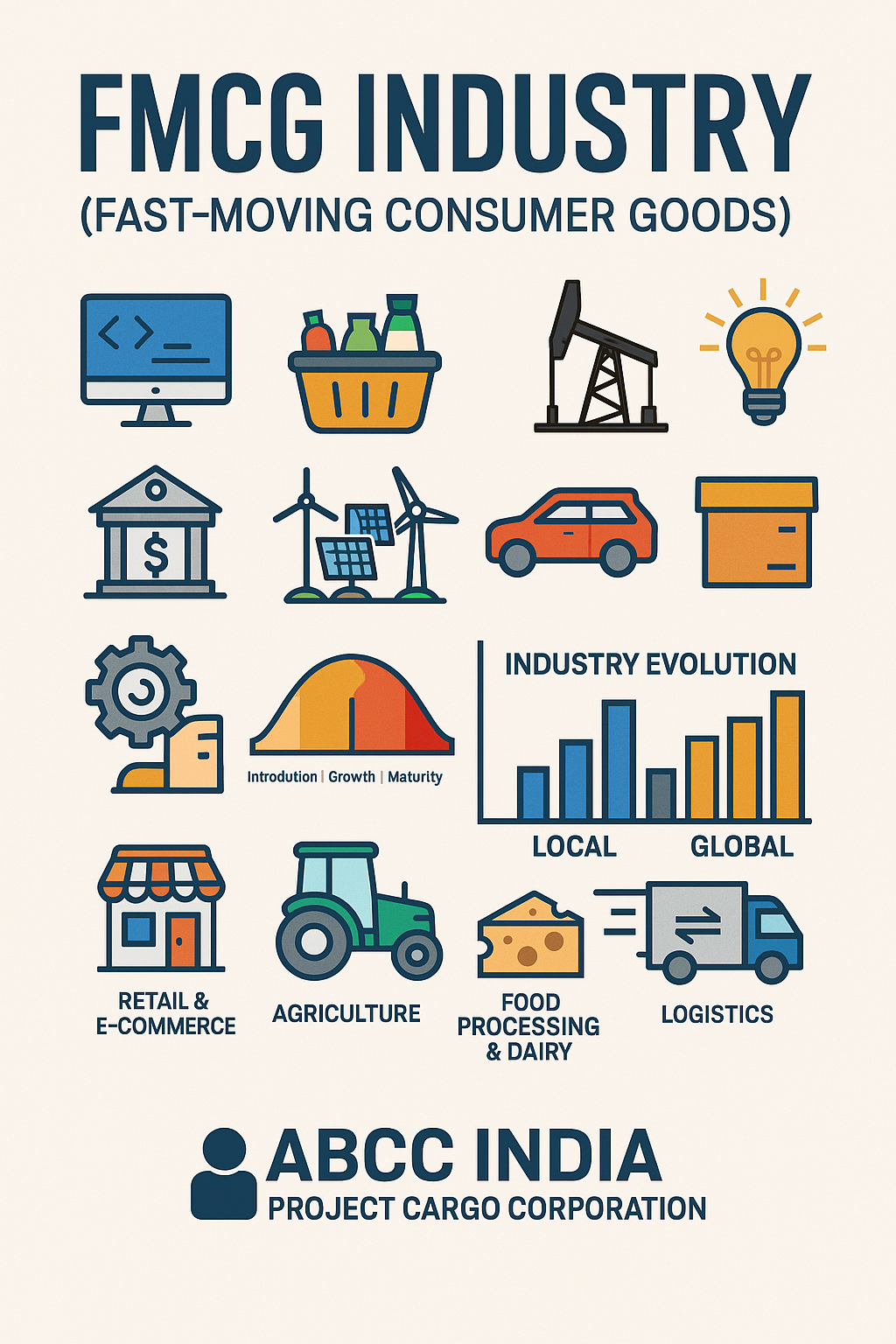
🏭 FMCG (Fast-Moving Consumer Goods): The Everyday Industry That Moves the World
🌱 Introduction — What Is FMCG in Simple Words?
FMCG, or Fast-Moving Consumer Goods, are those essential items that people buy regularly and use quickly — such as toothpaste, soaps, snacks, soft drinks, shampoos, detergents, biscuits, and packaged foods. These are the lifelines of every household, the silent heartbeat of retail shelves, and the fastest-turning wheels of the global economy.
The concept of FMCG was not “invented” by one person, but evolved naturally as societies moved from local barter systems to organized marketplaces. The term “Fast-Moving Consumer Goods” first gained traction during the post–World War II consumer boom (1940s–1950s) when industrial nations like the USA and UK witnessed rapid urbanization, better packaging technologies, and mass manufacturing.
In simple words —
“FMCG is the industry that converts everyday needs into business empires.”
The idea was born when manufacturers realized that every product used daily can create consistent demand, and when sold in large quantities, even small profit margins could create massive turnover. That’s how giants like Procter & Gamble, Nestlé, and Unilever built the foundations of modern FMCG.
💡 The Industrialization of FMCG: When, Where & How It Happened
🏙️ The Birth of Mass Consumption (Late 1800s – 1940s)
Industrialization brought soap, flour, and canned food to factory production lines. The first FMCG products came from Europe — with pioneers like William Colgate (1806), Henri Nestlé (1866), and Lever Brothers (1885) — who understood one truth: “Products people use daily never go out of demand.”
🚀 The Organized Retail & Branding Revolution (1950s – 1980s)
After World War II, FMCG exploded in the West. Supermarkets replaced corner shops, radio and TV advertising built emotional branding, and packaging became the new marketing language. FMCG was no longer just about products — it was about trust, identity, and lifestyle.
🌏 Global Expansion & Emerging Market Boom (1990s – 2010s)
With globalization and liberalization, FMCG entered Asia, Africa, and Latin America.
In India, the 1991 economic reforms opened doors for companies like HUL, ITC, Dabur, Godrej, and Marico, transforming Indian households forever.
FMCG became one of the largest job-creating sectors — connecting farmers, factories, wholesalers, retailers, and logistics operators under one umbrella of continuous consumption.
🤖 The Digital & Sustainable Era (2010s – Present)
E-commerce, social media marketing, and sustainability changed everything.
Brands now rely on data analytics, rural penetration, digital advertising, and eco-friendly packaging.
From soap to software, the FMCG mindset — fast production, fast sales, and faster delivery — has become the template for every modern business model.
🧭 The Essence of FMCG Industrialization
FMCG industrialization represents:
- Speed: Rapid production, distribution, and consumption.
- Volume: Low margins, high turnover.
- Connectivity: Every home, every village, every day.
- Resilience: Even in economic recessions, FMCG keeps moving.
- Adaptability: From kirana shops to BigBasket and Amazon Fresh.
“The FMCG industry doesn’t chase trends — it creates habits.”
📊 Types of FMCG Products, Uses & Tentative Price Range
| Category | Example Products | Uses | Tentative Retail Price Range (₹) |
|---|---|---|---|
| 🍞 Food & Beverages | Biscuits, Snacks, Juices, Dairy | Daily consumption | ₹10 – ₹500 |
| 🧴 Personal Care | Soaps, Shampoo, Toothpaste | Hygiene & grooming | ₹20 – ₹600 |
| 🧹 Home Care | Detergent, Cleaners, Air Fresheners | Cleaning & sanitation | ₹25 – ₹800 |
| 🍼 Baby & Health Care | Diapers, Sanitary Pads, OTC products | Family health | ₹50 – ₹1000 |
| 🛢️ Packaged Essentials | Oils, Ghee, Spices, Pulses | Kitchen essentials | ₹50 – ₹2000 |
⚙️ FMCG Industry Manufacturing & Product Lifecycle
🏭 Step-by-Step Production Flow
- Raw Material Sourcing — Agricultural produce, chemicals, and natural ingredients.
- Formulation & Processing — Blending, refining, and homogenizing materials into finished goods.
- Packaging — Branding, labelling, and protective wrapping.
- Warehousing & Distribution — Stored in bulk, moved via road transport, rail, and retail logistics.
- Retailing — Sold through kirana stores, supermarkets, and e-commerce.
- Consumption & Feedback Loop — Consumer behavior informs innovation and reformulation.
🔁 Product Lifecycle
| Stage | Description | Focus Area |
|---|---|---|
| 🧪 Development | Concept testing & R&D | Innovation |
| ⚙️ Manufacturing | Production & packaging | Efficiency |
| 🏬 Distribution | Channel expansion | Reach |
| 📢 Marketing | Brand awareness | Emotion |
| 🔁 Renewal | Product upgrade | Sustainability |
🌎 FMCG Industry Evolution (India vs Global)
| Era / Geography | Global Trends | India’s Parallel Journey |
|---|---|---|
| 1900–1950 | Birth of packaged goods | Cottage industries → organized brands |
| 1950–1990 | Branding & globalization | HUL, Dabur, Godrej rise |
| 1990–2010 | Liberalization boom | ITC, Marico, Nestlé India |
| 2010–2025 | E-commerce & rural push | D2C brands + digital FMCG logistics |
💰 FMCG Market Size
- Global FMCG Market (2025): $12 trillion+
- Indian FMCG Market (2025): ₹9.5 lakh crore (~$1.15 trillion)
- Employment Impact: 12% of India’s organized jobs
- Logistics Dependence: ~35% cost linked to transportation, warehousing & cold chain
💰 FMCG Market Size – Local (India) & Global Overview
The FMCG sector is one of the most dynamic and recession-resistant segments in the world. It directly reflects consumer habits, purchasing power, and lifestyle evolution.
🌏 Global FMCG Market (2025 Projection)
- Market Size: ~USD 12.2 Trillion
- Annual Growth Rate (CAGR 2022–2025): 5.4%
- Top Markets: USA, China, India, Japan, Germany
- Major Categories: Food & Beverage (45%), Personal Care (25%), Home Care (15%), Health & Wellness (10%)
🇮🇳 Indian FMCG Market (2025)
- Market Size: ₹9.5 Lakh Crore (~USD 1.15 Trillion)
- CAGR (2020–2025): 9.2%
- Rural Contribution: 45% of total FMCG revenue
- Top Segments: Packaged Food, Personal Care, Home Hygiene, Dairy, and Beverages
| Segment | Market Share (%) | Growth Driver |
|---|---|---|
| Food & Beverages | 45% | Rising disposable income |
| Personal Care | 25% | Beauty & hygiene awareness |
| Home Care | 15% | Urbanization & lifestyle changes |
| Health & Wellness | 10% | Preventive healthcare demand |
| Others | 5% | Pet care, new-age essentials |
🧭 India’s FMCG industry is not just growing; it’s evolving into a digital, data-driven marketplace connecting villages to virtual stores.
🌐 Top 10 Global FMCG Companies
🏢 Procter & Gamble (P&G) – USA
Founded in 1837, P&G revolutionized consumer branding with products like Tide, Gillette, and Pampers.
Their innovation strategy is simple: “Make everyday life easier.”
P&G’s marketing consistency and R&D excellence make it a global leader in home and personal care.
🍫 Nestlé – Switzerland
Started in 1866 by Henri Nestlé, this food giant built global trust through nutrition and quality.
From Nescafé to Maggi, Nestlé’s power lies in localization — adapting products to cultural tastes.
🧴 Unilever – UK/Netherlands
With over 400 brands including Dove, Lifebuoy, and Surf Excel, Unilever focuses on sustainability and social impact.
Its philosophy: “Doing well by doing good.”
🥤 The Coca-Cola Company – USA
A symbol of American culture since 1886, Coca-Cola turned a drink into a lifestyle.
Its global supply chain is one of the most efficient on earth, reaching over 200 countries daily.
🧃 PepsiCo – USA
From snacks to soft drinks, PepsiCo’s diversified FMCG empire (Lays, Tropicana, Quaker) shows how creativity and constant reinvention can outpace competition.
🍫 Mondelez International – USA
Home to Cadbury and Oreo, Mondelez uses emotional storytelling and regional branding to win consumer loyalty.
It dominates confectionery across 150+ countries.
💄 L’Oréal – France
The global beauty powerhouse, founded in 1909, blends science, technology, and emotion.
Their motto: “Because you’re worth it.”
💊 Johnson & Johnson – USA
A century-old healthcare and FMCG brand trusted by generations.
Their key to success: ethical innovation and consumer care.
🧽 Reckitt – UK
Makers of Dettol, Lysol, and Harpic, Reckitt built a hygiene revolution during and after global pandemics — redefining health protection.
🪥 Colgate-Palmolive – USA
Founded in 1806, Colgate turned a simple daily habit into brand devotion.
Today, it’s synonymous with oral hygiene worldwide.
🧠 Lesson from the Global FMCG Giants:
“The most successful FMCG companies don’t sell products — they sell trust, habit, and heritage.”
🇮🇳 Top 10 Indian FMCG Companies
India’s FMCG industry is powered by brands that blend tradition with technology.
Each company below is a symbol of India’s consumption revolution.
🏢 Hindustan Unilever Limited (HUL)
- Founded: 1931
- Headquarters: Mumbai
- Key Brands: Dove, Lifebuoy, Surf Excel, Vaseline
- Strength: Deep rural network and marketing excellence
- Revenue (2025 est.): ₹65,000+ crore
🚬 ITC Limited
- Founded: 1910 (as Imperial Tobacco Company)
- Diversified into FMCG, Hotels, and Paperboards
- Key Brands: Aashirvaad, Sunfeast, Fiama, Savlon
- Known for: Strong backward integration and agri-sourcing
🌿 Dabur India Ltd.
- Founded: 1884
- Core Area: Ayurveda & Healthcare
- Key Brands: Chyawanprash, Vatika, Real Juice
- Motto: “Celebrate life through natural health.”
🏠 Godrej Consumer Products Ltd.
- Founded: 1897
- Key Brands: Good Knight, Cinthol, HIT, Ezee
- Known for: Affordable quality and rural brand loyalty
💧 Marico Ltd.
- Founded: 1988
- Key Brands: Parachute, Saffola, Livon
- Specialization: Hair, health, and edible oils
- Strategy: Consistency and innovation
🍪 Britannia Industries
- Founded: 1892
- Key Brands: Good Day, Marie, Tiger
- Vision: “Eat Healthy, Think Better.”
🧈 Amul (GCMMF)
- Cooperative Model from Gujarat
- Founded: 1946
- India’s largest dairy brand, powering rural economy
🧃 Nestlé India
- Subsidiary of Nestlé S.A.
- Popular Brands: Maggi, Nescafé, Milkmaid
- Strength: Innovation in taste and packaging
🕉️ Patanjali Ayurved Ltd.
- Founded by Baba Ramdev & Acharya Balkrishna
- Focus: Natural and Ayurvedic FMCG products
- Vision: “Make India self-reliant in consumer goods.”
💄 Emami Ltd.
- Founded: 1974, Kolkata
- Key Brands: Boroplus, Fair & Handsome, Navratna Oil
- Known for: Herbal innovation and emotional advertising
🗺️All India State FMCG Manufacturers
| State | Leading FMCG Company | Owner/Director | Experience (Years) | Contact / Email / Website | Why Best | Budget Level |
|---|---|---|---|---|---|---|
| Maharashtra | HUL Regional Hub | Sanjiv Mehta | 25+ | info@hul.co.in | Strongest retail network | High |
| Gujarat | Amul | RS Sodhi | 30+ | amul@amul.com | Cooperative excellence | Medium |
| Tamil Nadu | CavinKare | CK Ranganathan | 25+ | info@cavinkare.com | South Indian market leader | Medium |
| Karnataka | Nandini Dairy | KMF Board | 35+ | contact@kmf.coop | Dairy leadership | Medium |
| Uttar Pradesh | Dabur India Plant | Mohit Malhotra | 25+ | info@dabur.com | Ayurveda leadership | High |
| West Bengal | Emami Ltd. | RS Agarwal | 40+ | info@emamigroup.com | Herbal innovation | Medium |
| Delhi | Patanjali | Acharya Balkrishna | 15+ | info@patanjaliayurved.org | Ayurvedic dominance | Medium |
| Haryana | ITC Ltd. | Sanjiv Puri | 35+ | info@itc.in | Agri sourcing expertise | High |
| Punjab | Bonn Foods | Amrinder Singh | 30+ | info@bonn.in | Bakery segment leader | Medium |
| Rajasthan | Bikaji Foods | Deepak Agarwal | 25+ | info@bikaji.com | Traditional snacking | Medium |
| Madhya Pradesh | Parle Agro | Schauna Chauhan | 20+ | info@parleagro.com | Beverage excellence | Medium |
| Bihar | Britannia Depot | Varun Berry | 28+ | info@britindia.com | Distribution strength | Medium |
| Kerala | Synthite | CV Jacob | 40+ | info@synthite.com | Spices & extracts export | High |
| Telangana | Heritage Foods | Nara Bhuvaneswari | 25+ | info@heritagefoods.in | Dairy innovation | Medium |
| Andhra Pradesh | Visakha Dairy | Managing Board | 30+ | contact@visakhadairy.com | Cooperative success | Medium |
| Odisha | Milk Mantra | Srikumar Misra | 15+ | info@milkmantra.com | Startup dairy innovation | Medium |
| Assam | Patanjali East Unit | Operations Head | 10+ | east@patanjaliayurved.org | Ayurvedic FMCG reach | Medium |
| Jharkhand | Britannia Depot | Plant Head | 20+ | info@britindia.com | Distribution backbone | Medium |
| Chhattisgarh | Balaji Wafers Plant | Virani Family | 25+ | info@balajiwafers.com | Snack segment | Medium |
| Goa | Nestlé India Plant | R Suresh | 18+ | info@in.nestle.com | Consistent export quality | High |
| Tripura | NE Dairy Unit | Regional Board | 15+ | info@nedairy.in | North East market coverage | Low |
| Meghalaya | Local FMCG Coop | Chairman | 10+ | info@meghcoop.in | Regional self-reliance | Low |
| Manipur | Herbal Valley FMCG | Founder Group | 8+ | info@herbalvalley.in | Organic FMCG push | Low |
| Nagaland | Highland Foods | Board | 7+ | info@highlandfoods.in | Tribal entrepreneurship | Low |
| Mizoram | Mizo Agro | Cooperative | 10+ | info@mizoagro.in | Local dairy FMCG | Low |
| Arunachal Pradesh | Frontier Foods | CEO | 10+ | info@frontierfoods.in | Rural micro-branding | Low |
| Sikkim | Sikkim Organic FMCG | State Dept. | 10+ | info@sikkimorganic.in | Fully organic products | Medium |
| Himachal Pradesh | Himalaya Wellness | Philipe Haydon | 25+ | info@himalayawellness.com | Herbal leadership | Medium |
| Uttarakhand | Patanjali HQ | Acharya Balkrishna | 20+ | info@patanjaliayurved.org | Largest FMCG campus | High |
| Jammu & Kashmir | JK Dairy | Managing Board | 20+ | info@jkdairy.in | Cold-chain efficiency | Medium |
| Chandigarh | Godrej Regional Hub | Zonal Head | 15+ | info@godrejcp.com | North region hub | Medium |
| Ladakh | Local Food Processing Unit | Coop Head | 7+ | info@ladakhfoods.in | Cold region innovation | Low |
| Andaman & Nicobar | Small FMCG Cooperative | Cooperative Body | 6+ | info@andamanfmcg.in | Island distribution | Low |
| Puducherry | Aachi Masala | A D Padmasingh | 25+ | info@aachigroup.com | Spice segment strength | Medium |
| Daman & Diu | Parle Unit | Plant Manager | 15+ | info@parle.in | Export packaging | Medium |
| Lakshadweep | Cooperative FMCG | Local Board | 5+ | info@lakshadweepcoop.in | Local sustainability | Low |
📈 Best Era and Recession Time for FMCG Industry
🌞 Golden Eras
- 1950s–1970s: Mass branding and post-war consumption surge.
- 1990s–2000s: Globalization and retail boom.
- 2020s: Digital e-commerce and D2C growth.
🌧️ Recession-Resistant Nature
Even during recessions (2008, 2020), FMCG maintained steady growth because consumers still buy essentials.
Brands like HUL, Nestlé, and P&G thrive by focusing on necessity over luxury.
| Period | Global Event | Impact on FMCG | Why Survived |
|---|---|---|---|
| 2008 | Global Financial Crisis | 3% dip, quick recovery | Everyday demand constant |
| 2020 | COVID-19 Pandemic | Hygiene & food demand up | Sanitizers, packaged food |
| 2023 | Inflation Spike | Price rationalization | Value-for-money products |
💡 “Recession may slow economies, but not necessities.”
🌿 Environmental & Seasonal Effects on the FMCG Industry
The FMCG industry operates in a close loop with nature, agriculture, and climate. Seasonal trends, environmental policies, and sustainability practices all shape its production, packaging, and consumer behavior.
☀️ Seasonal Impact
| Season | High-Demand Products | Logistics & Supply Challenge | Example Brands Benefiting |
|---|---|---|---|
| 🌞 Summer | Cold drinks, ice creams, deodorants, soaps | Cold-chain and refrigeration | Coca-Cola, Amul, PepsiCo |
| 🌧️ Monsoon | Home care, mosquito repellents, hygiene | Flood logistics & moisture protection | Godrej (Good Knight), HUL |
| ❄️ Winter | Chocolates, lotions, food oils, tea | Heating & storage cost | Nivea, Dabur, Britannia |
| 🌾 Festive Season | Packaged sweets, gifts, beverages | Inventory buildup & packaging | Haldiram’s, Cadbury, ITC |
💡 “FMCG sales follow the rhythm of seasons — success depends on anticipating nature’s demand.”
🌎 Environmental Effects
- Plastic waste management — Transition to biodegradable & recyclable packaging.
- Carbon neutrality goals — FMCG majors target net-zero emissions by 2040.
- Water usage — Efficient utilization in beverage & detergent manufacturing.
- Energy sources — Solar and biomass adoption in factories.
🌱 Sustainability is no longer an option — it’s the license to operate.
🏛️ FMCG Unions and Higher Authorities (India & Global)
FMCG operations require strong regulatory and trade-body coordination to protect consumer health, quality, and fair trade.
🇮🇳 Indian Authorities
| Authority / Union | Full Name | Primary Function |
|---|---|---|
| FSSAI | Food Safety & Standards Authority of India | Regulates food product quality & labeling |
| BIS | Bureau of Indian Standards | Provides ISI certifications for packaging & production |
| AGMARK | Agricultural Marketing Standard | Ensures quality in agri-based FMCG |
| GST Council | Goods & Services Tax Body | Defines taxation for FMCG products |
| IBA | Indian Brands Association | Protects consumer interest and trade ethics |
🌐 Global Authorities
| Organization | Headquarters | Key Role |
|---|---|---|
| FDA | USA | Food & drug safety |
| ISO | Switzerland | Global standardization |
| WHO | Geneva | Health-related product safety |
| Codex Alimentarius | Rome | Food safety guidelines |
🧭 “Strong regulation doesn’t restrict growth — it ensures trust.”
⚖️ Legal & Compliance Framework + Quality Standards
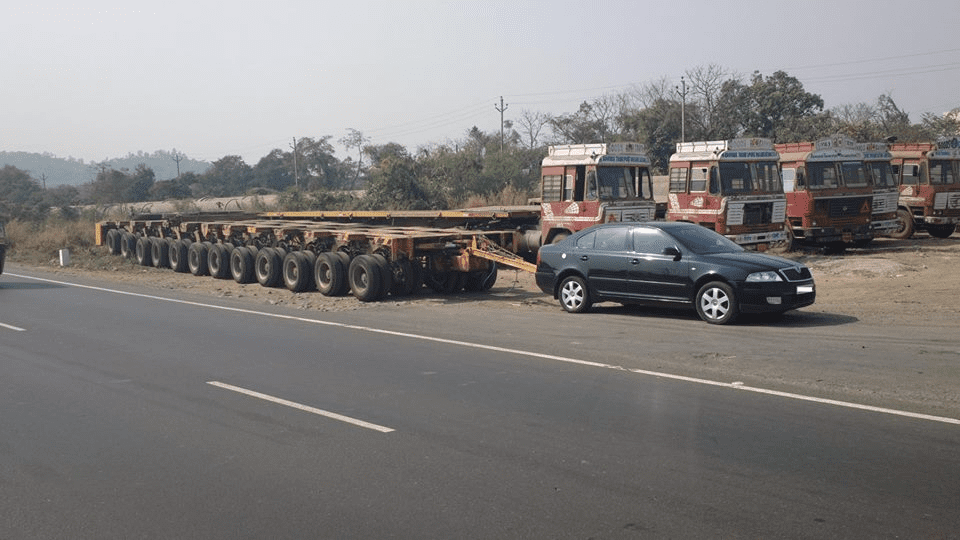
Legal compliance forms the backbone of FMCG credibility. Each product sold must meet quality, labeling, safety, and consumer protection laws.
📋 India’s Legal Framework
| Law / Act | Description |
|---|---|
| Legal Metrology Act (2009) | Ensures correct labeling, weights, and measures |
| Consumer Protection Act (2019) | Protects consumer rights |
| Environment Protection Act (1986) | Regulates pollution and waste |
| Drugs and Cosmetics Act (1940) | Controls cosmetic safety |
| Food Safety & Standards Act (2006) | Defines food manufacturing quality norms |
🌐 Global Quality Certifications
| Certification | Purpose |
|---|---|
| ISO 9001 | Quality Management |
| ISO 14001 | Environmental Management |
| GMP (Good Manufacturing Practice) | Manufacturing hygiene standards |
| HACCP | Food safety system |
| Halal / Kosher | Cultural product compliance |
⚙️ Compliance is not a burden — it’s the bridge between consumer and corporate trust.
📈 Advantages and Disadvantages of FMCG Industry
| Aspect | Advantages | Disadvantages / Challenges |
|---|---|---|
| 📦 Production | High turnover, scalable manufacturing | Thin margins require volume sales |
| 🚛 Distribution | Continuous demand, stable logistics | High competition in channels |
| 💰 Financial | Recession-proof, quick cash flow | High marketing expenditure |
| 🌍 Market | Global reach, rural penetration | Regional taste variations |
| ♻️ Environment | Sustainability innovation | Waste management issues |
| 👨💼 Employment | Large job generator | Seasonal labor dependency |
💡 “The strength of FMCG lies in its speed — but it must balance speed with sustainability.”
🇮🇳 India and Government Support for FMCG Growth
India’s government actively fuels FMCG expansion through infrastructure, policy, and investment initiatives.
🏗️ Government Initiatives
| Program / Scheme | Objective |
|---|---|
| Make in India | Boost local manufacturing |
| Digital India | Strengthen e-commerce and digital supply chains |
| PM Gati Shakti Yojana | Improve logistics connectivity |
| National Logistics Policy | Reduce supply chain cost to <10% of GDP |
| FDI in Retail (100%) | Attracts foreign capital and technology |
| GST Implementation | Simplified tax regime for FMCG companies |
💡 FMCG’s Role in Indian Economy
- Contributes ~19% to India’s GDP (direct + indirect).
- Employs over 3 million people in organized and unorganized sectors.
- Supports over 60 lakh retail points, fueling micro-entrepreneurship.
🧭 Government Vision 2030
- Promote eco-friendly packaging and zero waste factories.
- Encourage rural warehouse infrastructure under PM Gati Shakti.
- Integrate FMCG with multi-modal logistics hubs for reduced cost.
🇮🇳 “FMCG is not just India’s largest employer — it’s the heartbeat of Bharat’s consumption economy.”
🏙️FMCG Hubs and Big Markets of India (Season-Wise Overview)
India’s FMCG landscape thrives across both urban megacities and rural consumption belts. Every region contributes uniquely to the sector’s supply chain, distribution, and seasonal sales patterns.
🌾 Major FMCG Hubs
| Region / State | Key FMCG Centers | Primary Products | Seasonal Demand Peak |
|---|---|---|---|
| Western India (Maharashtra, Gujarat) | Mumbai, Pune, Ahmedabad | Packaged food, beverages, dairy | Year-round (urban stability) |
| Northern India (Delhi, Punjab, Haryana, UP) | Delhi NCR, Ludhiana, Lucknow | Personal care, home care, Ayurvedic products | Summer & festivals |
| Southern India (TN, Karnataka, Kerala, Telangana) | Chennai, Bengaluru, Kochi, Hyderabad | Dairy, snacks, hair oils, masalas | Monsoon & festive quarters |
| Eastern India (West Bengal, Odisha, Assam) | Kolkata, Bhubaneswar, Guwahati | Tea, biscuits, noodles, home care | Winter & festivals |
| Central India (MP, Chhattisgarh) | Indore, Raipur | Bakery, detergent, processed food | Year-round |
| Union Territories | Chandigarh, Goa | Premium cosmetics, beverages | Tourism season peaks |
💡 “Every city is a marketplace — every village a consumer.”
🧾 Most Selling FMCG Items and Raw Material Rate List
FMCG production relies heavily on raw material supply consistency and logistics speed. Below is a practical pricing overview (approximate retail/wholesale data, 2025/26 basis).
| Category | Top-Selling Products | Major Raw Material | Supplier / Region | Approx. Raw Material Rate (₹/kg or litre) |
|---|---|---|---|---|
| Food & Beverage | Biscuits, snacks, noodles | Wheat, sugar, palm oil | Gujarat, UP | ₹25 – ₹60 |
| Dairy | Milk, butter, cheese | Fresh milk | Gujarat, Maharashtra | ₹45 – ₹65 |
| Home Care | Detergent, cleaner, soap | LAB, soda ash | Gujarat, Tamil Nadu | ₹80 – ₹120 |
| Personal Care | Shampoo, lotion, cosmetics | Coconut oil, aloe vera | Kerala, TN | ₹70 – ₹150 |
| Beverages | Tea, coffee, juices | Tea leaves, sugar | Assam, Karnataka | ₹90 – ₹180 |
| Confectionery | Chocolates, candies | Cocoa, milk powder | South India imports | ₹180 – ₹250 |
🚛 Efficient raw material logistics = reduced production cost = competitive FMCG pricing.
📈 FMCG Market Trends & Growth Drivers
The next decade belongs to data-driven, sustainable, and hyper-local FMCG innovation.
Key trends reshaping the sector include:
💡 Top Growth Drivers
- Digital Transformation – AI-driven demand forecasting, digital payments, and direct-to-consumer models.
- Rural Consumption Expansion – 45% FMCG demand comes from rural India.
- E-commerce & Quick Commerce – Platforms like Zepto, Blinkit, and BigBasket changing delivery speed.
- Health & Hygiene Focus – Post-pandemic shift toward immunity, fitness, and organic products.
- Private Label Growth – Retailers building in-house FMCG brands to cut costs.
- Green & Clean Manufacturing – Reduced plastic, solar-powered plants, water recycling.
- Urbanization & Millennials – Higher disposable income, convenience lifestyles.
🧠 “The future FMCG leader won’t just deliver fast — they’ll deliver smarter and greener.”
⚖️ Indian Regulatory Changes Impacting FMCG
The FMCG business environment in India has been redefined by progressive reforms and digitization policies.
| Regulatory Reform | Year | Impact on FMCG |
|---|---|---|
| Goods and Services Tax (GST) | 2017 | Simplified multi-state logistics & uniform pricing |
| Consumer Protection Act | 2019 | Strengthened consumer complaint redressal |
| E-commerce Guidelines | 2020 | Ensured fair online pricing & transparency |
| Plastic Waste Management Rule | 2022 | Pushed shift toward biodegradable packaging |
| FDI in Retail (100%) | 2023 | Attracted global brands & investments |
| Draft National Logistics Policy | 2023 | Enhanced supply chain infrastructure |
⚙️ “Reform-driven India is the most fertile ground for FMCG innovation.”
🔮 FMCG Industry Forecast (2025–2035)
The next decade promises a major transformation fueled by digital retail, sustainability, and logistics modernization.
📊 10-Year Forecast (2025–2035)
| Indicator | 2025 (Current) | 2030 Projection | 2035 Vision |
|---|---|---|---|
| Market Size | ₹9.5 Lakh Crore | ₹15 Lakh Crore | ₹22 Lakh Crore |
| Rural Demand Share | 45% | 50% | 55% |
| E-commerce Contribution | 12% | 25% | 40% |
| Green Packaging Use | 30% | 60% | 90% |
| Employment Generation | 3 Million | 5 Million | 7 Million |
| Logistics Cost (% of GDP) | 13% | 10% | 8% |
🚀 Future Vision
- AI-driven supply chain management and predictive logistics.
- Smart packaging using QR codes and freshness indicators.
- Hyper-local manufacturing hubs for faster delivery.
- Integration with renewable energy sources.
- Global Indian FMCG brands competing on sustainability and affordability.
🌱 “Tomorrow’s FMCG factory will run on solar energy, digital data, and consumer trust.”
👥 Key Stakeholders in the FMCG Ecosystem
Every FMCG product connects a huge ecosystem — from farms to factories, trucks to retailers, and finally to consumers.
| Stakeholder | Role | Value Contribution |
|---|---|---|
| 🧑🌾 Farmers & Raw-Material Suppliers | Provide base inputs (milk, wheat, oil, herbs). | Foundation of supply chain. |
| 🏭 Manufacturers | Convert materials into branded goods. | Production efficiency & quality. |
| 🚛 Logistics & Warehousing Firms | Move goods from plants to markets. | Cost control & timely delivery. |
| 🏪 Distributors & Retailers | Ensure market availability. | Customer access. |
| 💻 E-Commerce & Digital Platforms | Connect brand to doorstep. | Speed & data intelligence. |
| 🧾 Regulators & Government Bodies | Maintain compliance & safety. | Consumer trust. |
| 👨👩👧👦 Consumers | Drive demand & feedback. | Continuous innovation loop. |
💡 “Every biscuit you eat is the result of thousands of coordinated hands — that’s the beauty of FMCG.”
⚠️ Problems, Challenges & Innovative Solutions in FMCG
| Challenge | Description | Innovative Solution |
|---|---|---|
| 📦 Distribution Fragmentation | Small & scattered retail network. | Use AI route planning & unified distributors. |
| 🧊 Cold-Chain Gaps | Perishable goods losses. | Solar cold-rooms & reefer trucks. |
| 💸 High Marketing Costs | Too many brands chasing same audience. | Digital & influencer-based micro-marketing. |
| 🧴 Counterfeit Products | Duplicate FMCG goods in rural belts. | QR-coded traceable packaging. |
| 🧑🤝🧑 Workforce Attrition | High turnover in sales teams. | Skill development & incentive programs. |
| ♻️ Plastic Waste | Environmental backlash. | Biodegradable packaging & reuse models. |
🧭 “Innovation in FMCG isn’t optional — it’s survival.”
🚛 Warehousing, Supply Chain & Multi-Modal Logistics in FMCG
The backbone of FMCG growth is logistics — connecting factories to 10 million + retail points across India.
⚙️ FMCG Supply-Chain Flow
- Manufacturing Plants → 2. Regional Warehouses → 3. Distributors → 4. Retailers / E-Commerce → 5. Consumers
📊 Key Logistics Components
| Logistics Element | Importance | Optimization Method |
|---|---|---|
| 🏗️ Warehousing | Inventory safety & product rotation. | Automated systems & RFID. |
| 🚛 Road Transport | 70% of FMCG movement in India. | Dedicated fleet & GPS tracking. |
| 🚂 Rail Freight | Bulk food & beverage shipment. | Cold-chain integration. |
| 🚢 Sea Freight | Export of packaged food & cosmetics. | Containerized FMCG cargo. |
| ✈️ Air Cargo | Urgent retail replenishment. | Express shipping for D2C brands. |
🏗️ ABCC India Project Cargo Corporation – The FMCG Logistics Partner
ABCC INDIA PROJECT CARGO CORPORATION plays a pivotal role in supporting FMCG manufacturers with reliable transportation and logistics networks:
- 🛣️ Pan-India Fleet of 10–65 ft container trucks, low-bed & multi-axle trailers.
- 🧊 Cold-Chain Ready Vehicles for perishable FMCG movement.
- 🏬 Warehousing Support near major FMCG hubs (Mumbai, Pune, Ahmedabad, Chennai, Delhi, Hyderabad, Kolkata).
- 🧮 Cost-Effective FTL & LTL Models reducing per-unit freight cost.
- 🌍 Multi-Modal Connectivity integrating road–rail–port corridors under the PM Gati Shakti plan.
⚙️ “Where products move fast — ABCC India keeps them moving faster, safer, and smarter.”
💸 New Tax Slab Impact on Domestic & Global FMCG Business
🇮🇳 India (GST-Based Regime)
- Standard FMCG GST rates: 5%, 12%, 18%, 28% depending on item type.
- 5–12% slab covers essentials (food grains, biscuits, soaps).
- 18–28% slab applies to premium cosmetics & beverages.
Impact:
- Streamlined tax filing & input credit has reduced logistics delays.
- FMCG companies can operate with uniform pricing across states.
- Increased transparency and reduced cascading taxes.
🌍 Global Tax Context
| Region | Average VAT / GST | Impact |
|---|---|---|
| Europe | 20–22% | Higher retail prices offset by strong branding. |
| USA | 8–10% sales tax | Competitive domestic FMCG pricing. |
| ASEAN | 5–12% | Favors export-oriented production. |
💡 Efficient tax systems make FMCG supply chains more competitive and consumer-friendly.
🌱 Future of FMCG Industry (2025 – 2040)
The next 15 years will define how FMCG blends technology, sustainability, and emotion.
🔮 Key Future Drivers
- AI & Predictive Demand Analytics for near-zero inventory losses.
- 3D-Printed Packaging & Customization.
- Zero-Plastic Factories & Net-Zero Warehouses.
- Rural E-Commerce Boom: Tier-3 & Tier-4 towns as new profit centers.
- Renewable-Powered Manufacturing Units.
- Blockchain-Based Supply Transparency.
🌍 The FMCG of 2040 will not just sell products — it will sell responsibility.
📚 Top Books on FMCG Industry (India & Global)
| Book Title | Author / Publisher | Focus Area / Description | Approx. Price (₹) | Best For |
|---|---|---|---|---|
| 📘 FMCG Sales Toolkit | Industry Experts (Amazon India) | Practical sales & retail management techniques for FMCG professionals. | 299 | Field sales managers, distributors. |
| 📗 FMCG Selling: Sales 12.8 | Retail Training Series | Explains sales psychology, product pitching, and channel performance. | 1,592 | FMCG frontline sales teams. |
| 📙 FMCG Distribution Challenges & Workable Solutions | Global Logistics Forum | Deep insights into supply-chain efficiency and route optimization. | 2,606 | Supply-chain & logistics professionals. |
| 📒 Complete Guide to Fast-Moving Consumer Goods (FMCG) | Atlantic Books | Comprehensive guide to FMCG manufacturing, branding, and distribution. | 972 | Students & general readers. |
| 📕 FMCG Blueprint: Your No-Nonsense Guide to FMCG Success! | R. Menon | Entrepreneurial approach to launching and scaling FMCG startups. | 499 | Startups & new manufacturers. |
| 📔 55 Most Profitable Micro, Small & Medium Scale Food Processing Projects | NIIR Board of Consultants & Engineers | Real-world data and project reports for food-based FMCG manufacturing. | 1,675 | MSME & food-sector entrepreneurs. |
| 📘 Indian FMCG Industry | Nitin Mehrotra | Analytical book on India’s FMCG market dynamics, policies, and players. | ~900 | Academics & industry strategists. |
| 📗 How to Save the FMCG Industry: A Practical Guide | Chris Leach (Springer, 2022) | Explores collaboration, sustainability, and modern business reforms. | 3,000 | Global executives & consultants. |
| 📙 The Power of Habit | Charles Duhigg | Explains consumer behavior and repetitive buying — crucial for FMCG marketers. | 450 | Marketing & branding experts. |
| 📒 The Unilever Story | John Deighton | Historical evolution of Unilever — blueprint of global FMCG success. | 1,200 | Corporate leadership readers. |
| 📕 The Tata Story: 75 Years of Trust | R. M. Lala | Chronicles Indian industrialization including FMCG, beverages, and household goods. | 850 | Indian business historians. |
| 📗 Marketing 4.0 – Moving from Traditional to Digital | Philip Kotler | Digital transformation & e-commerce in FMCG marketing. | 650 | Digital marketers & D2C strategists. |
| 📘 Brand Building and Positioning in FMCG | P. Ghosh | Branding fundamentals for competitive product categories. | 700 | Brand managers. |
| 📒 Fast Moving Consumer Goods – The Future of Retail | Economic Times Press | Covers changing retail & consumption trends post-COVID. | 980 | Business analysts & bloggers. |
| 📕 Lean Thinking for FMCG Manufacturing | Womack & Jones | Process optimization & efficiency for high-volume production. | 1,200 | Production & plant managers. |
🎬 Top 10 Movies & Documentaries Related to the FMCG Industry
| 🎥 Title | Year | Origin / Language | FMCG Connection / Theme | Key Insight for Industry Professionals |
|---|---|---|---|---|
| 🍔 Food, Inc. | 2008 | USA / English | Documentary on industrial food manufacturing, supply chains & corporate control. | Reveals the real face of large-scale FMCG food production and consumer impact. |
| 🧃 Fast Food Nation | 2006 | USA / English | Film exploring corruption, branding, and exploitation behind global fast-food empires. | Reflects ethical and operational challenges in FMCG food sector. |
| 🏢 Corporate | 2006 | India / Hindi | Business drama about competition and manipulation within Indian FMCG beverage companies. | Represents branding wars, product positioning, and industrial politics in Indian FMCG. |
| 🧂 The Founder | 2016 | USA / English | Story of Ray Kroc and McDonald’s rise — perfect parallel to FMCG brand building. | Teaches brand scalability, franchising, and consistent product quality. |
| 🥤 Super Size Me | 2004 | USA / English | Social experiment documentary on fast-food consumption. | Demonstrates consumer behavior and responsibility in FMCG consumption. |
| 🍫 Charlie and the Chocolate Factory | 2005 | USA / English | Fictional but symbolic look at food innovation, branding, and production. | Highlights creativity, quality control, and market fantasy in product creation. |
| 🧴 Erin Brockovich | 2000 | USA / English | Legal drama based on pollution caused by an industrial manufacturer. | Stresses environmental responsibility for FMCG and chemical industries. |
| 🍟 The Social Dilemma | 2020 | USA / English | Explores consumer psychology and addiction — relevant for FMCG marketing parallels. | Demonstrates how consumer behavior can be influenced, similar to FMCG advertising. |
| 🛒 The True Cost | 2015 | USA / English | Documentary about fast fashion, production chains, and ethical sourcing. | FMCG analogy in terms of sustainability and global supply chain transparency. |
| 🥛 Pattabhiraman | 2019 | India / Malayalam | Story of a food inspector fighting against adulterated FMCG companies. | Highlights quality control, public health, and corporate accountability. |
🧭 Optional Additions
| Title | Theme |
|---|---|
| 🧃 That Sugar Film (2014) | How marketing shapes FMCG food demand. |
| 🧴 The Men Who Built America (2012) | Mini-series showing the rise of industrial tycoons & consumer goods empires. |
| 🧁 King Corn (2007) | Supply chain of corn — the hidden backbone of many FMCG products. |
“These movies not only entertain but also unveil the business, ethics, logistics, and branding complexities behind everyday consumer goods — the true engine of FMCG industrialization.”
🏁 Conclusion
ABCC INDIA PROJECT CARGO CORPORATION stands as the logistical backbone of India’s fast-moving supply chain.
From packaged biscuits to dairy cargo, ABCC ensures speed, safety, and savings.
🧱 Why FMCG Companies Choose ABCC India
- 24×7 Nationwide Fleet Tracking & Support.
- Expertise in FTL / LTL Deliveries.
- Temperature-Controlled Logistics for perishable FMCG.
- Customized Transportation Plans per brand or season.
- Strong partnerships across industrial corridors & warehousing hubs.
🧭 “When India moves, ABCC India delivers.”
📘 Summary 🧾
The FMCG industry — from soaps to snacks — is India’s daily growth engine.
It embodies speed, volume, innovation, and trust.
From the first soap factory in the 1800s to AI-driven delivery systems today, FMCG defines the journey of modernization.
With evolving consumer behavior, sustainability demands, and policy reforms, the next decade will see India leading global FMCG innovation — supported by robust logistics partners like ABCC INDIA PROJECT CARGO CORPORATION.
FMCG = Fast Moving Growth of Modern Civilization.
Powered by ABCC INDIA PROJECT CARGO CORPORATION
🌐 Website: ROADSTRANSPORTER.COM
📧 Email: Heavyhaulage@roadstransporter.com
📞 Helpline: +91-9408275245