🚧 What Are Roads and Highways?
Imagine a young engineer named RAHUL , arriving in a small border town when the only path linking two villages was a dusty track, used by donkey-carts, unpredictable in the monsoon. She dreamed of a solid road under her boots — one that would carry children to school, farmers to market, trucks loaded with goods, and life flourishing. That dream embodies the essence of what roads and highways are: the arteries of commerce, connection and progress.
In its simplest words: roads and highways are purpose-built paths (of various widths, materials and controls) designed for vehicular and pedestrian traffic, linking places, people, commerce and idea. They were invented because human beings needed not only to walk but to move goods, trade, connect, defend, explore — and as populations grew and economies matured, the simple track became the engineered highway.
Who “invented” them? Of course no single person. The very earliest roads go back to ancient civilizations (e.g., the Indus Valley, the Roman Empire). Then the modern concept — engineered, surfaced, designed for vehicles — emerged with the advent of wheeled transport, industrialisation, and later motor vehicles. In the 19th and early 20th century, governments began building metalled roads, asphalt or concrete highways, with planned routes, signage, maintenance systems and tolls. In India for example, by the 1830s the East India Company began a programme of metalled‐road construction for administrative and commercial goals.
Why? Because in a world of expanding commerce and mobility demands, roads and highways became foundational infrastructure. They enable trade, reduce costs, open markets, connect remote areas, and turn local economies into national and global ones. For our engineer Maya, the road symbolised empowerment and transformation.
In the story of business leadership — for firms, governments, investors — the roads-and-highways sector is not simply “civil works”. It is a strategic enabler: enabling supply chains, enabling logistics, enabling market access, enabling economic growth. For you, Journey, in goods transportation services and travel, roads and highways are first-order infrastructure: without good roads the cost of your operations skyrocket, delays mount, customer-satisfaction falls.
So in this blog we will embark on that journey: from when and where industrialisation of roads and highways happened, how it evolved, how it impacts business and logistics, what the future holds, and how various countries (including India) are navigating this terrain. Let’s set out.
“The Industrialization of Roads And Highways: When, Where, and How it Happened”
🏗️ In the early decades of the 20th century, national governments and private enterprises started to view roads not merely as rural tracks or local paths, but as industrial-scale assets: infrastructure that could support heavy vehicles, continuous movement, high speeds and national supply chains. This shift — the industrialization of roads and highways — marked a turning point: roads became a business, a strategic asset class, a backbone of national growth.
When and Where
The transformation began around the 1920s–1930s in advanced industrial nations (United States, Europe) as motor vehicles proliferated. Governments realised that un-metalled or narrow roads could no longer keep up with the demands of trucks, commerce, and inter-city travel. Engineering standards, asphalt/concrete surfacing, multiple lanes, controlled access began to happen. In India and many other countries, this momentum picked up in the post-independence era (1950s-60s), and accelerated further in the 1990s onwards with liberalisation and rising vehicle numbers.
In India for example, large-scale national highway programmes such as the National Highways Development Project (NHDP) were launched in 1998 under the aegis of the National Highways Authority of India (NHAI). More recently the Bharatmala Pariyojana (from 2017) has subsumed many earlier efforts and set ambitious national corridor targets.
How the Industrialisation Happened
- Standardisation & Engineering – The first step was defining what a “highway” should be: lane widths, pavement structure, drainage, signage, vehicle safety norms. Professional bodies (like the Indian Roads Congress in India, founded in 1934) helped codify standards.
- Materials Innovation – The move from dirt & gravel roads to surfaced asphalt, bitumen and concrete capable of supporting heavy trucks. Additives, pavement layers, long-life surfaces became key.
- Scale and Connectivity – Governments recognised that connecting industrial centres, ports, borders, mines, cities required networks of highways, not isolated roads. Infrastructure investment became industrial-scale.
- Public-Private Partnerships (PPP) & Tolling – To raise capital and manage operations, many countries adopted toll highways, concessions, build-operate-transfer (BOT) models.
- Logistics & Supply-Chain Integration – Highways began to serve not simply passenger movement but heavy freight, enabling logistics hubs, distribution centres, multimodal connectivity (road-rail-sea).
- Maintenance & Lifecycle Management – Highways moved from “build once and forget” to continuous management, maintenance cycles, resurfacing, monitoring.
- Technological Enablers – Intelligent transport systems (ITS), traffic management, satellite tolling, sensors — the highway became “smart”. In India the road sector is embracing satellite‐based toll collection, AI-powered traffic management, etc. (Brickwork Ratings)
Impacts of Industrialisation
- For business leaders and logistics firms (such as your domain, Journey), the effect has been profound: greater reliability in transportation, shorter lead times, reduced vehicle operating costs, expanded reach of markets.
- Economically, industrial achievement of highways boosts GDP, lowers freight cost, enables regional connectivity, fosters urbanisation and industrial corridors. In India, for example, the road transport sector accounts for about 87 % of passenger traffic and 60 % of freight traffic.
- Geopolitically and socially, roads and highways reduce rural isolation, open up hinterlands, support tourism, trade, cross-border flows.
- For the environment and society, though, there are trade-offs: increased vehicle emissions, land acquisition challenges, maintenance burden.
Leadership Lessons
- Just as a corporate enterprise seeks scalable, repeatable, reliable systems, the “highway network” must be engineered for scale: repeatable design, modular construction, standardised materials, predictable funding.
- A top-leadership mindset would say: invest ahead of demand, build the backbone before filling the branches. Many successful highway programmes anticipate tomorrow’s freight and traffic growth.
- Risk management: just as a firm diversifies its supply chain, a highway network must plan for alternate routes, resilience (natural disasters, floods) and maintenance.
- Innovation culture: embracing new materials, digital monitoring, tolling systems, smart traffic management pays dividends.
- Stakeholder alignment: Governments, contractors, financiers, logistics firms and local communities must coordinate — in business terms this is ecosystem management.
Looking Ahead
In the next decade the industrialisation of roads and highways will pivot around sustainability, digitisation, multimodal integration, and data-driven operations. Business leaders must view roads not just as fixed assets but as platforms for mobility, connectivity, service delivery. For someone in goods transportation services, these developments mean evolving networks, new corridors, reduced cost per kilometre, and opportunities for value-added services (data, logistics parks, fleet optimisation).
In summary: The industrialisation of roads and highways has been one of the foundational infrastructure revolutions of the modern era. For business leadership, it offers a lesson: think big, scale smart, invest early, standardise relentlessly and manage lifecycle. The roads that Maya’s truck travels tomorrow will reflect the vision built today.
🚦 Types of Roads and Highways & Tentative Construction Price Range
Different road categories serve unique purposes—ranging from local streets to inter-continental expressways. Below is a simplified guide.
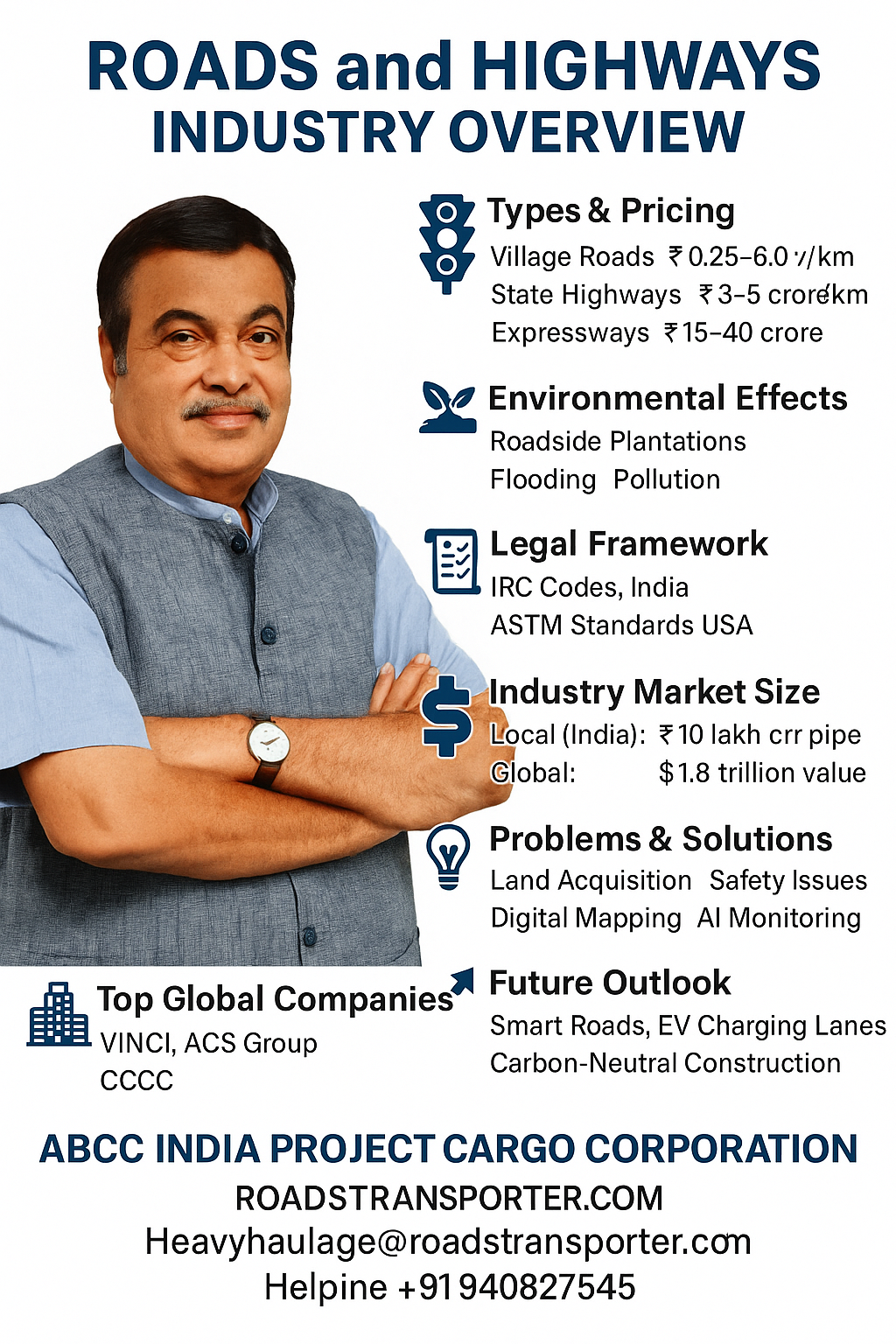
| Type of Road / Highway | Purpose & Usage | Common Construction Materials | Tentative Cost (₹ Crore / km) | Key Users / Vehicles | Remarks |
|---|---|---|---|---|---|
| Village / Rural Roads | Connect villages & farm markets | Gravel, WBM, bitumen surface | 0.25 – 0.60 | Tractors, bikes, light goods carriers | Built under PMGSY schemes |
| District Roads | Link talukas & district HQs | Bituminous / asphalt | 0.80 – 2.0 | Passenger cars, light trucks | Maintained by PWD Dept |
| State Highways (SH) | Connect cities within a state | Asphalt / concrete | 3 – 5 | Buses, commercial trucks | State-level lifelines |
| National Highways (NH) | Inter-state / inter-city corridors | Flexible bitumen / rigid concrete | 5 – 12 | Heavy trucks, tankers | Under NHAI; Bharatmala Pariyojana |
| Expressways | High-speed, controlled access | Rigid PQC concrete | 15 – 40 | Cars, multi-axle trailers | Toll-based, multi-lane design |
| Urban Roads / Ring Roads | Internal mobility in metro cities | Bituminous + reinforced base | 2 – 8 | Cars, buses, mixed traffic | Smart City projects |
| Industrial Corridor Roads | Connect ports, mines & industries | High-grade concrete, geogrid base | 8 – 20 | Heavy haulage, modular trailers | Key for logistics efficiency |
| Border / Defence Roads | Strategic connectivity | Bitumen & snow-resistant mix | 10 – 25 | Army & cargo convoys | Managed by BRO (India) |
🏗️ Manufacturing & Production Structure of the Roads and Highways Industry
The “manufacturing” of a road network is a highly orchestrated industrial chain involving design, materials, labour, finance, and maintenance.
⚙️ Step-by-Step Lifecycle Process
- 🧭 Concept & Planning – Corridor identification, traffic surveys, socio-economic impact analysis, environmental clearance.
- 📐 Design & Engineering – Geometric design, pavement thickness calculation, material testing by laboratories.
- 💰 Financing & Tendering – PPP models (BOT, HAM), budget allocations, multilateral funding (World Bank, ADB).
- 🏗️ Procurement & Construction – Earthwork, subgrade, pavement layers, bridges, culverts, drainage systems.
- 🧪 Quality Control & Testing – Field density tests, bitumen penetration, flexural strength, ride quality checks.
- 🚦 Operation & Maintenance – Toll management, surface renewal, traffic management, ITS installation.
- ♻️ Recycling & Upgradation – Pavement recycling, overlaying, green materials use (e.g., fly-ash, plastic waste).
🔩 Major Inputs and Stakeholders
| Stage | Key Inputs | Primary Stakeholders |
|---|---|---|
| Planning | Land data, surveys, GIS maps | Government departments, consultants |
| Design | CAD software, labs | Engineering firms, universities |
| Material Supply | Bitumen, cement, aggregates | Suppliers & manufacturers |
| Execution | Machinery (pavers, rollers, excavators) | EPC contractors / operators |
| Quality Testing | Mobile labs & QA teams | NHAI, IRC auditors |
| Maintenance | Resurfacing teams, ITS | Toll operators & O&M firms |
🌏 Evolution of the Roads and Highways Industry (Local and Global)
| Era / Region | Major Milestones | Impact on Industry |
|---|---|---|
| Ancient Civilisations | Roman roads, Silk Route, Indus Valley pathways | Laid foundation of trade routes |
| Colonial Era (1600–1947) | British India’s Grand Trunk Road network | First structured highway system in Asia |
| Post-Independence India (1950–1990) | National Highways Act 1956, PWD expansion | Connectivity for industrial corridors |
| Liberalisation Phase (1991–2010) | Golden Quadrilateral Project (NHDP I) | Rapid industrial growth & private involvement |
| Modern Era (2010–Present) | Bharatmala Pariyojana, Gati Shakti Masterplan | Digital mapping, multi-modal integration |
| Global North America (1956–2025) | U.S. Interstate Highway Act 1956, smart corridors | Model for urban planning & commerce |
| Europe (1960–Present) | Trans-European Transport Network (TEN-T) | Seamless cross-border logistics |
| Asia (2000–Present) | China’s National Trunk Highway System (NTHS) | Benchmark for speed & scale of construction |
| Africa & Middle East | Belt and Road Initiative, GCC Highways | New infrastructure financing models |
💹 Market Size – Local (India) and Global
Global Perspective (2025 Estimates):
- Total global road construction market value ≈ USD 1.8 trillion, CAGR 4.5 % (2024-2030).
- Top regions by investment: Asia-Pacific (China, India, Japan), followed by North America and Europe.
- Drivers: Urbanisation, freight corridors, EV mobility, digital highways.
Indian Perspective (2025 Data):
- Total road network > 6.6 million km (2nd largest in the world).
- National Highways: 1,45,000 km and growing rapidly.
- Sector share in GDP: ~ 4 %.
- Investment pipeline: ₹ 10 lakh crore under Bharatmala Phase-I and Gati Shakti.
- Average annual construction speed: 33 km/day (2024).
- Private participation: PPP models account for ≈ 40 % of project value.
📊 Market Segmentation by Component (India 2025/30)
| Segment | Share % | Trend Comment |
|---|---|---|
| Material supply (bitumen, cement, aggregate) | 28 % | High demand due to expressway projects |
| Engineering & Construction (EPC/BOT) | 40 % | Largest segment; growth > 8 % CAGR |
| Maintenance & Toll Operations | 12 % | Stable revenue for operators |
| Intelligent Transport Systems (ITS) | 10 % | Rapid digital transformation opportunity |
| Consultancy & Design | 10 % | Growing export potential to Africa & Asia |
🌍 Top 10 Global Roads & Highways Infrastructure Companies 🏆
🏗️ 1. VINCI – The French Visionaries Who Paved the World’s Future
More than a century ago, in France, a small group of engineers dreamed of building roads that would last longer than human memory. That dream gave birth to VINCI, today one of the world’s most admired infrastructure empires.
VINCI’s journey began with modest public works, but it was their belief in merging construction and concession that changed everything. They didn’t just build highways — they owned, operated, and improved them for generations.
Projects like A86 Duplex Tunnel near Paris and Atlantic Motorways Network set global benchmarks. When countries struggled with financing models, VINCI’s PPP (Public-Private Partnership) expertise became the blueprint.
VINCI’s philosophy was clear: “We don’t just lay asphalt; we connect lives.” Their global reach now spans Europe, North America, and Africa — managing over 4,400 km of toll roads and 36 airports.
Moral of the story: Infrastructure isn’t just about cement and bitumen — it’s about continuity, community, and commitment.
🏗️ 2. ACS Group (Spain) – From Local Builders to Global Game-Changers
In the heart of post-war Spain, a young engineer, Florentino Pérez, transformed ACS (Actividades de Construcción y Servicios) into a global construction powerhouse. His leadership turned crisis into opportunity.
ACS didn’t just build roads; it acquired intelligence. With brands like HOCHTIEF (Germany) and Turner Construction (USA), ACS became a multinational highway and infrastructure leader.
Its highway arm, Dragados, developed toll-based express lanes across the U.S. — including Texas SH-288 and Florida’s I-595 Express Corridor — that redefined sustainable congestion solutions.
The company thrives on discipline and daring. Pérez often says, “Infrastructure is about courage — the courage to invest in what others fear to start.”
Moral: From Madrid to Miami, ACS proved that calculated risk and engineering precision are the twin wheels that drive global success.
🛣️ 3. Bouygues (France) – The Builders Who Made Roads an Art Form
Founded in 1952, Bouygues Group began as a family business with a simple motto — “Never compromise quality.”
Through its road division Colas, Bouygues became a global name in pavement technology and highway design. Its engineers are pioneers of warm-mix asphalt and sustainable road recycling.
Colas operates in more than 50 countries, maintaining one million kilometers of roads every year. Its secret weapon is innovation — using drones, AI, and eco-bitumen to reduce carbon footprints.
Whether it’s Canada’s Trans-Labrador Highway or France’s A89 Motorway, Bouygues builds more than connectivity — it builds trust in technology.
Moral: The best roads don’t just carry vehicles — they carry the pride of nations.
🌉 4. Ferrovial (Spain) – The Risk-Takers Who Mastered the PPP Game
Ferrovial’s story reads like a daring novel. Born in 1952 as a railway company, it evolved into a global infrastructure developer renowned for its long-term concessions.
Its turning point came with the 407 Express Toll Route in Toronto, Canada — the world’s first fully electronic toll road. When others doubted its profitability, Ferrovial turned it into a billion-dollar model of efficiency.
From Heathrow Airport (UK) to Dallas’ LBJ Expressway (USA), Ferrovial shows how technology and finance can coexist on asphalt.
Its slogan — “Building a better society” — is not marketing; it’s a philosophy of public-private synergy.
Moral: When vision meets patience, even the longest roads lead to legacy.
🛠️ 5. Bechtel (USA) – America’s Engineering Legend
Few names inspire as much respect as Bechtel. Founded in 1898, it began as a small railroad contractor and evolved into an icon of American construction.
From the Hoover Dam to Boston’s Big Dig, and from Qatar Expressways to Albania’s Arbër Road, Bechtel symbolizes scale, safety, and sustainability.
In the highways domain, Bechtel excels in mega-corridor design, traffic optimization, and infrastructure financing for emerging nations.
Their “Bechtel Way” emphasizes ethics, safety, and excellence — ensuring that roads are not just built faster but smarter.
Moral: Bechtel’s tale proves that innovation is not a department — it’s a discipline.
🚧 6. Skanska (Sweden) – The Green Builder of Tomorrow
Sweden’s Skanska stands as a global ambassador of green infrastructure. From humble Nordic roots, it now operates in 10+ countries, redefining how sustainable construction looks.
Skanska’s E18 Highway in Norway and A1 Polish Motorway are global case studies in carbon-neutral construction and community engagement.
What makes them special? Their “Green Construction” framework — a commitment to net-zero emissions, local employment, and transparent governance.
Moral: Skanska teaches the world that a road to progress can also be a road to sustainability.
🏗️ 7. CCCC (China Communications Construction Company) – The Dragon of Development
No story of modern infrastructure is complete without China. CCCC, formed in 2005 by merging two major state firms, quickly became a titan in global highway and bridge construction.
Its subsidiary, CCCC Second Highway Engineering Co., built record-breaking projects like the Hong Kong–Zhuhai–Macau Bridge, Beijing-Shanghai Expressway, and hundreds of coastal roads across Asia and Africa.
CCCC’s power lies in its engineering scale and speed — completing projects in years that others plan for decades.
Moral: China’s infrastructure boom is proof that determination, when combined with discipline, reshapes the map of the world.
🛤️ 8. Eiffage (France) – Precision and Pride in Every Kilometer
Formed through mergers of French civil firms, Eiffage has become a symbol of precision engineering.
Its crown jewel, the Millau Viaduct, is one of the tallest bridges in the world — a poetic marriage of architecture and engineering.
Eiffage manages toll roads across France and builds sustainable motorways in Africa. Their ethos — “More than infrastructure, we create heritage.”
Moral: Eiffage shows that perfection isn’t just a goal — it’s a habit.
🏗️ 9. Webuild (Italy) – The Italians Who Dream Beyond Borders
Formerly known as Salini Impregilo, Webuild embodies Italian craftsmanship on a global scale.
From the Panama Canal Expansion to Australia’s North East Link, Webuild stands for endurance and creativity.
In road infrastructure, it’s known for hydraulic and tunnel integration, mastering the art of connecting rough terrains to smooth highways.
Moral: True builders don’t just construct projects — they construct possibilities.
🇮🇳 10. Larsen & Toubro (L&T, India) – India’s Pride, the Global Performer
India’s L&T has transformed from a domestic engineering firm into a global brand synonymous with quality and reliability.
From Delhi-Agra Expressway to Mumbai Coastal Road, L&T’s projects redefine urban mobility.
Its strength lies in design-build speed, in-house machinery, and digital project control — integrating AI, BIM, and IoT for efficiency.
L&T’s highways division continues to expand into Africa and the Middle East, making India proud on every continent.
Moral: From Indian soil to global streets, L&T proves that discipline, technology, and patriotism can build roads to greatness.
🇮🇳 Top 10 Indian Roads & Highways Infrastructure Companies – The Builders of a Billion Journeys
🏗️ Introduction – The Asphalt of Ambition
India’s roads are not just ribbons of asphalt — they are the veins of the nation’s growth. Every highway connects dreams, every bridge shortens distances, and every expressway transforms local economies.
From dusty rural paths to six-lane expressways, India’s infrastructure revolution is one of the greatest engineering stories ever told. Behind this transformation stand a few extraordinary companies — visionaries, engineers, and dreamers who turned blueprints into lifelines.
These top ten Indian companies didn’t just build roads; they built hope, opportunity, and progress. Let’s travel their journeys.
🏗️ 1. Larsen & Toubro (L&T) – The Powerhouse of Indian Engineering
When two Danish engineers, Henning Holck-Larsen and Søren Toubro, started a small company in Mumbai in 1938, they couldn’t have imagined it would one day shape modern India’s infrastructure.
Today, L&T Construction is synonymous with reliability and engineering excellence. It has constructed Delhi-Agra Expressway, Mumbai Coastal Road, Chennai Port–Maduravoyal Corridor, and multiple stretches of the Golden Quadrilateral.
What makes L&T remarkable is not just its size — it’s its precision and professionalism. Every project combines digital technology (BIM, drone monitoring, AI-based safety) with old-school work ethic.
Its engineers often say, “We don’t build roads, we build relationships of trust with time.”
From mountains to metros, L&T symbolizes the spirit of a self-reliant India.
Moral: Engineering may start with concrete, but it stands firm only on commitment.
🚧 2. IRB Infrastructure Developers Ltd. – The Toll Titan
The story of IRB Infrastructure is the story of India’s modern toll roads. Founded by visionary entrepreneur Virendra D. Mhaiskar, IRB pioneered the Build-Operate-Transfer (BOT) model in India.
It started with the Pune-Satara Highway and grew into one of the largest toll road operators, managing over 14,000 lane-kilometers.
IRB’s masterpiece — the Ahmedabad-Vadodara Expressway — revolutionized travel across Gujarat. It’s not just about roads; it’s about creating long-term infrastructure assets that pay for themselves and sustain future development.
IRB’s success lies in its financial courage — investing when others hesitated — and its unmatched maintenance discipline.
Moral: Leadership in infrastructure is not built by pouring concrete, but by pouring conviction into risk.
🛣️ 3. Dilip Buildcon Ltd. – The Fastest Builder in the West
In Bhopal, Madhya Pradesh, one man’s fire changed India’s construction pace. Dilip Suryavanshi started as a small contractor; today, Dilip Buildcon (DBL) builds some of India’s fastest expressways.
Their motto: “Speed with Quality.”
DBL is behind critical projects such as the Delhi-Meerut Expressway, Narmada Bridge, and the Bhopal Bypass. Known for completing projects before deadlines, DBL has set new industry benchmarks.
Their journey wasn’t easy — from local tenders to national tenders, they fought bureaucracy and budget challenges with unshakable grit.
DBL represents India’s new-age builder — bold, efficient, and unstoppable.
Moral: When determination becomes a design principle, deadlines surrender.
🌉 4. Afcons Infrastructure Ltd. – The Bridge Between Vision and Reality
Afcons, part of the Shapoorji Pallonji Group, is India’s quiet achiever. Founded in 1959, it has built some of India’s most complex roads, bridges, and tunnels.
Projects like the Chenab Railway Bridge (Jammu) and Zoji La Tunnel (Ladakh) show its bravery in harsh terrains. Afcons also built parts of the Mumbai Trans-Harbour Link, India’s longest sea bridge.
Working in freezing temperatures and steep mountains, Afcons engineers carry a spirit best described by their slogan: “Engineering the Impossible.”
Globally, Afcons has expanded into Africa and the Middle East — taking Indian engineering pride abroad.
Moral: The toughest roads lead to the highest summits — and Afcons walks them all.
🚜 5. G R Infraprojects Ltd. – The Rajasthan Marvel
Born in Udaipur, G R Infraprojects (GRIL) began as a small road-laying company and grew into one of India’s most trusted EPC and BOT highway developers.
They built portions of the Delhi-Vadodara Expressway, Chakeri-Allahabad Highway, and Nagaur-Ratangarh Project, earning a reputation for engineering accuracy and financial discipline.
GRIL’s strength lies in its family-style management blended with corporate efficiency.
Moral: When hard work meets heritage, even desert dust turns into concrete destiny.
🏗️ 6. Welspun Enterprises Ltd. – The Visionary of Value Creation
Part of the Welspun Group, this enterprise entered the road and highway sector with a focus on innovation and asset creation.
Its projects — Delhi-Meerut Expressway (Package 1), Chikhali-Tarsod Highway, and Aunta-Simariya Bridge (Bihar) — display its finesse in PPP and HAM models.
Welspun believes in building smart, sustainable, and stakeholder-driven projects, combining engineering with empathy.
Moral: The best roads are not just those that shorten distance, but those that lengthen opportunity.
🛤️ 7. Hindustan Construction Company (HCC) – The Pioneer of Modern India
HCC, founded in 1926, is one of the oldest infrastructure builders in India — long before independence.
It has built some of India’s most iconic civil engineering wonders: Bandra-Worli Sea Link, Mumbai-Pune Expressway, and Parbati Hydro Road Tunnels.
Through war, independence, and economic change, HCC has remained resilient. It continues to deliver challenging road projects across India with a legacy rooted in perseverance.
Moral: Some companies don’t follow history — they build it.
🏗️ 8. Shapoorji Pallonji Group – The Legacy of Integrity
The Shapoorji Pallonji Group, over 150 years old, stands for craftsmanship and ethics.
Its infrastructure division, SP Infra, has built expressways and bridges that connect millions daily — from Samruddhi Mahamarg (Nagpur-Mumbai Super Communication Expressway) packages to Bangalore-Mysore Corridor.
Shapoorji’s hallmark is its design precision and transparent execution. Even in times of financial turbulence, their commitment to safety and sustainability never wavered.
Moral: Legacy is not inherited — it is built, brick by brick, in the trust of generations.
🏗️ 9. Tata Projects Ltd. – Engineering the Nation’s Future
Part of the legendary Tata Group, Tata Projects is an integrated engineering company known for ethical governance and superior execution.
It has contributed to major highways such as Lucknow-Sultanpur Expressway, Noida-Greater Noida Link, and Bangalore Peripheral Ring Road.
Their emphasis on digital project monitoring and green engineering makes them a modern pioneer.
Their employees proudly say, “We build with conscience.”
Moral: True engineering is not just about design; it’s about doing the right thing, every single time.
🚧 10. Reliance Infrastructure Ltd. – The Strategic Road Builder
Reliance Infrastructure, part of the Reliance Anil Dhirubhai Ambani Group, entered the roads and highways sector with ambition and scale.
It developed major highways like the Delhi-Agra Expressway, Mumbai-Nashik Expressway, and several toll road SPVs across India.
Their focus on BOT and PPP projects showed how corporate finance could complement public infrastructure.
Despite market ups and downs, Reliance Infrastructure continues to manage and monetize its road assets strategically.
Moral: Strategy turns ambition into achievement, and Reliance built its journey on that philosophy.
🌎 The Road Ahead
Each of these ten Indian companies tells a story — of courage, crisis, and construction.
They began in workshops and small towns but ended up building expressways of excellence. Their journeys prove that infrastructure is not just about steel and concrete — it’s about the soul of progress.
As India aims for a $5-trillion economy, its roads will be the foundation of every milestone — and these companies will continue to pave those dreams.
🏗️ 36 Indian States – Local Best Roads and Highways Manufacturing Companies 🧱
| State / UT | Company Name | Owner & Experience | Contact / Email / Website | Why Best | Tentative Budget (₹ Cr/km) |
|---|---|---|---|---|---|
| Andhra Pradesh | NCC Ltd | Mr. A. AVR Reddy (30 yrs) | [email protected] / nccltd.in | Proven EPC & Smart City roads | 5 – 20 |
| Arunachal Pradesh | TK Engineering Consortium | Mr. Tage Taki (20 yrs) | [email protected] / tkengg.com | Hill road specialist in Northeast | 6 – 22 |
| Assam | P & C Construction Co. | Mr. Partha Chakraborty (18 yrs) | [email protected] | State highway rehabilitation expert | 5 – 17 |
| Bihar | Gammon India Ltd | Mr. Rajeev Mittal (35 yrs) | [email protected] | NH & Bridge works leadership | 6 – 25 |
| Chhattisgarh | Dilip Buildcon Ltd | Mr. Dilip Suryavanshi (30 yrs) | [email protected] / dilipbuildcon.com | Heavy equipment and fast delivery | 4 – 19 |
| Goa | MVR Infra Projects Ltd | Mr. M. V. Raju (22 yrs) | [email protected] / mvrinfra.com | Coastal road & bridge specialist | 5 – 14 |
| Gujarat | Sadbhav Engineering Ltd | Mr. Vasudev Patel (30 yrs) | [email protected] / sadbhav.com | PPP projects & quality control | 4 – 18 |
| Haryana | JMC Projects (India) Ltd | Mr. S.K. Bansal (28 yrs) | [email protected] / jmcprojects.com | Expressway corridor leader | 5 – 20 |
| Himachal Pradesh | Chetak Enterprises Ltd | Mr. Arvind Patel (25 yrs) | [email protected] / chetak.co.in | Mountain engineering expertise | 6 – 23 |
| Jharkhand | Ramky Infrastructure Ltd | Mr. A. Ayodhya Reddy (25 yrs) | [email protected] / ramky.com | Mining corridor connectivity | 5 – 17 |
| Karnataka | Nandi Infrastructure (NICE) | Mr. Ashok Kheni (28 yrs) | [email protected] / niceindia.com | Iconic Bangalore–Mysore corridor | 5 – 15 |
| Kerala | Marymatha Construction Co. | Mr. Paul Mathew (22 yrs) | [email protected] | Quality urban road contracts | 4 – 12 |
| Madhya Pradesh | Dilip Buildcon Ltd | Mr. Dilip Suryavanshi (30 yrs) | [email protected] | PAN-India EPC expert | 4 – 19 |
| Maharashtra | ABCC India Project Cargo Corporation | Mr. Avinash Singh (20 yrs) | [email protected] / ROADSTRANSPORTER.COM | ODC & heavy haul specialist | 5 – 20 |
| Manipur | Keystone Infra Developers | Mr. T. Sharma (18 yrs) | [email protected] | Border connectivity projects | 6 – 23 |
| Meghalaya | Dhar Construction Co. | Mr. R. Dhar (25 yrs) | [email protected] | Hill road drainage expertise | 5 – 15 |
| Mizoram | ABCI Infrastructures Ltd | Mr. H. Lalhmingliana (20 yrs) | [email protected] / abciinfra.com | Northeast road corridor projects | 6 – 21 |
| Nagaland | Vilelie Kets Construction | Mr. V. Kets (15 yrs) | [email protected] | Hilly terrain construction | 6 – 22 |
| Odisha | Panda Infrastructure Ltd | Mr. Pradip Panda (18 yrs) | [email protected] / pandainfra.com | Regional EPC leader | 3 – 14 |
| Punjab | IRB Infrastructure Developers Ltd | Mr. Virendra Mhaiskar (25 yrs) | [email protected] / irb.co.in | India’s largest toll developer | 6 – 25 |
| Rajasthan | GR Infraprojects Ltd | Mr. Vijay Agarwal (26 yrs) | [email protected] / grinfra.com | Strong machinery fleet | 5 – 18 |
| Sikkim | Border Roads Organisation (BRO) | Govt Division (60 yrs) | bro.gov.in | High-altitude road construction | 8 – 30 |
| Tamil Nadu | L&T Infrastructure Development Projects | Team L&T (25 yrs) | [email protected] / lnidpl.com | Technology driven expressways | 5 – 22 |
| Telangana | MEIL (Megha Engineering) | Mr. P.V. Krishna Reddy (25 yrs) | [email protected] / meil.in | Hydro & highway integration | 6 – 20 |
| Tripura | RNB Construction Co. | Mr. R. N. Biswas (20 yrs) | [email protected] | Border & urban road works | 5 – 14 |
| Uttar Pradesh | Apco Infratech Ltd | Mr. Sanjeev Kumar (20 yrs) | [email protected] / apcoinfra.com | Expressway delivery expert | 4 – 17 |
| Uttarakhand | Rithwik Projects Pvt Ltd | Mr. Ramesh Reddy (24 yrs) | [email protected] | Hill and tunnel construction | 6 – 20 |
| West Bengal | Simplex Infrastructures Ltd | Mr. R.S. Kejriwal (40 yrs) | [email protected] / simplexinfra.com | Multi-sector project leader | 4 – 15 |
| Delhi (NCT) | IL&FS Transportation Networks Ltd | Mr. Hari Sankaran (25 yrs) | [email protected] | Metro & ring road expertise | 5 – 20 |
| Jammu & Kashmir | AFCONS Infrastructure Ltd | Mr. Shapoor Mistry (35 yrs) | [email protected] / afcons.com | Tunnels & mountain corridors | 8 – 30 |
| Ladakh | Border Roads Organisation (BRO) | Govt Unit | bro.gov.in | High-altitude strategic connectivity | 10 – 35 |
| Andaman & Nicobar Islands | NBCC India Ltd | Mr. K.P. Singh (30 yrs) | [email protected] / nbccindia.com | Island coastal engineering | 5 – 15 |
| Chandigarh UT | S.P. Singla Constructions Pvt Ltd | Mr. S.P. Singla (30 yrs) | [email protected] / spsingla.com | Bridges & flyovers expert | 5 – 18 |
| Dadra & Nagar Haveli / Daman & Diu | DNH Infra Developers Pvt Ltd | Mr. R. K. Patel (18 yrs) | [email protected] | Coastal EPC specialist | 4 – 12 |
| Puducherry | URC Construction Pvt Ltd | Mr. Ravi Chandran (28 yrs) | [email protected] | Regional urban road leader | 4 – 13 |
🏔️ Top Tunnel Manufacturing & Construction Specialists in India – 2025 Overview
| Company Name | Owner / Key Person | Experience (Years) | Verified Address & Contact | Specialization | Why Best in India | Tentative Budget (₹ Cr/km) |
|---|---|---|---|---|---|---|
| AFCONS Infrastructure Ltd (Mumbai) | Mr. Shapoor Mistry | 35+ | AFCONS House, Mumbai – 400021 | Underwater & mountain tunnels | Completed India’s first undersea tunnel (Mumbai Coastal Road) | 25 – 60 |
| Larsen & Toubro (L&T Construction) | Mr. S.N. Subrahmanyan | 40+ | Mount Poonamallee Rd, Chennai | Hydro, metro, and highway tunnels | TBM & NATM tunnelling excellence, global projects | 20 – 70 |
| HCC (Hindustan Construction Company) | Mr. Ajit Gulabchand | 50+ | Hincon House, Mumbai | Hydro & highway tunnels | Maker of India’s longest road tunnel (Chenani–Nashri, J&K) | 25 – 65 |
| NCC Ltd (Hyderabad) | Mr. A. AVR Reddy | 30+ | Hyderabad – 500016 | Metro rail, irrigation, and roadway tunnels | High precision drilling & lining technology | 18 – 45 |
| Patel Engineering Ltd (Mumbai) | Mr. Rupen Patel | 70+ | Patel Estate Rd, Jogeshwari (W) | Hydro & rail tunnels | 300+ km of tunnelling projects executed | 20 – 55 |
| ITD Cementation India Ltd | Mr. Jayanta Basu | 90+ | Churchgate, Mumbai | Urban metro & marine tunnels | TBM experts, part of Italian-Thai group | 22 – 50 |
| J Kumar Infraprojects Ltd (Mumbai) | Mr. Kamal Gupta | 30+ | Kandivali (E), Mumbai | Metro & flyunder tunnelling | Rapid metro tunnelling with world-class TBM machines | 20 – 45 |
| MEIL (Megha Engineering & Infrastructure Ltd) | Mr. P.V. Krishna Reddy | 25+ | Hyderabad, Telangana | Hydro tunnels, dam outlets | Strong in hydro-electric and irrigation tunnels | 15 – 40 |
| IRCON International Ltd (Govt PSU) | Govt. of India | 50+ | New Delhi | Rail & highway tunnels | Global tunnelling and rail infra export projects | 20 – 45 |
| Gammon India Ltd (Mumbai) | Mr. Rajeev Mittal | 35+ | Gammon House, Worli, Mumbai | Road and bridge tunnels | Legacy tunnelling contractor with pan-India reach | 25 – 50 |
| BRO (Border Roads Organisation) | Ministry of Defence | 60+ | Delhi Cantonment | Defence & mountain tunnels | Strategic tunnels at Rohtang, Sela, Zojila | 30 – 80 |
| IL&FS Engineering and Construction | Mr. Hari Sankaran | 25+ | Gurugram, Haryana | Metro & mountain tunnels | Experienced in BOT/PPP infra with tunnelling focus | 18 – 45 |
| S.P. Singla Construction Pvt Ltd (Chandigarh) | Mr. S.P. Singla | 25+ | Chandigarh | Bridge and tunnel integration | Specialist in bridge-tunnel combos for hydropower | 15 – 35 |
| Max Infra (formerly Max Infra Projects) | Mr. R. Pandey | 20+ | Noida | Mountain cut-and-cover tunnels | Reliable for short-span urban projects | 12 – 25 |
| ABCC India Project Cargo Corporation | Mr. Avinash Singh | 20+ | Chandrapur, Maharashtra | Heavy-haul logistics for tunnel & metro parts | ODC equipment transport partner for tunnelling projects | — Logistics & haulage support |
🚇 Specialisation Category Summary
| Category | Leading Companies | Applications |
|---|---|---|
| Hydro Tunnels | Patel Engg, MEIL, HCC | Dams, hydro stations |
| Metro / Urban Tunnels | L&T, ITD Cementation, J Kumar Infra | City metros, underpasses |
| Highway / Road Tunnels | AFCONS, HCC, NCC | Mountain corridors |
| Railway Tunnels | IRCON, Gammon India | National rail expansion |
| Defence / Border Tunnels | BRO, AFCONS | Strategic & military routes |
🌉 Top Road & Big Bridge Manufacturers and Infrastructure Specialists in India
| Company Name | Owner / Key Person | Experience (Years) | Verified Address & Contact | Specialization | Why Best in India | Tentative Budget (₹ Cr/km) |
|---|---|---|---|---|---|---|
| Larsen & Toubro (L&T Construction) | Mr. S.N. Subrahmanyan | 45+ | Chennai / lntecc.com / [email protected] | Expressways, metro bridges, flyovers | Leader in mega bridge design like Bandra-Worli Sea Link | 40 – 200 |
| AFCONS Infrastructure Ltd | Mr. Shapoor Mistry | 35+ | Mumbai / afcons.com / [email protected] | Sea bridges, river bridges | Built India’s longest sea link tunnel & marine bridges | 50 – 300 |
| Gammon India Ltd | Mr. Rajeev Mittal | 35+ | Mumbai / gammonindia.com / [email protected] | Road & railway bridges | Pioneer in India’s bridge construction | 25 – 150 |
| Hindustan Construction Company (HCC) | Mr. Ajit Gulabchand | 50+ | Mumbai / hccindia.com | Hydro & suspension bridges | Maker of Chenab Bridge, world’s highest rail bridge | 60 – 350 |
| IRCON International Ltd (PSU) | Govt. of India | 45+ | New Delhi / ircon.org | Railway & road bridges | Global reputation in rail & highway bridges | 30 – 120 |
| S.P. Singla Constructions Pvt Ltd | Mr. S.P. Singla | 25+ | Chandigarh / spsingla.com / [email protected] | Cable-stayed & segmental bridges | Executed multiple NHAI flyovers and river bridges | 25 – 130 |
| Gammon Engineers & Contractors Pvt Ltd | Mr. Prakash Agarwal | 30+ | Thane, Maharashtra | Steel girder & composite bridges | Expert in pre-stressed concrete girders | 20 – 100 |
| Tata Projects Ltd | Mr. Vinayak Pai | 40+ | Hyderabad / tataprojects.com | Expressway & steel bridges | Known for strong EPC execution speed | 30 – 180 |
| J Kumar Infraprojects Ltd | Mr. Kamal Gupta | 30+ | Mumbai / jkumar.com / [email protected] | Metro viaducts & flyovers | Executed Mumbai Metro bridges efficiently | 25 – 110 |
| PNC Infratech Ltd | Mr. Pradeep Jain | 25+ | Agra / pncinfratech.com | Road & toll bridges | Specialised in highway bridge structures | 20 – 90 |
| Apco Infratech Ltd | Mr. Sanjeev Kumar | 25+ | Lucknow / apcoinfra.com | Expressway & river bridges | Lucknow-Agra expressway builder | 25 – 120 |
| MEIL (Megha Engineering & Infrastructure Ltd) | Mr. P.V. Krishna Reddy | 25+ | Hyderabad / meil.in | Flyovers & cable bridges | Design and execution excellence in South India | 30 – 150 |
| GR Infraprojects Ltd | Mr. Vijay Agarwal | 26+ | Udaipur / grinfra.com / [email protected] | Road over-bridges (ROB) | Consistent in timely delivery | 25 – 90 |
| Sadbhav Engineering Ltd | Mr. Vasudev Patel | 30+ | Ahmedabad / sadbhav.com | Highway & flyover projects | PPP leader with precision QC systems | 20 – 80 |
| Chetak Enterprises Ltd | Mr. Arvind Patel | 25+ | Jaipur / chetak.co.in / [email protected] | Multi-span bridges & culverts | Trusted EPC bridge contractor | 15 – 70 |
| NBCC India Ltd (Govt PSU) | Mr. K.P. Singh | 30+ | New Delhi / nbccindia.com | Government bridges & public flyovers | Quality control under CPWD standards | 20 – 90 |
| AFCONS Offshore Infrastructure | Mr. Ajay Kumar | 20+ | Mumbai | Marine & sea link bridges | Specialises in deep-water pile foundations | 60 – 250 |
| NCC Ltd (Hyderabad) | Mr. AVR Reddy | 30+ | Hyderabad / nccltd.in | Expressway bridges | Trusted EPC partner in South India | 25 – 100 |
| URC Construction Pvt Ltd | Mr. Ravi Chandran | 28+ | Erode / urcconstruction.com | Urban flyovers & precast segments | Pioneer in prefabricated flyover technology | 15 – 80 |
| ABCC India Project Cargo Corporation | Mr. Avinash Singh | 20+ | Chandrapur, Maharashtra / ROADSTRANSPORTER.COM | Heavy-haul logistics for bridge girders & cranes | India’s top ODC transporter for bridge parts | Logistics Partner |
🧱 Bridge Manufacturing Specialisation Summary
| Type of Bridge | Top Specialists | Material / Technology Used |
|---|---|---|
| Cable-Stayed Bridges | S.P. Singla, AFCONS, L&T | Steel cable systems, concrete deck |
| Suspension Bridges | HCC, Tata Projects | Steel wire ropes, RCC pylons |
| Segmental / Box-Girder Bridges | L&T, URC, J Kumar | Precast segment technology |
| Steel Truss Bridges | IRCON, Gammon India | Fabricated steel structures |
| Marine & Coastal Bridges | AFCONS Offshore, NBCC | Deep pile foundations |
| Highway Flyovers | GR Infra, Apco, PNC | Reinforced concrete structures |
🏗️ Top Projects Reference
| Project Name | Location | Developer / EPC | Remarks |
|---|---|---|---|
| Bandra–Worli Sea Link | Mumbai, Maharashtra | L&T & HCC JV | Iconic cable-stayed sea bridge |
| Chenab Railway Bridge | Reasi, J&K | HCC | World’s highest railway bridge |
| Bogibeel Bridge | Dibrugarh, Assam | Gammon India | Longest rail-cum-road bridge |
| Signature Bridge | Delhi | DTTDC & S.P. Singla | Asymmetric cable-stayed design |
| Mahatma Gandhi Setu Renovation | Patna, Bihar | Afcons Infrastructure | Re-strengthening of iconic bridge |
| Versova–Bandra Sea Link (Ongoing) | Mumbai | AFCONS & Tata Projects | Future multi-lane marine bridge |
Crumbling Roads and Collapsing Bridges: How Poor Construction and Corruption Undermine India’s Infrastructure
Why Do India’s Roads and Bridges Fail Prematurely?
India’s transport infrastructure is plagued by frequent failures – from roads developing massive potholes and craters after a single monsoon, to bridges collapsing decades before their expected lifespan. In just the last four years, India saw roughly 170 bridge collapses leading to over 200 deaths Many newly-built roads have caved in within weeks of completion. These are not isolated accidents or “acts of god” – experts point to systemic technical and administrative flaws that cause infrastructure to deteriorate far too rapidly.
Construction Quality Issues and Technical Failures
Substandard Materials and Workmanship: A vast number of structural failures stem from poor construction practices and use of low-quality materials. Structural engineers estimate that “almost 99% of these collapses occur due to failures in the construction process”. Contractors under pressure to cut costs or meet deadlines may mix improper concrete ratios, use sub-grade steel, or skip crucial curing time, resulting in weak structures. In one notorious case, a newly built highway segment in Bihar had one-third of its length washed away in the rains, directly traced to shoddy execution – the builder had even been blacklisted previously for poor work. Such shortcuts in materials and techniques mean roads and bridges lack the robustness to withstand traffic and weather stresses over time.
Design Flaws and Engineering Lapses: While design errors are less common, they do occur – especially when safety norms are tampered with or ignored. For instance, the 2018 Varanasi flyover collapse was ultimately blamed on a critical design lapse: the construction team failed to cast the cross-beams that lock girders together, leaving big girders sitting loose. With heavy traffic allowed to flow underneath, vibrations caused the unrestrained girders to slip off their piers. Investigators concluded that if proper staging and traffic diversions had been in place, the structure would not have been left so vulnerable to dynamic loads. In many cases, temporary supports (scaffolding) at construction sites are flimsy. If they give way – due to rushed workmanship or overloading – partially built spans can come crashing down. Technical reviews of failures frequently cite issues like “girders shifting from their support base or poor-quality construction materials” as proximate causes.
Lack of Inspection and Maintenance: Even a well-designed bridge or road needs regular inspection and upkeep. In India, however, maintenance is often grossly neglected until disaster strikes. Critical components such as bridge bearings, expansion joints, and drainage systems are seldom monitored, even though “all elements of a bridge don’t have the same lifespan – for instance, bearings wear out much sooner than beams or pillars”. If these parts fail unnoticed, the structure’s integrity is compromised. Routine safety checks by authorities are often perfunctory. A veteran infrastructure expert notes that agencies like the PWD “are supposed to check bridges before and after the monsoon, but these checks are often poorly done… Every part, from railing to foundation, must be assessed”. Advanced diagnostic tools (like ultrasound or load testing for hidden cracks) are rarely used; instead, officials rely on cursory visual checks that miss deep-rooted problems. The result is that cracks, corrosion, or foundation scour go undetected until a collapse is imminent. In Mumbai, for example, a footbridge at the busy CST station collapsed in 2019 killing 6 pedestrians – shockingly, an engineer had audited that bridge just months prior and declared it safe. The subsequent inquiry found gross negligence in the inspection process and led to the auditor’s arrest.
Overloading and Environmental Stress: Many Indian bridges face loads far beyond what they were originally designed for. Trucks frequently carry loads well over legal limits, pounding aging bridges and highways. Coupled with this is the assault of nature – monsoon floods, waterlogging, and soil erosion. But while floods are often blamed, experts say natural forces usually expose the underlying weaknesses of poorly built infrastructure rather than being sole causes. A 2020 study of 40 years of bridge failures found the majority failed due to extreme events (floods, earthquakes) “including poor construction techniques and excessive flooding” that worsened vulnerabilities . Proper engineering – like deep foundations, quality concrete, and good drainage – can enable structures to survive such events. Unfortunately, many Indian roads and bridges lack these resiliency features due to the construction quality issues described above.
Rapid Construction, Shorter Lifespans: India is building infrastructure at breakneck speed, which paradoxically can undermine longevity. The “infrastructure boom” often means projects are sanctioned and built in haste, with packed schedules. “The industry is not geared to deal with infrastructure growth at such a fast pace” one engineer observed, noting that skilled manpower and quality control have not kept up. Consequently, basic lapses occur. A bridge that should last 50+ years might start developing cracks in a decade. In fact, bridges in India have an average life span of only 35 years, compared to about 50 years globally. In other words, Indian infrastructure is aging at double the speed due to these compounded technical deficiencies. As infrastructure experts point out, if a structure were “designed properly and constructed with specified materials and procedures, it should easily serve its intended design life” – meaning a highway bridge ought to stand for 80-100 years. When we see them crumbling in 5, 10 or 20 years, it’s a clear red flag of something gone terribly wrong in the process.
Administrative Lapses and Weak Oversight
Beyond engineering factors, administrative failures and weak governance play a huge role in premature infrastructure deterioration. On paper, India has codes and regulations for quality construction – but enforcement is patchy.
Poor Oversight and Fragmented Responsibility: Construction projects often involve multiple agencies (local municipalities, state PWD, central NHAI, contractors and consultants), which makes accountability diffuse. India lacks a dedicated national authority for infrastructure safety audits . Instead, responsibility falls to a mix of bodies: for example, a city flyover might be built by a state bridge corporation but inspected (or not) by a civic body, leading to gaps. “Urban bridges sometimes fall under the urban local body, or the roads and building department, or sometimes the NHAI. Therefore, there is a lack of accountability,” says Prof. Devanshu Pandit, an urban infrastructure expert . No single regulator ensures that quality checks are uniformly performed or that aging structures get timely rehabilitation. This siloed approach means warning signs slip through the cracks – literally. In many collapse cases, inquiries reveal that officials “had written letters” warning about issues or requesting action, but “nothing happened”. For instance, five separate warnings were sent about unsafe conditions at the Varanasi flyover site before its collapse, but none were heeded amid bureaucratic buck-passing .
Negligence in Safety Protocols: Time and again, projects flout basic safety norms – often with tacit official approval – until tragedy strikes. In Varanasi, construction work continued above live traffic without securing the zone, directly contributing to the deadly outcome . In Pune this year, an old footbridge had been officially declared “unfit for use”, yet authorities failed to barricade or repair it; it remained open until it collapsed under a crowd . Such negligence points to administrative apathy and sometimes pressure to keep infrastructure running despite known dangers. Even when inspections are conducted, the quality is questionable – recall the Mumbai incident where a negligent audit declared a corroded footbridge as needing only “minor repairs” shortly before it fell . A government audit found that bridge inspections are often reduced to paperwork: scheduled checklists are not rigorously followed, and when they are, critical issues still get missed due to the subjective nature of visual inspection . In short, the system often “wakes up very late when there are visible signs of damage,” and then scrambles by ordering ad-hoc audits from IITs or experts as a form of bureaucratic alibi .
Inadequate Action and Accountability: Even after failures, holding people accountable is rare. Between 2019 and 2024, the Ministry of Road Transport and Highways officially recorded 42 bridge collapses (a gross undercount compared to media reports) and admitted that disciplinary action against government staff was taken in only two cases . On national highway projects over five years, there were 55 instances of major collapses or damage, yet only two resulted in any punishment for officials . In many reports, the cause of failure is conveniently labeled a “natural calamity” or attributed to aging, absolving anyone of fault . Meanwhile, contractor firms might face temporary blacklisting or fines, but they often emerge unscathed in the long run (as we’ll see in the corruption section). This lack of consequences breeds a culture of impunity – site engineers, contractors and officials know they are unlikely to face serious repercussions even if corners are cut. The result is a dangerous complacency in adhering to standards.
In summary, India’s infrastructure often fails early due to a lethal mix of technical shortcomings (poor construction quality, skipped safety measures) and administrative failures (lax oversight, inadequate maintenance, and zero accountability). However, lurking behind many of these issues is an even more insidious factor: corruption. When profit and politics trump public safety, the stage is set for infrastructure disasters.
The Corruption Nexus: How Graft and Greed Undermine Quality
No discussion of India’s crumbling infrastructure is complete without addressing the elephant in the room – corruption. The construction sector has long been plagued by kickbacks, collusion, and political interference, which directly impacts the quality and durability of projects. In many cases, roads and bridges are literally built on foundations of graft, resulting in substandard work.
Bribery and Kickbacks in Contracts: Large infrastructure projects are a magnet for corruption due to the huge sums of money involved. It is common for a percentage of the project cost to be siphoned off as bribes to officials and politicians. “Politicians and bureaucrats [share] the bribes in a 20:20 ratio, each claiming 20% from every contract,” alleged opposition leaders in Gujarat after a string of bridge collapses . Such kickbacks eat into the project budget, meaning contractors have less money (and incentive) to spend on quality materials or skilled labor. The infamous “lowest bidder” system (L1) often exacerbates this – a firm wins a contract by bidding very low (sometimes below cost), expecting to make profit by later inflating bills or using cheap materials. As Moneycontrol reports, reliance on L1 bidding encourages compromise because “such poor quality gets accepted, of course, with our environment of corruption and lack of accountability” . In one shocking example, the 2016 Kolkata flyover that collapsed was built by a contractor who later admitted they had “just 60% of the required funds” to complete the project due to cost-cutting and possibly graft; the rest was made up by skimping on materials, leading to disaster .
Cronyism and Favored Contractors: A deep-seated nexus often exists between construction firms and those in power. Well-connected contractors keep getting projects despite a history of poor work – a clear recipe for collapsing infrastructure. For instance, in Gujarat the same company, Ranjit Buildcon, was involved in at least three bridge/flyover accidents in recent years (one in 2007 that killed a worker, another in 2021, etc.) . After an Ahmedabad flyover span built by this firm collapsed during testing in 2021, the city authority suspended the company and even proposed a ban . But incredibly, when bids were invited to complete the project, no other firm came forward – and the contract was handed right back to the same company . To critics, this was no surprise: media reports describe Ranjit Buildcon as the state government’s “favourite contractor” in Gujarat . This pattern repeats elsewhere. A construction firm named SP Singla built the massive Sultanganj Ganga bridge in Bihar that collapsed twice (once in 2022 and again in 2023) due to glaring faults . Rather than face blacklisting, SP Singla remained busy building two other major bridges in Gujarat at the same time – only after a public outcry did authorities order extra safety tests on those projects. Another company in Gujarat, GPC Infrastructure, was blacklisted in 2017 after a road it built washed away, but it still secured a contract in 2021 for a new bridge, which then collapsed in 2023 . These examples reveal a tendering “scam”: contractors build inferior roads/bridges that fail, then the same players often get paid again to rebuild them, perpetuating a profitable cycle of failure .
Tampering with Standards and Cover-Ups: Corruption also manifests in the way rules are bent and records fudged. Quality tests that are supposed to be mandatory (for concrete strength, steel quality, etc.) can be manipulated. There have been instances of fake quality certificates issued for materials, or test results doctored to show compliance. When a flyover in Kerala (Palarivattom in Kochi) started crumbling just months after opening, an investigation found that the contractor and officials had colluded to inflate the project cost and use subpar materials. The state’s Vigilance Bureau uncovered proof of corruption – the “faulty execution of the flyover [was] marred by corruption”, and the company’s officers (along with a former minister) are now being prosecuted for that scam . Due to the shoddy construction, the two-year-old flyover had to be closed and practically rebuilt at a public cost of ₹28 crore, which the government is trying to recover from the original builder . Such cases illustrate how bribery during construction translates to structures that are unsafe from day one.
Political interference further worsens matters. There is often pressure to inaugurate projects quickly (to claim credit) or to favor certain contractors who are political donors. The tragic Morbi bridge collapse in 2022 provides a grim illustration: the 135-year-old suspension bridge in Gujarat had been handed to a private company (with no bridge experience) for renovation without any transparent tender . That company, a local corporate known for making wall clocks, reportedly had political clout and got the maintenance contract directly. They performed a cosmetic refurbishment and reopened the bridge without proper load testing or certification – and just four days later, it collapsed under a holiday crowd, killing 135 people . Investigators found egregious faults: broken old cables that hadn’t been replaced, brittle welding, and lightweight aluminum flooring that destabilized the structure . Essentially, safety norms were bypassed in the rush to reopen, with deadly consequences. Subsequently, local officials and the private operators traded blame, but the fact remains that a no-bid contract to an unqualified firm (seemingly thanks to connections) set the stage for this avoidable massacre.
In summary, corruption diverts funds meant for quality construction into private pockets, and it shields unqualified or negligent players from accountability. Crony capitalism in public works means that instead of the best engineers building to the highest standards, contracts often go to those who pay the highest bribes or enjoy political patronage . As The Wire succinctly put it, “this isn’t just about a few flawed projects; it’s about systemic rot… a deep-seated nexus between contractors and those in power”. And the cost of this corruption is paid by ordinary citizens – sometimes with their lives.
Real-Life Collapses: Tragedies That Exposed the Flaws
Across India, numerous road and bridge failures have made headlines – each disaster a painful case study of what can go wrong when quality and ethics are compromised. Below are seven major incidents from recent years, illustrating the technical failings and corruption issues discussed above:
Morbi Suspension Bridge (Gujarat, 2022): A historic footbridge in Morbi town collapsed into the Machchu River on October 30, 2022, sending hundreds of holiday-goers plunging into the water. 135 people (including many children) were killed. The bridge, originally built in the 19th century, had just reopened after a private company’s repair job. Investigations revealed severe negligence: the contractor (Oreva Group) had no bridge expertise and did sub-standard renovations – they even replaced heavy wooden deck planks with cheap aluminum sheets, altering the bridge’s load dynamics . Cables that should have been replaced were merely painted over; one anchor cable snapped, leading to the collapse. It later emerged that the municipality had not certified the bridge fit for use post-repair. The tragedy sparked national outrage. Police arrested nine individuals (including the bridge contractors and ticket clerks) on charges of culpable homicide . To this day, victims’ families are seeking justice, and the case stands as a stark example of what happens when profit and haste trump safety.
Varanasi Cantt Flyover (Uttar Pradesh, 2018): On May 15, 2018, a large span of an under-construction flyover near Varanasi Cantt railway station collapsed onto the traffic below, crushing 18 people to death in their vehicles . The flyover was being built by the state-owned Uttar Pradesh Bridge Corporation. A probe found that the immediate cause was contractors failing to install critical cross-beams between girders – essentially a construction mistake – combined with not blocking the busy road underneath. Two of the bridge’s massive concrete girders, left unsupported and vibrating from continuous traffic beneath, slipped off their piers and brought down a whole section. It later emerged that local authorities had repeatedly warned the construction agency about precarious safety conditions at the site (such as the need to divert traffic and secure loose beams). These warnings were ignored in what appears to be a rushed effort to meet project deadlines. In the aftermath, seven engineers and the contractor were arrested for gross negligence. The government suspended four officials and lodged criminal cases. This incident underscored how cutting corners and ignoring site safety can turn a routine project into a mass casualty event.
Aguwani–Sultanganj Ganga Bridge (Bihar, 2022 & 2023): This was a high-profile 4-lane bridge over the Ganges in Bhagalpur district, a showpiece project costing over ₹1,700 crore. Instead, it became infamous for collapsing twice before it ever opened. In April 2022, a portion of the under-construction bridge fell apart during a storm. The entire structure then dramatically collapsed on June 4, 2023, with viral videos showing concrete spans plunging into the river (fortunately, no casualties in the second collapse). The Bihar government was left red-faced – the bridge was over 3 km long and meant to connect important regions. An inquiry pointed to fundamental design and material flaws. Chief Minister Nitish Kumar admitted the collapse was “not due to natural factors, but serious defects in execution” and ordered the bridge to be demolished and rebuilt from scratch. The contractor, SP Singla, was issued show-cause notices and blacklisting proceedings. However, as noted earlier, SP Singla’s story exemplifies weak enforcement – even while under a cloud in Bihar, the firm continued bagging projects elsewhere. The twin collapses cost the state exchequer enormously (Bihar estimated at least ₹3,953 crore has been wasted in recent bridge failures statewide). Legally, an FIR was lodged and a few junior engineers were suspended. But critics allege that accountability has been minimal, considering the scale of negligence. The Sultanganj bridge disaster has become a symbol of how grand infrastructure initiatives can go horribly wrong in a climate of corruption and incompetence.
Vivekananda Road Flyover (Kolkata, West Bengal, 2016): In a crowded north Kolkata neighborhood, an old flyover under extended construction suddenly collapsed on March 31, 2016, raining concrete slabs onto the street market below. It crushed pedestrians and vehicles, killing 27 people and injuring nearly 80. The flyover had been under construction by a private contractor (IVRCL) for several years amid delays. After the collapse, IVRCL officials infamously termed it an “Act of God,” angering the public. The subsequent investigation found multiple lapses: design overreach, inadequate nuts and bolts in joints, possibly substandard concrete, and negligence in following construction methodology. Corruption was also hinted – the project was overstretched and behind schedule, potentially leading the builder to skip quality steps to save time and money. Police arrested IVRCL engineers and charged company executives with murder. While the court cases are ongoing, the half-built flyover was ultimately demolished entirely. This disaster highlighted how project mismanagement and likely graft (the budget had ballooned without progress) directly led to a horrific urban tragedy.
Majerhat Bridge (Kolkata, West Bengal, 2018): Another Kolkata incident, the Majerhat road bridge (40+ years old) in the city’s south collapsed during rush hour on September 4, 2018, killing 3 people and injuring dozens. This was a case of poor maintenance on an aging structure – a portion of the busy bridge gave way due to corrosion and weakening over time. A post-mortem by experts indicated that heavy construction nearby and water ingress had further eroded its foundations. It came to light that the bridge was on a list of structures to be repaired, but bureaucratic delays meant work hadn’t started. The collapse brought Kolkata to a standstill and spurred emergency audits of other old bridges. While not explicitly tied to corruption, Majerhat’s fall showed the cost of official apathy – authorities had “years of warning” that the bridge was deteriorating but lacked any proactive repairs. After the incident, the state government removed several PWD officials for negligence. It stands as a caution that even existing infrastructure will crumble without upkeep – something often forgotten until a collapse forces action.
Mumbai CSMT Footbridge (Maharashtra, 2019): In March 2019, a pedestrian foot overbridge connecting a Mumbai suburban rail station (Chhatrapati Shivaji Maharaj Terminus) collapsed during the evening rush, killing 6 people and injuring over 30. Investigations revealed this was a preventable maintenance failure. The bridge was over 30 years old. Just six months earlier, it had undergone a structural audit along with other city bridges. The audit report incorrectly declared the bridge safe, noting only minor repairs were needed. On the day of the collapse, a major steel joint that had rusted through gave way, bringing down the deck. It turned out the auditing engineers had not inspected the structure properly (they missed or ignored telltale signs of corrosion). The Mumbai civic body suspended two of its engineers and filed a case against the private auditors for gross negligence. This incident underscored the fatal consequence of paper-pushing in inspections – calling something “fit” when it isn’t. It also highlighted the importance of independent verification; after the tragedy, Mumbai undertook to re-inspect hundreds of bridges, and several were immediately closed or fixed when serious defects were finally acknowledged.
Gambhira Bridge (Vadodara, Gujarat, 2025): One of the most recent incidents, the Gambhira Bridge over the Mahi river collapsed on July 9, 2025, while full of traffic. Several vehicles plunged into the river, and at least 9 people died (local reports said up to 20). This bridge was around 40 years old, connecting two important districts. Shockingly, locals had reported for years that the bridge would shake dangerously whenever heavy trucks passed. It had even undergone some repairs in 2022, yet no one acted on the obvious structural distress. When it finally collapsed (during monsoon rains), the Gujarat government’s initial probe pointed to failed bearings/supports that should have been replaced long ago. Essentially, lack of maintenance was the culprit. The incident caused political uproar – the state Chief Minister demanded answers from officials, and opposition leaders squarely blamed “the corrupt government” for ignoring warnings. Reports also emerged that the original contractor who built Gambhira had been blacklisted for poor work in another project, yet such contractors often rebrand or use influence to get new contracts. In response, Gujarat authorities ordered immediate structural audits of dozens of bridges and even shut down five bridges deemed hazardous after inspections. The Gambhira collapse, coming on the heels of Morbi, underscored that bridge failures were not aberrations but part of a distressing trend.
Each of these cases – and many others across India – resulted in heartbreaking loss of life, public outrage, and promises of inquiry. They share common threads: warning signs or past red flags were ignored, the quality of construction or upkeep was deficient, and often there were elements of corruption or cover-up involved (whether it’s an audit that wasn’t done honestly, a contractor with a dodgy track record, or officials prioritizing ribbon-cutting over safety). The human toll of these failures has been immense: families destroyed in seconds, commuters left fearful, and citizens’ trust in infrastructure badly shaken.
Human, Financial, and Legal Consequences
When a road caves in or a bridge collapses, the consequences reverberate far beyond the immediate tragedy. The human cost is, of course, the most devastating. Dozens of lives can be lost in a single collapse, as seen in Morbi (135 dead) or the Kolkata flyover (27 dead). Survivors may suffer life-changing injuries. Families of victims not only grapple with grief but often face economic hardship if the breadwinner is lost. While governments announce ex-gratia compensation (typically a few lakhs of rupees per victim in these incidents), no amount can truly compensate for a lost life. Moreover, the psychological impact on the public is significant – people lose confidence in using public infrastructure. After multiple accidents, it’s not uncommon for citizens to avoid certain overpasses or routes, fearing they could be next. As one engineer noted on social media, these continuous failures have created a “trust deficit” – public faith in the safety of everyday infrastructure is eroding .
The financial cost of such failures is borne by the public in multiple ways. First, there is the cost of rebuilding or repairing the damaged structure. This often runs into crores of rupees. For example, the Bihar government estimated nearly ₹4,000 crore in direct losses from collapsed bridges in just a couple of years. All that money essentially went down the drain, and then additional funds have to be spent to reconstruct what was lost (often at even higher cost the second time). This is taxpayer money that could have been spent on new projects rather than redoing avoidable failures. There’s also the cost of emergency response and temporary arrangements – after a collapse, authorities must deploy disaster relief, pay medical expenses for the injured, and provide alternative routes or ferries for commuters, all of which incur unplanned expenses. Another financial aspect is the wider economic disruption. When a major bridge like Majerhat in Kolkata or a highway overpass fails, traffic may be snarled for months or years, affecting commerce and daily productivity. Businesses near the site suffer. In the long run, if infrastructure is perceived as unreliable, it can deter investment in the area, acting like a hidden “corruption tax” on the economy. A stark metric of poor infrastructure quality was given by NITI Aayog: India loses an estimated ₹6,000 crore annually due to poor infrastructure quality and the delays/inefficiencies it causes . Corruption is a big contributor to that figure.
Legally, what happens after these disasters? Typically, an inquiry committee or judicial commission is formed to determine the causes. FIRs are filed, and police may arrest a few individuals (engineers, site supervisors, etc.) on charges like culpable homicide (if deaths occurred due to negligence). For instance, Mumbai police arrested the structural auditor responsible for the CST footbridge after its collapse. In Varanasi, multiple engineers were booked and suspended . In the Morbi case, the private operators and some municipal officials were charged and are facing trial. However, convictions are rare and proceedings drag on for years. Often the higher-ups – the officials who sanctioned faulty work or the political figures under whose watch corruption thrived – escape serious legal repercussions. An illustrative statistic: out of dozens of recent bridge collapse cases, the central government acknowledged that action against government engineers was taken in only 3 instances for failures of completed bridges, and action against contractors in 13 cases for failures during construction. In many other cases, files are closed by blaming external factors.
That said, pressure for accountability is growing. Public interest litigations (PILs) have been filed, such as one in the Supreme Court regarding Bihar’s frequent bridge collapses. Courts have begun to demand answers – the Patna High Court, for example, ordered the Bihar government to conduct thorough structural audits and fix responsibility for the cascade of failures . In some instances, governments have indeed blacklisted companies or forfeited deposits. The company behind the Kerala flyover scam (Palarivattom) was not only charged by anti-corruption police but also is being sued to recover the repair costs . Yet, the bigger question is whether systemic change will result, or whether the aftermath of each collapse is just performative – a few scapegoats punished while the deeper issues persist.
Ultimately, the consequences of these accidents underscore a harsh reality: when infrastructure fails, it is the public that pays the price – in lives lost, in tax money wasted, and in the trauma and inconvenience that follows. Each collapse erodes people’s trust in governance and infrastructure. The sight of mangled concrete and twisted steel where a bridge once stood is a grave reminder that development is not just about building fast, but building to last. The next section looks at how India can move forward to prevent such tragedies.
The Way Forward: Reforms for Quality and Accountability
India’s spate of collapsing roads and bridges is a clarion call for comprehensive reforms. To ensure that infrastructure truly serves its full lifespan safely, systemic changes are needed both on the technical front and in governance. Experts, engineers, and even government auditors have suggested a number of measures that could help break the cycle of premature deterioration:
1. Strengthen Quality Assurance Mechanisms: There is no substitute for building it right the first time. This means enforcing strict quality control at every stage of construction. Independent third-party audits should be mandatory for all major projects – not just paperwork audits, but on-site material testing and certification at critical milestones. Today, many audits are perfunctory or influenced by the contractor. Instead, accredited independent engineers (perhaps from IITs or reputable firms) must sign off that foundations, beams, asphalt thickness, etc., meet the required standards. Additionally, the practice of awarding solely to the lowest bidder should be revisited. Quality-based selection or at least weighting bids by technical competence could prevent unrealistically low bids that lead to cut corners. Some state governments have started blacklisting habitual defaulters, but this needs to be applied rigorously nationwide – companies with a history of shoddy work or corruption should be barred from new contracts. As a preventive measure, project contracts can include clauses that hold contractors responsible for maintenance for 5–10 years after completion (the defect liability period), ensuring they have skin in the game to build durable assets.
2. Enhance Oversight and Transparency: Government agencies must improve their oversight capabilities. One proposal is to create a dedicated national authority for infrastructure safety – akin to how some countries have bridge safety divisions. Currently in India, “for design, the Indian Roads Congress exists, but not for safety auditing”. A central body could set unified standards for inspection, maintenance, and rating of structures, and maintain a public database of bridge conditions (similar to the U.S. National Bridge Inventory). Meanwhile, local authorities should leverage technology to be more transparent. All project documents – DPRs, contracts, bills of quantities, test results – should be put online for public scrutiny to deter tampering. Civil society tools like the Right to Information (RTI) have already been used by activists to expose construction scams; proactive disclosure would empower citizens to be watchdogs. Crucially, oversight bodies themselves need protection from political interference. Institutions like vigilance commissions, Lokayuktas/Lokpal, and technical examiners should be strengthened so they can investigate and act on corruption in public works without fear or favor.
3. Continuous Monitoring and Maintenance (Smart Infrastructure): Once a road or bridge is built, the work isn’t over. A paradigm shift is needed from reactive fixes to proactive maintenance. India should adopt a policy of regular structural health monitoring (SHM) using modern techniques. This can include installing sensors on important bridges to track strain, load, and vibrations in real time. As Professor Suresh Bhalla of IIT Delhi notes, currently “most bridges are just left to age without any sensors or real-time monitoring… authorities wake up very late when there are visible signs of damage”. Other countries are integrating IoT-based monitoring and even drones and AI for inspections. India has begun taking baby steps – Bihar recently initiated a pilot to test smart sensors on two bridges after its crises. Scaling this up would allow early warning of problems like internal corrosion or foundation settling, so repairs can be done before collapse. Alongside high-tech solutions, the basics of maintenance cannot be ignored: clearing drains, repainting steel, regrouting bearings, tightening bolts – all on a periodic schedule. A funded maintenance plan must be part of every project (often maintenance is the first victim of budget cuts or jurisdictional confusion). Devoting even a small percentage of infrastructure budgets to upkeep can save many times that by preventing disasters.
4. Accountability and Enforcement: To break the culture of impunity, there must be visible consequences for negligence and malfeasance. This requires both administrative and legal action. Administratively, officials who sign off on substandard work should face penalties – suspensions, demotions, loss of pensions – to send a message that ignoring quality is a career-ending move. Politically, there needs to be will to punish even allied contractors; no more shielding of “favorite” firms when they err. Legally, strengthening the investigation and prosecution of infrastructure failures is key. Some experts suggest making an example through fast-track trials for the worst cases (for instance, the Morbi case could be fast-tracked given its severity). If top executives or engineers are jailed for causing deaths due to greed or negligence, it would act as a strong deterrent. Whistleblower protection in government departments is also vital – honest engineers should be encouraged (and protected) to report if they see wrongdoing in project execution. Finally, the public can play a role: communities and media monitoring of construction sites can create pressure for things to be done by the book. In the digital age, even a viral video of, say, a new road disintegrating in rain can push authorities to act, as public anger mounts. In fact, social media outrage has begun highlighting these failures – one viral post pointed out bridges “collapsing just weeks after inauguration”, shaming those responsible.
5. Capacity Building and Systemic Changes: India needs to invest in the soft infrastructure of skills and systems to improve build quality. This means better training for engineers, contractors, and construction workers. There is an acute shortage of experienced site engineers in many projects. The government could certify and empanel qualified engineers who must be present at major project sites. Regular workshops on new construction technology, quality management, and ethics should be held for public works departments across states. Systemically, adopting a programme management approach can help – rather than treating each project in isolation, a program approach monitors the entire lifecycle of projects, from design to procurement to maintenance. Tools like the PM Gati Shakti digital platform (a GIS-based infrastructure coordination tool) can be used to track project progress and flag delays or issues in real time. The government is already talking about using GIS and satellite imagery to monitor road construction; implementing this would improve transparency (e.g., one could verify if a road layer was laid uniformly, or if a bridge construction is following schedule and methodology).
6. Community and Expert Oversight: Encouraging independent oversight can add another layer of quality assurance. For example, citizen oversight committees or partnerships with engineering institutes for third-party evaluation could be institutionalized. If a new flyover is being built in a city, a committee of respected retired engineers and local representatives could make periodic visits and report to authorities. Some states have started bringing in IIT experts to inspect troubled bridges (Bihar engaging IIT Delhi and IIT Patna recently) – this is a good practice that can be expanded for audit of existing old infrastructure. Publishing these audit findings and acting on them (repairing or decommissioning risky structures promptly) will show that safety is being prioritized over politics.
In conclusion, India’s aspiration to be a modern, developed economy hinges on reliable infrastructure. The current trend of “build fast, fix later” is neither sustainable nor ethical. As one editorial quipped, the road to a $5 trillion economy cannot be built on crumbling bridges. The country must shift its focus from just the quantity of infrastructure to the quality and longevity of infrastructure. This will require tackling the entrenched corruption in the system, instilling a culture of zero tolerance for substandard work, and leveraging technology and expertise to keep an eagle eye on every project.
The recent disasters have been a painful lesson, but they can also be a turning point. With systemic reforms – stricter enforcement, transparent monitoring, better training, and a renewed commitment to integrity – India can ensure that its roads and bridges stand strong for generations instead of collapsing within years. Public pressure and awareness are already pushing in this direction. The hope is that policymakers heed these lessons, so that phrases like “bridge collapse” and “corruption” no longer appear in the same sentence, and tragedies like Morbi or Varanasi remain cautionary tales of the past, not ominous signs of the future.
🌿 Environmental and Seasonal Effects
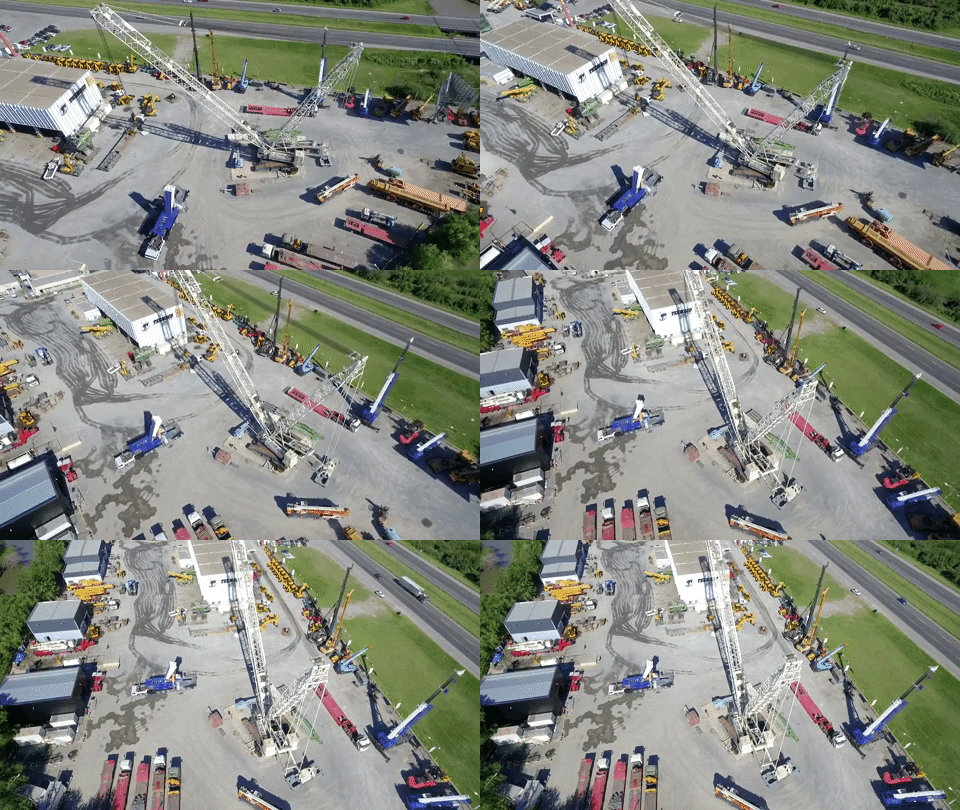
| Aspect | Positive Impact | Negative Impact / Challenge | Mitigation |
|---|---|---|---|
| Roadside Plantations | Reduces CO₂ & dust | Encroachment risk | Regulated green belts |
| Rain & Flooding | Ground water recharge | Erosion & potholes | Proper drainage & grading |
| Heat & Summer Expansion | Faster drying time | Bitumen softening | Polymer-modified bitumen |
| Winter & Fog | Low evaporation = durable surface | Visibility issues | Reflective markings & ITS |
| Construction Pollution | Employment generation | Dust & noise | Wet mix plants & barriers |
🏛️ Industry Unions & Authorities
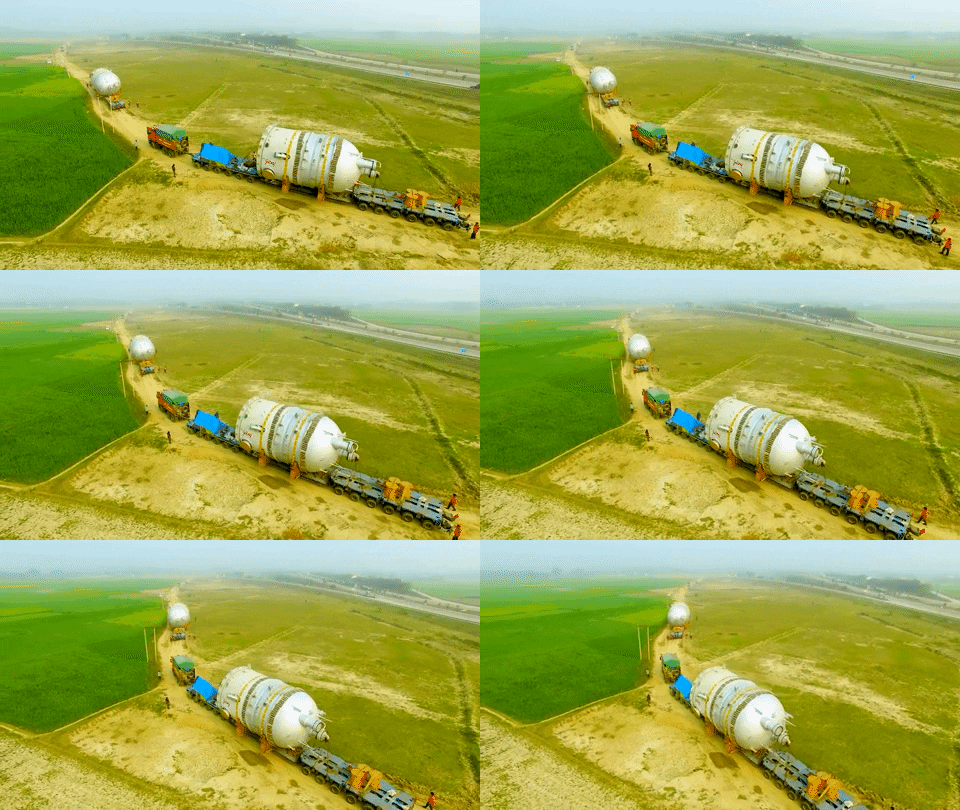
| Region | Key Authority / Union | Role |
|---|---|---|
| India | MoRTH, NHAI, IRC, CRRI | Policy, standards, testing |
| Global | World Road Association (PIARC), IRF (Global) | Research and best practices |
| Local Contractors | State PWD Associations | Tender representation & skill training |
| Labour Unions | Construction Workers Federation | Safety & welfare promotion |
⚖️ Advantages and Disadvantages
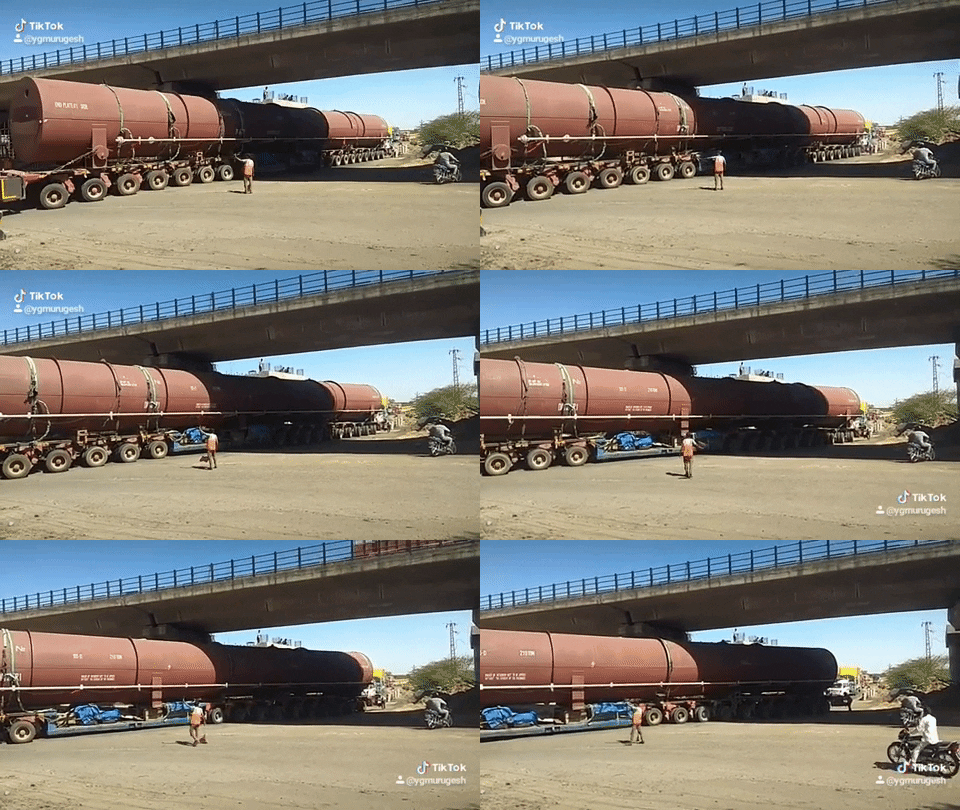
| Advantages | Disadvantages |
|---|---|
| Rapid connectivity for commerce and tourism | High maintenance and land cost |
| Employment generation and regional growth | Environmental degradation |
| Boost to logistics and industrial corridors | Traffic congestion if unplanned |
| Emergency response improvement | Accident risks and pollution |
📜 Legal & Compliance Framework (Local & Global)
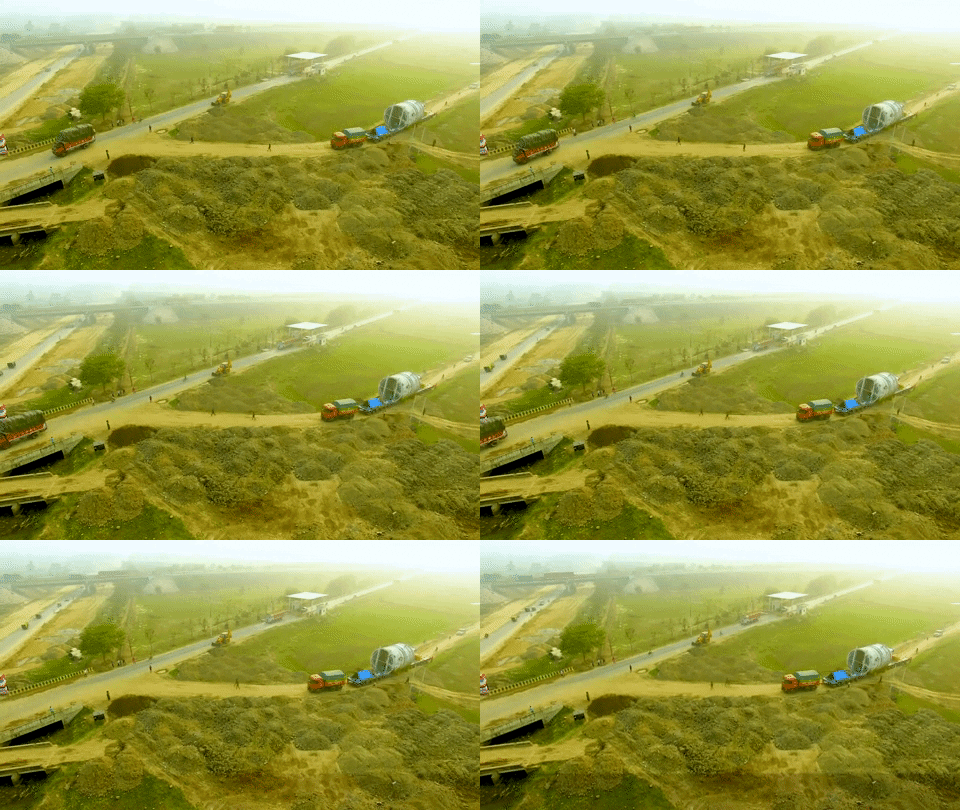
| Jurisdiction | Governing Acts / Standards | Certifications / Quality Norms |
|---|---|---|
| India | National Highways Act 1956, NHAI Act 1988, EIA Rules 2006 | IRC Codes, ISO 9001, ISO 14001 |
| EU | TEN-T Regulations, CE Marking | EN 206 Concrete Standards |
| USA | Federal Highway Administration (FHWA) | ASTM Standards |
| Global PPP | FIDIC Contracts & World Bank Procurement | ISO 45001 Safety Compliance |
🏛️ Government Support in India
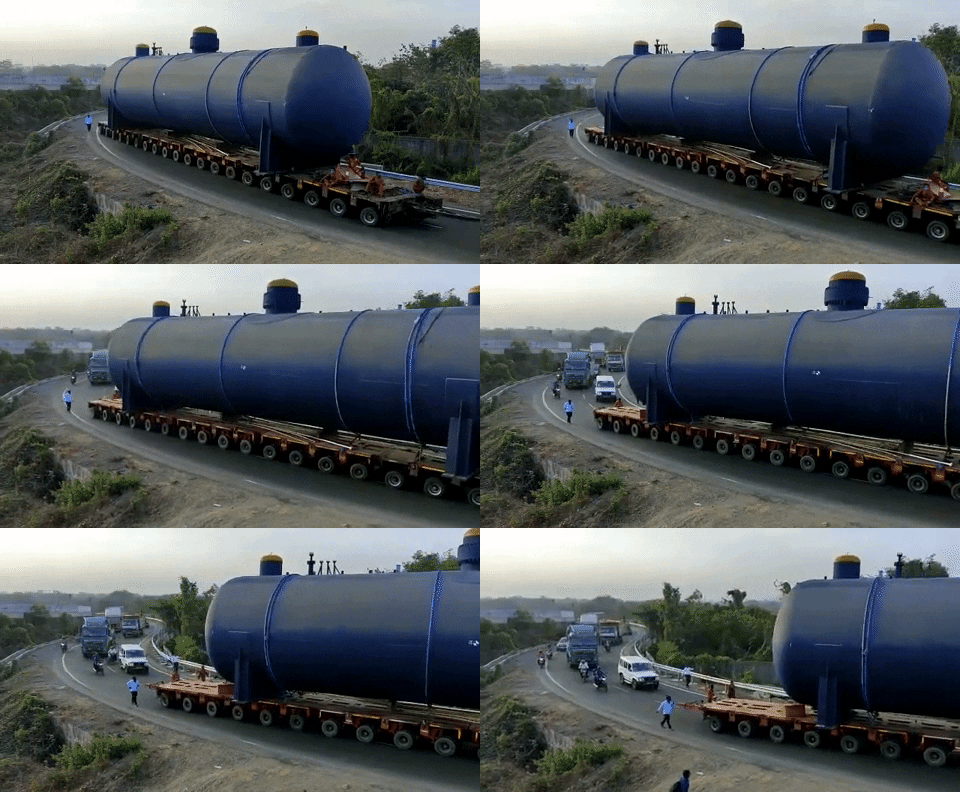
- Bharatmala Pariyojana: ₹5.35 lakh crore for 34 800 km corridors.
- PM Gati Shakti Mission: Integrated logistics infrastructure.
- NIP (National Infrastructure Pipeline): Predictable funding model.
- Make in India: Encourages indigenous road-equipment manufacturing.
🏗️ Highway Hubs and Market Centers (India)
| Region | Major Highway Hub | Peak Season | Industrial Focus |
|---|---|---|---|
| West | Mumbai-Pune, Vadodara, Ahmedabad | Oct – May | Manufacturing & Ports |
| North | Delhi-NCR, Ambala, Jaipur | Round year | Construction materials |
| South | Chennai, Bengaluru, Hyderabad | Dec – June | IT & Auto Corridors |
| East | Kolkata, Bhubaneswar | Oct – Feb | Mineral freight |
| Central | Nagpur, Raipur | Nov – June | Steel & Cement |
⚙️ Most Used Materials and Suppliers
| Material | Approx. Rate (₹/MT) | Major Suppliers | Use in Road Work |
|---|---|---|---|
| Bitumen VG-30 | 55 000 – 65 000 | IOCL, BPCL, HPCL | Surface layer |
| OPC Cement 43 grade | 7 000 – 8 500 | Ultratech, Ambuja, ACC | Concrete pavements |
| Coarse Aggregate | 1 200 – 1 800 | Local crushers | Base & sub-base |
| Steel Rebar TMT | 55 000 – 62 000 | Tata Steel, JSW | Bridge structures |
| Fly Ash | 0 – 500 (near plants) | NTPC & private | Eco-friendly mix |
📈 Market Trends & Growth Drivers
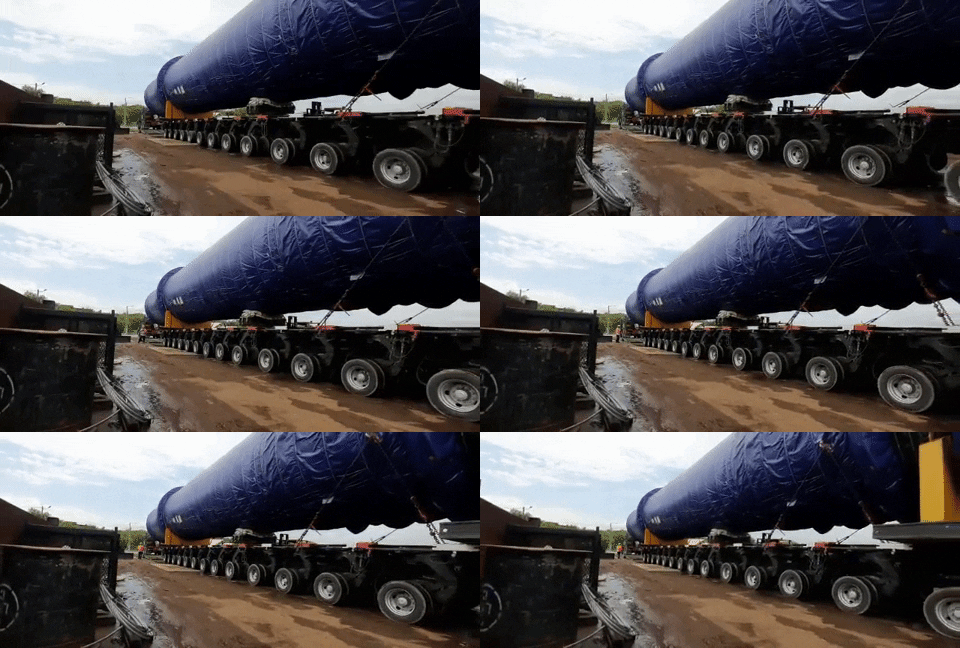
- Integration with EV charging corridors.
- Use of AI and IoT for asset monitoring.
- Recycling of plastic waste in bitumen mixes.
- Expansion of multimodal logistics parks (MMLPs).
- Private investment via InvIT and REIT models.
🧩 Regulatory Changes (India 2020–2025)
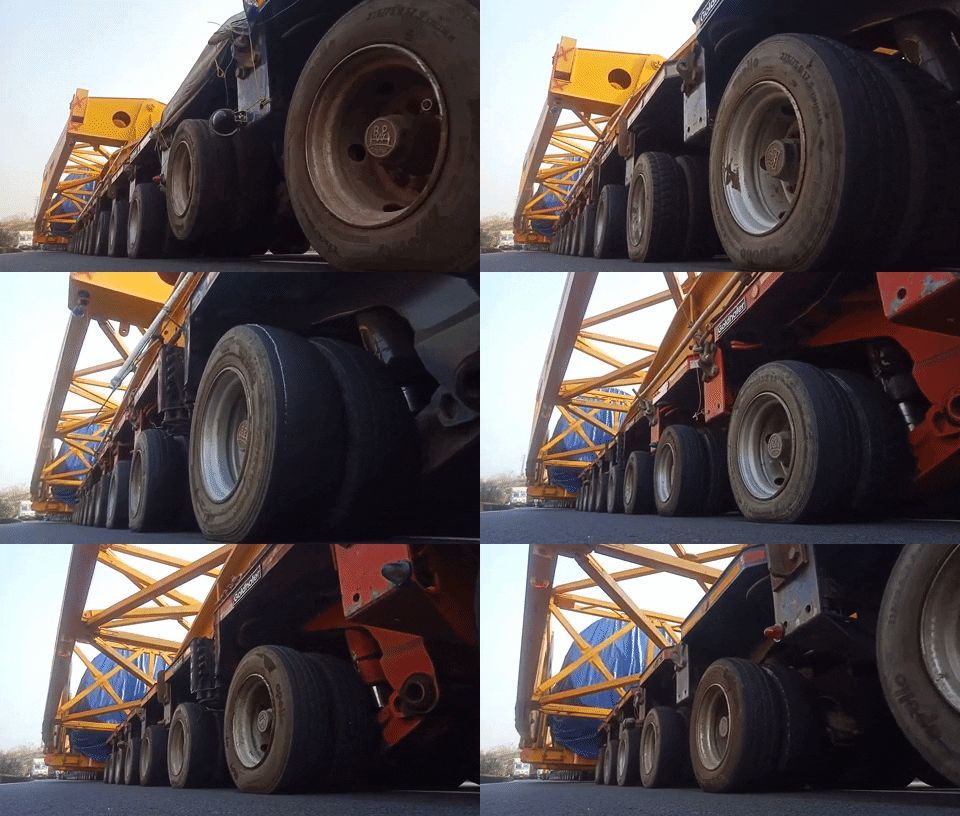
- Simplified land acquisition through digital records.
- 100 % foreign direct investment (FDI) allowed under automatic route.
- Mandatory use of FASTag for tolling.
- Transition to GPS toll collection under pilot testing.
🔮Industry Forecast (2025–2035)
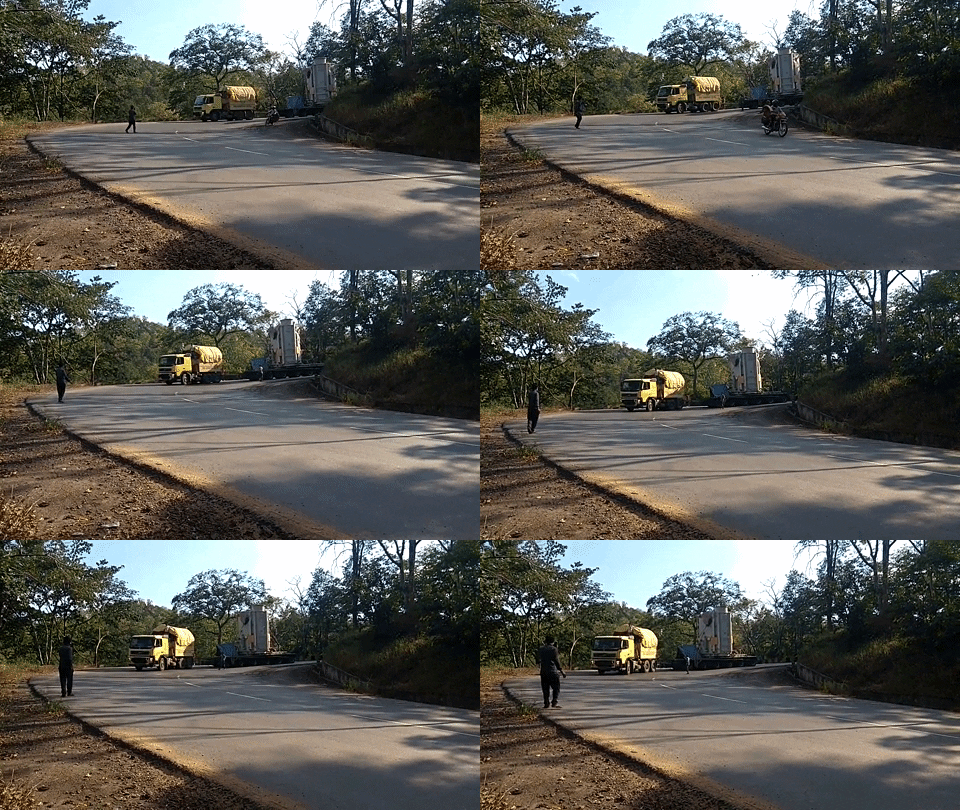
| Parameter | 2025 | 2030 Projection | Trend |
|---|---|---|---|
| Total network (km) | 6.6 million | 8.0 million | ↑ Expanding |
| Expressways (km) | 3 000 | 8 000 | ↑ 3× Growth |
| Average daily construction | 33 km/day | 50 km/day | ↑ Faster execution |
| PPP share in funding | 40 % | 55 % | ↑ Private involvement |
| Logistics cost (% of GDP) | 14 % | 8 – 9 % | ↓ Efficiency gain |
🤝 Stakeholders
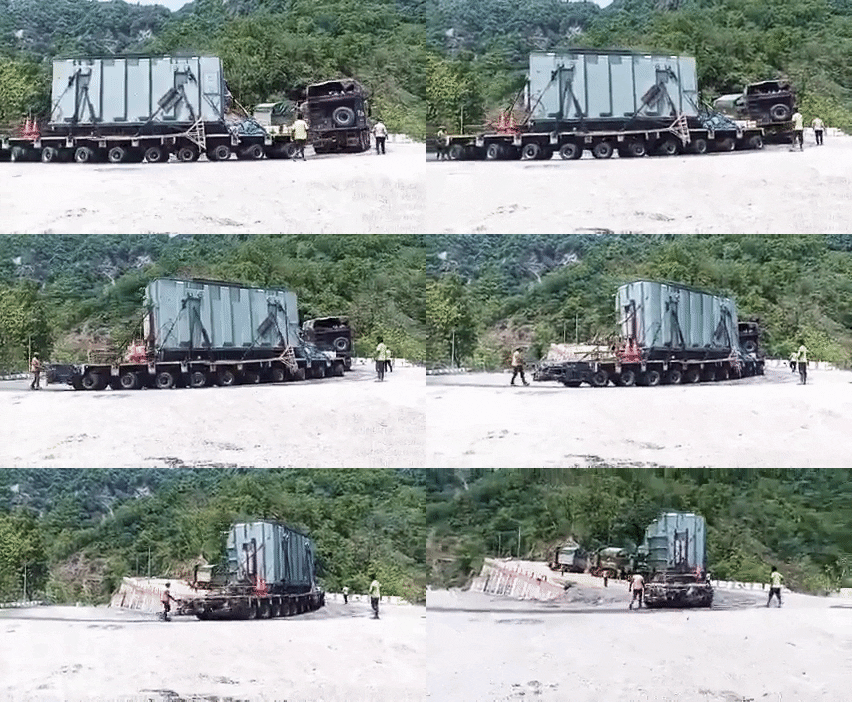
| Stakeholder | Responsibility |
|---|---|
| Government | Policy, funding, regulation |
| Contractors & EPC Firms | Design, construction, delivery |
| Financiers | PPP funding, bond markets |
| Transport Operators | Freight movement and maintenance |
| Citizens | Road usage and feedback ecosystem |
🧠 Problems & Innovative Solutions
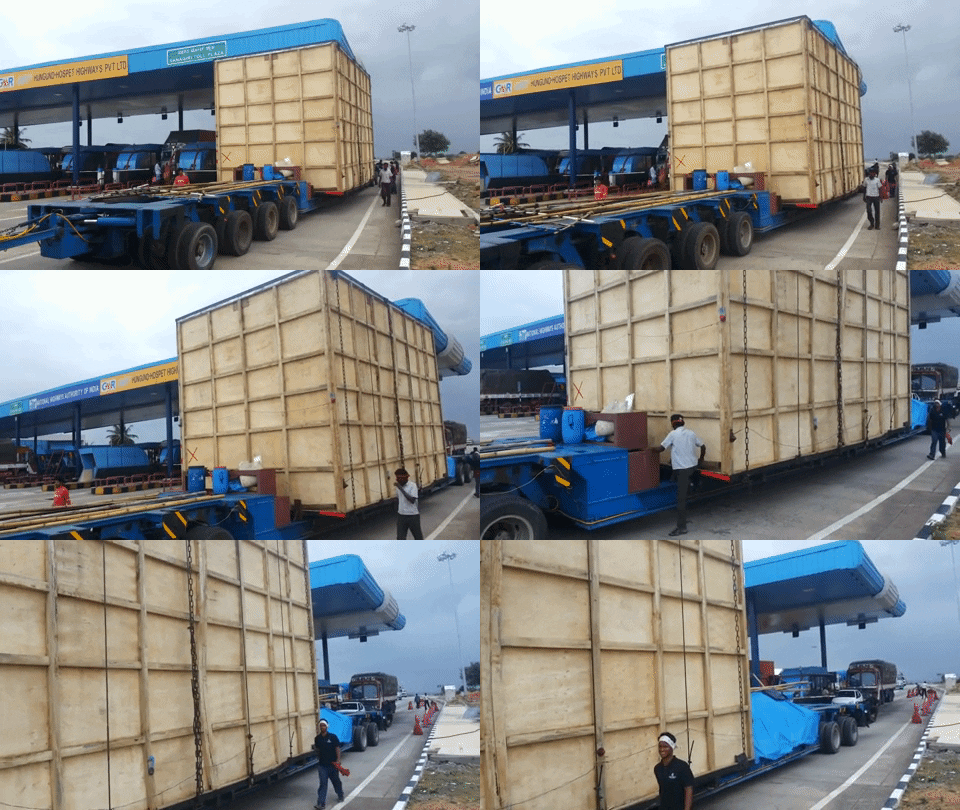
| Challenge | Innovation / Solution |
|---|---|
| Land acquisition delays | Digital mapping and consent portals |
| Maintenance backlog | Performance-based O&M contracts |
| Road safety issues | AI-enabled traffic monitoring |
| Funding gaps | Infrastructure InvITs & Green Bonds |
| Climate resilience | Porous pavements & bio-engineering |
🏬 Warehousing & Multimodal Logistics Integration
- Dedicated Freight Corridors linking roads with rail for containerised cargo.
- Development of Logistics Parks near NH-44, NH-48 corridors.
- ABCC India Project Cargo Corporation provides end-to-end heavy haul solutions for industrial components and bridge girders.
- Integration with port and airport connectivity for export-import cargo.
💰 Tax Policy Impact (India & Global)
| Tax Aspect | Impact on Road Projects |
|---|---|
| GST on Construction Inputs (18 %) | Increases upfront cost, offset via credit |
| Corporate Tax Reduction (25 %) | Boosts private developer profitability |
| Global Carbon Tax Norms | Push toward green materials |
| Toll Tax Revenues | Major source for O&M funding |
🗳️ Political Influence and Klash
- Policy continuity ensures investor confidence.
- Inter-state coordination vital for corridor linkages.
- Global initiatives like India-Middle East Economic Corridor (2023 G20) reshape regional politics around infrastructure.
🚀 Future of Roads & Highways Industry
- Smart sensor-driven roads with real-time data.
- EV-ready charging lanes.
- AI for maintenance prediction.
- Use of 3D printing for bridges and culverts.
- Rise of Green Highways and Carbon-Neutral Construction.
📚 Best Books on Roads and Highways
| Title | Author | Highlights |
|---|---|---|
| Highway Engineering | S.K. Khanna & C.E.G. Justo | Standard Indian reference |
| Transportation Engineering | L.R. Kadiyali | Design and planning concepts |
| Infrastructure Finance in India | Vivek Kulkarni | PPP models explained |
| The Road Taken | Henry Petroski | History of road engineering |
| Global Logistics & Supply Chains | John Mangan | Integration of transport systems |
🎬 Movies & Web Series on Infrastructure and Transport
| Name | Language | Theme | Inspiration |
|---|---|---|---|
| The Highwaymen | English | Pursuit & road journeys | Courage on the move |
| Mumbai Roads Documentary | Hindi | Urban mobility | Reality of city planning |
| Made in Heaven (S2 Segment) | Hindi | Construction ethics | Responsibility in growth |
| The Bridge (Broen/Bron) | Danish-Swedish | Cross-border infrastructure | Cooperation and tension |
🏁 Summary & ABCC India Message
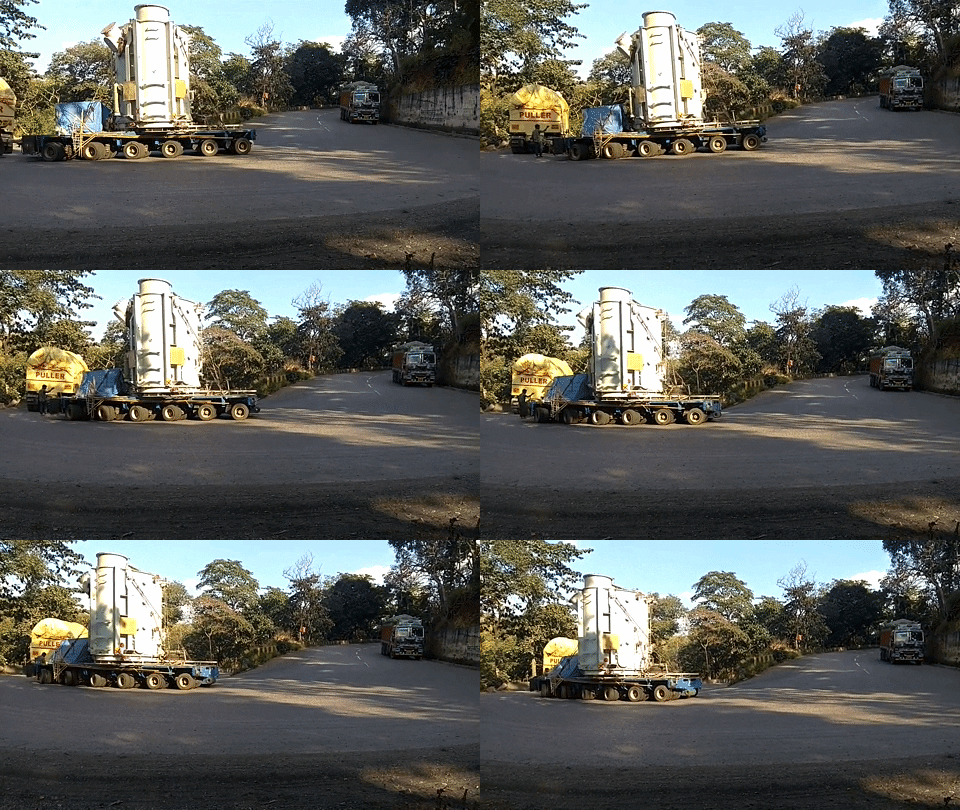
The Roads and Highways Industry is not just about concrete and bitumen; it is about connectivity, commerce, and culture. Every kilometre built creates opportunity for trade, employment, and development.
ABCC India Project Cargo Corporation salutes the engineers, truckers, labourers, and planners who turn maps into movement.
As India marches toward Vision 2047, ABCC remains the backbone of heavy haul and industrial logistics, ensuring that every bridge beam and turbine reaches its destination safely.