🚗 Who Started Volvo Automobile Company, When & Why?
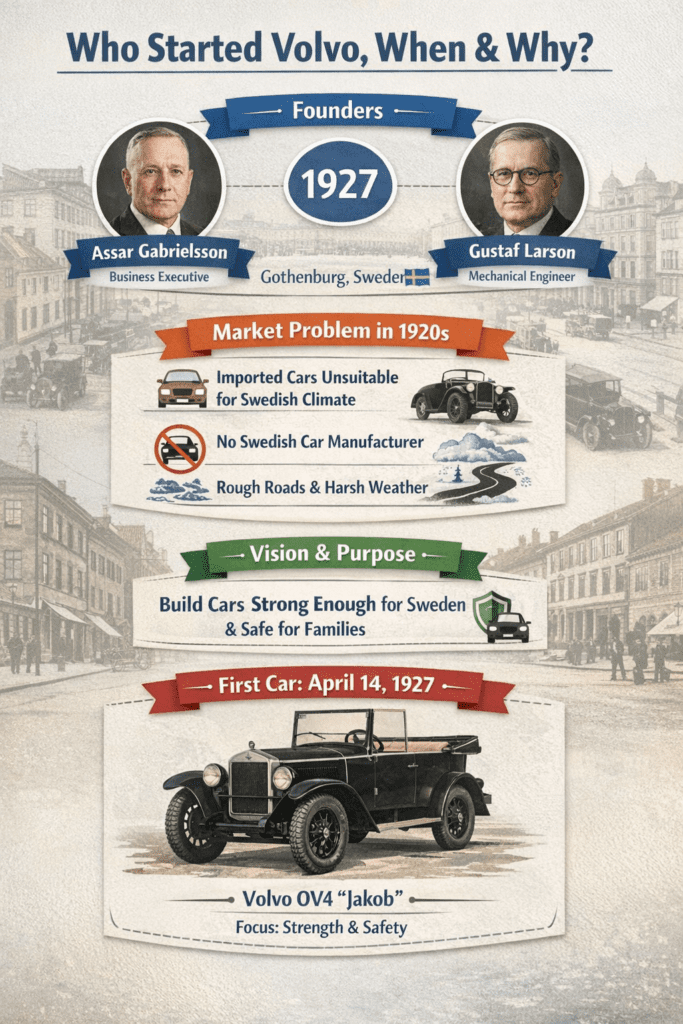
Volvo Automobile Company was started by Assar Gabrielsson and Gustaf Larson in the year 1927 in Gothenburg, Sweden. Assar Gabrielsson was a business professional working as a sales manager at SKF, a Swedish bearing company, while Gustaf Larson was a skilled mechanical engineer. Their partnership combined strong business vision with technical expertise, which laid the foundation for Volvo’s success.
In the 1920s, Sweden did not have its own strong automobile manufacturer. Most cars were imported from other countries, and those vehicles were not designed for Sweden’s harsh winters, rough roads, and extreme weather conditions. These imported cars often failed to perform well in the Nordic climate. Gabrielsson recognized this gap in the market and believed that Sweden needed a domestically produced car that was strong, reliable, and suitable for local conditions.
The idea behind starting Volvo was simple but powerful: build cars that could withstand Sweden’s challenging environment. Gabrielsson provided the financial support and business strategy, while Larson focused on designing a durable and high-quality automobile. Their goal was not just to manufacture cars, but to create vehicles that prioritized strength, reliability, and long-term performance.
On April 14, 1927, Volvo produced its first car, the Volvo OV4, also known as “Jakob.” Although the company started small and faced many early challenges, its clear focus on quality and safety helped it grow steadily. From the beginning, Volvo was built on the principle that cars are driven by people, and therefore safety should always come first. This philosophy later became Volvo’s strongest global identity.
In summary, Volvo was started in 1927 by Assar Gabrielsson and Gustaf Larson to solve a local market problem—Sweden needed strong and safe cars designed for its unique climate and road conditions. What began as a national solution eventually became one of the most respected automobile brands in the world.
🧑💼 Current Owner of Volvo Automobile Company
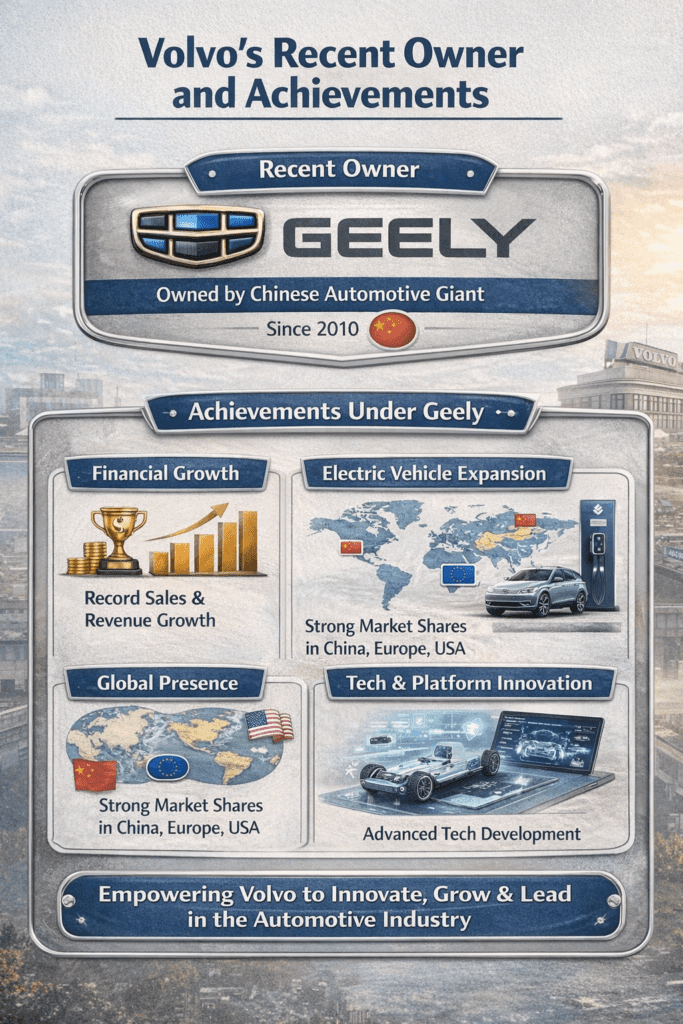
Volvo Cars is currently majority-owned by the Chinese automotive giant Geely. Geely acquired Volvo Cars from Ford Motor Company in 2010, in what was one of the largest overseas acquisitions by a Chinese automaker at the time. The agreement was completed on 2 August 2010, with Geely paying approximately US $1.8 billion in cash and notes to become the principal owner.
Since the acquisition, Volvo Cars has kept its headquarters and core R&D operations in Gothenburg, Sweden, while expanding its global manufacturing and sales footprint. Geely remains the dominant shareholder even after Volvo’s public listing on the Nasdaq Stockholm stock exchange in 2021, where a portion of Volvo Cars was offered publicly but Geely still retains majority control.
🏆 Key Achievements Under Geely Ownership
1. Global Sales Growth & Market Expansion
After Geely took over, Volvo Cars revived its global growth trajectory. Sales expanded significantly, breaking historic records in multiple regions including Europe, the U.S., and China. In 2015, Volvo sold over half a million cars worldwide for the first time in its history.
2. New Vehicle Architecture & Products
Under Geely, Volvo developed its Scalable Product Architecture (SPA) platform and launched a refreshed product lineup, including successful models such as:
- Volvo XC90 (premium SUV)
- New S90 and V90 series
These contributed to stronger brand relevance and better market positioning.
3. Focus on Electric Vehicles & Technology Leadership
Volvo aligned its strategy with future mobility trends by investing heavily in electric and hybrid vehicles, advanced safety systems, and sustainable automotive technologies. Partnerships and collaborations, including joint ventures with Geely for EV tech and shared platforms, accelerated innovation.
4. Strategic Control of Chinese Operations
In 2021, Volvo Cars agreed to take full ownership of its Chinese manufacturing and sales operations, strengthening its foothold in its largest market and enhancing operational control.
5. Strong Financial Performance & Public Listing
Volvo’s public listing on Nasdaq Stockholm in 2021 marked a significant milestone, boosting its global profile and allowing broader investment participation while maintaining majority ownership under Geely. Revenues and profits achieved record levels in recent years, demonstrating financial robustness.
Today, Volvo Cars is primarily owned by China’s Geely Holding Group, which purchased the company in 2010 and has since driven its transformation into a globally competitive automobile manufacturer. Major achievements under Geely’s ownership include global sales growth, strong financial performance, electrification strategy, expanded product lines, and operational expansion in key markets, all while retaining Volvo’s Swedish engineering identity.
🚗 Volvo Automobile Company – History
🏢 The Beginning of a Bold Swedish Vision (1927)
The journey of Volvo Cars began in Gothenburg, Sweden, in 1927. It was founded by two determined individuals — Assar Gabrielsson and Gustaf Larson. One was a business strategist, the other a brilliant engineer. Together, they shared a powerful idea: Sweden needed its own strong and reliable automobile.
In the 1920s, most cars in Sweden were imported and not designed for harsh Nordic winters, icy roads, and rough terrain. Gabrielsson believed that if Sweden could manufacture high-quality steel and bearings, it could also build world-class cars. Larson believed he could design vehicles strong enough to survive extreme conditions. Their partnership combined vision and engineering excellence — the perfect startup formula.
On April 14, 1927, the first Volvo car, the OV4 (nicknamed “Jakob”), rolled out of the factory. Sales were modest, and challenges were many. But the foundation was strong — literally and philosophically.
❄️ Strength Through Adversity
The early years were not easy. Volvo faced financial pressure, limited market recognition, and competition from established foreign brands. However, instead of competing on low price or flashy design, Volvo chose durability and quality.
This decision shaped its long-term identity. Volvo cars became known for:
- Strong chassis construction
- Reliable engines
- Long-lasting performance
The founders believed that short-term profit should never replace long-term reputation. That mindset helped Volvo survive when many early automobile startups disappeared.
🛡️ Safety Becomes a Global Promise
One of the most defining moments in Volvo’s history came in 1959. Volvo engineer Nils Bohlin invented the three-point seatbelt — a revolutionary safety device that has saved millions of lives worldwide.
Instead of keeping the patent for exclusive profit, Volvo made it available to all car manufacturers. This decision was not only ethical; it was strategic. It positioned Volvo as a company that values human life over commercial gain.
From that moment onward, safety became Volvo’s strongest brand pillar. Features like side-impact protection, child booster seats, and whiplash prevention systems reinforced the company’s reputation. Trust became Volvo’s most valuable asset.
🌍 Ownership Changes and Reinvention
Like many global companies, Volvo faced financial challenges and strategic shifts. In 1999, the company was acquired by Ford Motor Company, which helped expand its global footprint but also created dependency issues during Ford’s financial crisis.
In 2010, Volvo entered a new chapter when it was acquired by Geely. Many industry experts doubted whether Volvo would maintain its identity under new ownership.
However, this acquisition became a turning point for growth. With fresh investment and operational independence, Volvo redesigned its product lineup, launched highly successful SUVs like the XC series, and strengthened its position in China, Europe, and North America.
What seemed like uncertainty became a powerful opportunity for transformation.
🔋 Entering the Electric Era
Volvo has always evolved with the times. In recent years, it has aggressively invested in electrification and sustainability. The company announced its ambition to move toward a fully electric future and reduce its carbon footprint significantly.
Today, Volvo is developing advanced electric vehicles and sustainable manufacturing systems. Its mission now includes not only protecting passengers inside the car but also protecting the planet outside it.
This shift shows Volvo’s ability to adapt while remaining true to its core value: responsibility.
🌟 The Motivational Core of Volvo’s Story
Volvo’s history teaches an important lesson — success is not built overnight, and it is not built on shortcuts. It is built on consistency of purpose.
From a small Swedish startup in 1927 to a globally respected premium automobile brand, Volvo’s journey demonstrates:
- Clear vision creates direction
- Strong values create trust
- Innovation creates longevity
- Adaptation creates survival
Volvo did not try to be the fastest.
It did not try to be the loudest.
It chose to be the safest and most responsible.
That choice created a legacy.
💡 Final Inspiration
The story of Volvo reminds entrepreneurs and business leaders that:
- A company built on values will outlast trends.
- Ethical decisions can become competitive advantages.
- Challenges are opportunities in disguise.
- Reinvention is necessary, but identity must remain strong.
Volvo started by solving a local Swedish problem. Today, it protects millions of drivers worldwide.
Its journey proves a powerful truth:
When your mission is bigger than profit and your foundation is built on trust, even the toughest roads lead to lasting success.
🚗 Volvo Automobile Company Evolution
Volvo Cars has evolved from a small Swedish startup in 1927 to a global premium automobile leader. Below is a structured evolution chart showing major transformation phases.
📊 Volvo Evolution Timeline Chart
| Year / Period | Major Event | Strategic Focus | Business Impact |
|---|---|---|---|
| 1927 | Company founded by Assar Gabrielsson & Gustaf Larson | Durable cars for Swedish climate | Established Swedish automobile brand |
| 1930s–1940s | Expansion in domestic market | Reliability & engineering strength | Built strong local reputation |
| 1959 | Invention of three-point seatbelt by Nils Bohlin | Safety innovation | Global recognition for safety leadership |
| 1970s | Focus on crash safety research | Human protection systems | Strengthened premium safety positioning |
| 1990s | Global expansion & premium sedan growth | International market entry | Increased exports & brand value |
| 1999 | Acquired by Ford Motor Company | Platform sharing & global reach | Access to international resources |
| 2010 | Acquired by Geely | Financial revival & independence | Beginning of modern transformation |
| 2015–2018 | Launch of XC90 & SUV success | Premium SUV strategy | Record global sales growth |
| 2019 | Electrification commitment | Hybrid & EV transition | Positioned as future-ready brand |
| 2020–Present | Focus on fully electric future | Sustainability & AI safety | Strong EV portfolio & global competitiveness |
🔄 Evolution Phases Explained Briefly
🏗️ Phase 1: Foundation & Survival (1927–1950s)
- Built strong cars for tough Nordic conditions
- Established reputation for durability
🛡️ Phase 2: Safety Leadership (1959–1990s)
- Introduced life-saving safety innovations
- Became globally trusted family car brand
🌍 Phase 3: Global Expansion (1990s–2010)
- Entered new markets
- Acquired by Ford for global integration
🔋 Phase 4: Reinvention & Electrification (2010–Present)
- Acquired by Geely
- Massive investment in SUVs & electric vehicles
- Focus on sustainability and carbon-neutral future
🌟 Key Evolution Highlights
- From local Swedish manufacturer to global premium brand
- From durability-focused cars to safety-focused innovation leader
- From traditional combustion engines to electric mobility
- From survival mode to record-breaking financial growth
Volvo’s evolution reflects a powerful business principle:
Adapt to change, but never abandon core values.
From 1927 to today, Volvo has transformed technologically, financially, and strategically — while keeping safety and responsibility at its heart.
🚗 Volvo Automobile Company Contribution in the Automotive Industry
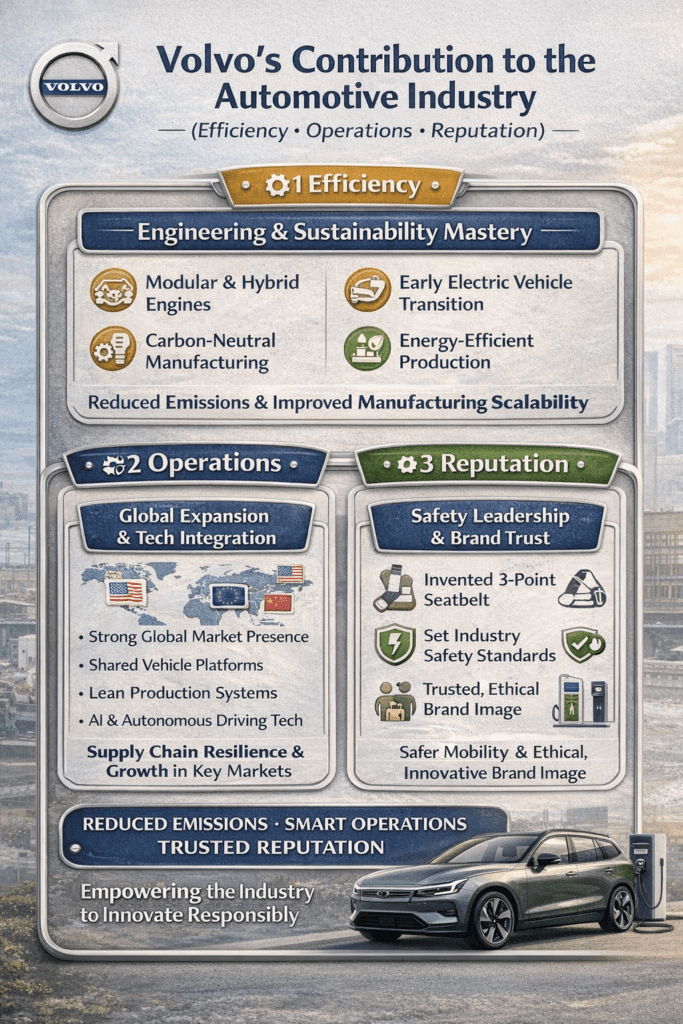
Volvo Cars has played a transformative role in the global automotive industry since 1927. While many car manufacturers compete on speed, luxury, or mass production, Volvo has built its influence through safety, operational discipline, engineering efficiency, and brand integrity.
Its contribution goes beyond selling cars — it has shaped how the industry thinks about human safety, responsible manufacturing, and long-term sustainability.
⚙️ 1️⃣ Contribution in Efficiency
🔧 Engineering Efficiency
Volvo has consistently improved vehicle efficiency by:
- Downsizing engines while maintaining power output
- Introducing turbocharged 4-cylinder platforms
- Investing in hybrid and electric drivetrains
- Improving fuel economy and emission standards
The company shifted from large multi-engine options to modular engine architecture, reducing manufacturing complexity while improving performance consistency.
🔋 Energy & Sustainability Efficiency
Volvo contributed to the industry by:
- Committing to electrification early
- Reducing lifecycle carbon emissions
- Using recycled and sustainable interior materials
- Investing in battery technology and EV platforms
Volvo’s efficiency focus is not just fuel efficiency — it includes environmental efficiency across the supply chain.
🏭 Manufacturing Efficiency
Under the ownership of Geely, Volvo improved global production efficiency through:
- Shared vehicle platforms
- Scalable architecture (SPA platform)
- Optimized global manufacturing plants
- Lean operational processes
This helped reduce production costs while maintaining premium quality standards.
🏗️ 2️⃣ Contribution in Operations
🌍 Global Operational Expansion
Volvo expanded strategically into key markets:
- Europe
- North America
- China
It adopted a global production model while maintaining Swedish design and engineering standards. This balance between localization and global integration strengthened operational resilience.
📊 Supply Chain Discipline
Volvo improved operational stability by:
- Strengthening supplier relationships
- Digitizing procurement processes
- Improving quality control systems
- Building crisis-ready logistics frameworks
During global disruptions such as economic downturns and semiconductor shortages, Volvo demonstrated adaptive operational planning.
🤖 Technology Integration in Operations
Volvo integrated:
- AI-based driver assistance systems
- Digital vehicle architecture
- Over-the-air software updates
- Smart factory automation
This modernization improved speed-to-market and product reliability.
🛡️ 3️⃣ Contribution in Reputation
💺 Safety Leadership
Volvo’s biggest contribution to the automotive industry is safety.
In 1959, engineer Nils Bohlin invented the three-point seatbelt. Instead of keeping it proprietary, Volvo made the patent open to all car manufacturers.
This decision saved millions of lives worldwide and permanently positioned Volvo as a moral and safety leader.
Other safety contributions include:
- Side-impact protection systems
- Child booster seats
- Pedestrian detection technology
- Advanced collision avoidance systems
Volvo set new global safety standards that competitors later adopted.
🌱 Ethical & Responsible Brand Image
Unlike performance-driven competitors such as Mercedes-Benz, BMW, or Audi, Volvo positioned itself around responsibility and protection rather than speed and prestige.
Its brand reputation is built on:
- Trust
- Transparency
- Long-term durability
- Family safety
This differentiation gave Volvo a strong emotional connection with consumers.
📈 Financial Reputation & Stability
Since its acquisition by Geely in 2010, Volvo has:
- Achieved record global sales
- Expanded its SUV portfolio
- Strengthened its electric vehicle strategy
- Maintained premium positioning
Its financial growth improved investor confidence and strengthened global credibility.
📊 Summary Chart – Volvo’s Industry Contribution
| Area | Volvo’s Contribution | Industry Impact |
|---|---|---|
| Efficiency | Modular engines, EV shift, sustainability focus | Reduced emissions & improved production scalability |
| Operations | Global expansion, platform sharing, lean systems | Strong supply chain & operational resilience |
| Reputation | Safety leadership, ethical innovation | Industry-wide adoption of safety standards |
| Sustainability | Carbon-neutral goals, electric roadmap | Accelerated green mobility transition |
🌟 Overall Industry Impact
Volvo has influenced the automotive industry in three major ways:
- It made safety a global priority, not an optional feature.
- It proved that ethical decisions can strengthen brand power.
- It demonstrated that efficiency and sustainability can coexist with premium positioning.
Volvo’s contribution to the automotive industry goes far beyond car production. It redefined what responsibility means in mobility. From pioneering life-saving safety technology to modern electric innovation, Volvo has consistently operated with purpose.
Its efficiency improvements strengthened manufacturing standards.
Its operational discipline ensured long-term growth.
Its safety leadership built one of the most trusted reputations in the industry.
Volvo’s journey proves that real industry impact comes not from being the fastest — but from being the most responsible.
🚗 Worldwide Evergreen Famous Volvo Models – Segment & Why
| Model Name | Launch Era | Segment | Body Type | Why It Became Evergreen | Global Impact |
|---|---|---|---|---|---|
| PV444 / PV544 | 1940s–1960s | Compact Family Car | Sedan | Strong build quality, reliable engine, affordable pricing | Built Volvo’s early export success, especially in the USA |
| Volvo Amazon | 1956–1970 | Mid-Size Sedan | Sedan | First car with standard 3-point seatbelt, stylish yet safe | Established Volvo as global safety leader |
| Volvo 240 | 1974–1993 | Mid-Size Family Segment | Sedan & Wagon | Extremely durable, high crash safety, long lifespan | Became symbol of reliability worldwide |
| Volvo 850 | 1991–1997 | Premium Mid-Size | Sedan & Wagon | Front-wheel drive innovation, side-impact protection | Modernized Volvo’s image in 1990s |
| Volvo S60 | 2000–Present | Compact Executive | Sedan | Balanced luxury, performance & safety tech | Strong competitor to BMW 3 Series & Audi A4 |
| Volvo S80 | 1998–2016 | Executive Luxury | Sedan | Premium comfort, flagship safety features | Helped Volvo enter luxury sedan market |
| Volvo XC90 | 2002–Present | Premium Mid-Size SUV | 7-Seater SUV | High safety ratings, spacious family SUV | Global bestseller & brand revival model |
| Volvo XC60 | 2008–Present | Compact Luxury SUV | SUV | Urban appeal, advanced safety, strong resale value | Highest-selling Volvo model worldwide |
| Volvo XC40 | 2017–Present | Compact Urban SUV | SUV | Youthful design, electric variant (Recharge) | Expanded Volvo’s younger customer base |
| Volvo EX90 | 2020s–Present | Premium Electric SUV | SUV | AI-based safety, sustainable materials, full electric | Represents Volvo’s EV transformation |
📊 Segment-Wise Contribution Overview
| Segment Category | Famous Model | Core Strength | Industry Contribution |
|---|---|---|---|
| Compact Family | PV444 | Durability | Established brand trust |
| Mid-Size Sedan | Amazon | Safety innovation | Popularized 3-point seatbelt globally |
| Family Wagon | 240 | Longevity | Set benchmark for durability |
| Premium Sedan | S60 / S80 | Comfort + Safety | Balanced luxury positioning |
| Luxury SUV | XC90 | Family safety | Revived Volvo’s global image |
| Compact SUV | XC60 / XC40 | Urban practicality | Dominated premium SUV market |
| Electric SUV | EX90 | Sustainability | Strengthened EV transition |
🌟 Why These Models Remain Evergreen
- Safety-first engineering
- Timeless Scandinavian design
- Long-term reliability
- Premium yet practical positioning
- Continuous technological upgrades
Volvo’s famous models became evergreen not because of speed or aggressive marketing, but because they delivered consistent trust, durability, and responsible luxury across generations.
🚛 How Big Is the Volvo Group?
First, it’s important to clarify: Volvo Group is different from Volvo Cars.
- Volvo Group makes trucks, buses, construction equipment, marine & industrial engines.
- Volvo Cars makes passenger cars and SUVs.
They have been separate companies since 1999.
📊 Size of Volvo Group (Global Scale)
🌍 Global Presence
- Operates in 190+ markets worldwide
- Manufacturing facilities in Europe, North America, South America, and Asia
- One of the world’s largest heavy-duty truck manufacturers
👥 Workforce
- Around 100,000+ employees globally
- Strong engineering and R&D workforce
- Major operations in Sweden, USA, France, India, Brazil, and China
💰 Financial Scale
- Annual revenue: Over SEK 500+ billion (varies by year)
- Strong profitability in trucks and construction equipment
- Among the top global commercial vehicle manufacturers
🚛 Business Segments
| Division | Business Area |
|---|---|
| Volvo Trucks | Heavy-duty & medium-duty trucks |
| Mack Trucks | North American truck brand |
| Renault Trucks | European commercial vehicles |
| Volvo Construction Equipment | Excavators, loaders, heavy machinery |
| Volvo Penta | Marine & industrial engines |
| Volvo Buses | Public transport buses |
🏆 Industry Ranking
Volvo Group is:
- Among the top 3 global heavy truck manufacturers
- A leading supplier of construction equipment worldwide
- A major player in sustainable transport solutions
📌 Simple Comparison
| Company | Main Business | Scale Type |
|---|---|---|
| Volvo Group | Trucks, buses, heavy equipment | Industrial giant |
| Volvo Cars | Passenger cars & SUVs | Premium automotive brand |
Volvo Group is not just a car company — it is a global industrial powerhouse in commercial vehicles and heavy machinery. With operations in nearly 200 markets and tens of thousands of employees, it stands as one of the most influential transportation and infrastructure companies in the world.
🚛 Volvo Group Subsidiaries – Chart Overview
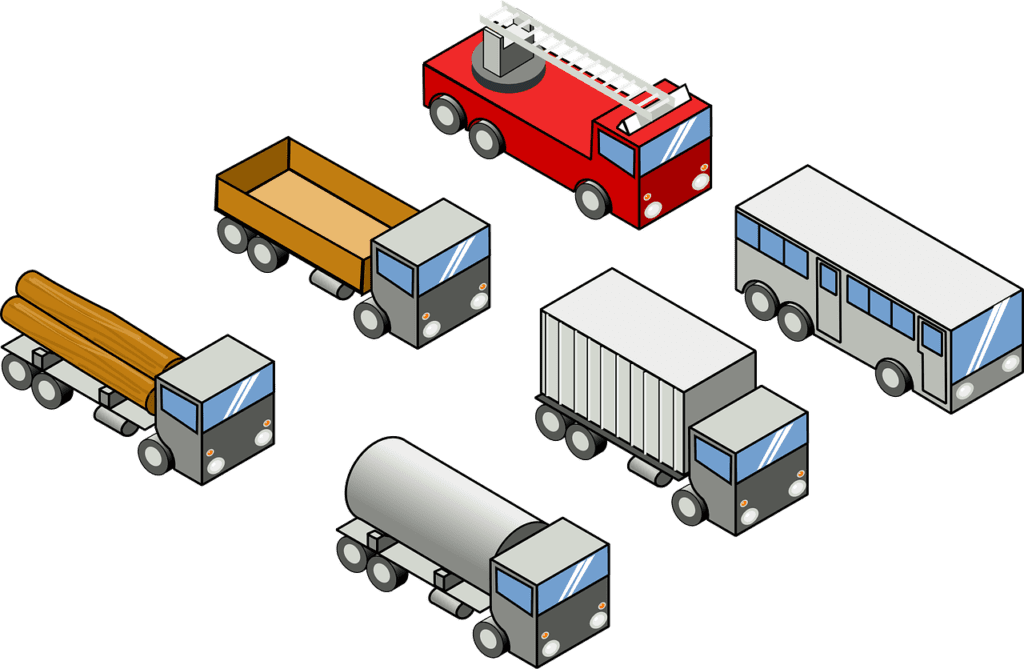
Below is a structured chart of major subsidiaries under Volvo Group. (Note: Volvo Group is separate from Volvo Cars.)
📊 Major Volvo Group Subsidiaries
| Subsidiary Name | Business Segment | Primary Market | Core Products / Services |
|---|---|---|---|
| Volvo Trucks | Commercial Vehicles | Global | Heavy-duty & medium-duty trucks |
| Mack Trucks | Commercial Vehicles | North America | Heavy-duty trucks |
| Renault Trucks | Commercial Vehicles | Europe | Medium & heavy-duty trucks |
| Volvo Construction Equipment (Volvo CE) | Construction Machinery | Global | Excavators, loaders, road equipment |
| Volvo Buses | Public Transport | Global | City & intercity buses |
| Volvo Penta | Marine & Industrial Engines | Global | Marine engines, industrial power systems |
| Arquus | Defense Vehicles | Europe | Military transport vehicles |
| Nova Bus | Public Transport | North America | Transit buses |
| Prevost | Luxury Coaches | North America | Motor coaches & touring buses |
| UD Trucks | Commercial Vehicles | Asia-Pacific | Heavy & medium trucks |
🚗 Volvo Cars Subsidiaries (Separate Company)
Under Volvo Cars (owned primarily by Geely):
| Subsidiary | Business Focus |
|---|---|
| Polestar (Joint Venture) | Electric performance vehicles |
| Volvo Car Financial Services | Vehicle financing & leasing |
| Volvo Car USA | North American passenger car operations |
| Volvo Car China | China market operations |
| Volvo Car India | Indian market operations |
🌍 Summary
Volvo operates through two major corporate structures:
1️⃣ Volvo Group – Global leader in trucks, buses, construction equipment, and industrial engines.
2️⃣ Volvo Cars – Premium passenger car and SUV manufacturer.
🚍 Volvo in Domestic Public Transport V/S Commercial Public & Goods Transportation
📊 Detailed Comparison Chart
| Comparison Factor | 🚌 Domestic Public Transport (Passenger Segment) | 🚛 Commercial Public & Goods Transportation |
|---|---|---|
| Main Objective | Moving people safely & comfortably | Moving goods, cargo & industrial materials |
| Vehicle Category | City Buses, Intercity Coaches | Heavy-Duty Trucks, Tippers, Trailers |
| Major Brand Entity | Volvo Buses | Volvo Trucks |
| Target Customers | Govt Transport Corporations, Private Bus Operators | Logistics Companies, Infra Firms, Mining Companies |
| Revenue Model | Ticket-based passenger fare | Freight-based transport contracts |
| Load Capacity | 40–55 passengers (City) / 45–60 (Coach) | 25–55 Tons (Depending on Truck Model) |
| Engine Focus | Smooth drive, lower vibration | High torque, heavy load pulling capacity |
| Comfort Level | High – AC, Recliners, Low-floor access | Moderate to High – Driver comfort cabin |
| Operating Routes | Urban Roads & Intercity Highways | National Highways, Mining Zones, Industrial Corridors |
| Fuel Efficiency Focus | Passenger efficiency per trip | Ton-kilometer efficiency |
| Technology | ABS, EBS, Passenger Safety, Air Suspension | I-Shift Gearbox, Engine Brake, Fleet Telematics |
| Economic Impact | Improves public mobility & tourism | Drives supply chain & industrial economy |
| Brand Positioning | Premium Passenger Mobility Brand | Heavy-Duty Industrial Performance Brand |
| Example Use | Airport Buses, State Transport Luxury Coaches | Container Transport, Cement Bulk, Petroleum Tankers |
📌 Quick Strategic Difference
| Segment | Strategic Role |
|---|---|
| Domestic Public Transport | Builds Brand Image & Public Trust |
| Commercial & Goods Transport | Builds Revenue & Industrial Strength |
🎯 Final Insight
- Passenger buses improve daily commuting comfort and safety.
- Commercial trucks power logistics, infrastructure, and national economic growth.
- Passenger segment builds visibility.
- Commercial segment builds profitability.
📊 Volvo Purchasing – Pros & Cons

| Purchase Factor | ✅ Pros of Buying Volvo | ❌ Cons of Buying Volvo |
|---|---|---|
| Brand Value | Globally trusted premium brand | Premium branding increases purchase price |
| Safety | Industry-leading safety features (strong chassis, ADAS, braking systems) | Advanced safety systems increase repair cost |
| Build Quality | Strong body structure, long lifespan | Parts replacement can be expensive |
| Engine Performance | Powerful engines, high torque (especially trucks) | Heavy-duty engines may consume more fuel |
| Comfort | Premium interiors, air suspension, driver-friendly cabin | Luxury components increase maintenance cost |
| Technology | Advanced telematics, automation (I-Shift in trucks) | Complex electronics require skilled service support |
| Reliability | Designed for long-haul and tough operations | Service network smaller than some mass brands |
| Resale Value | Strong resale value due to brand trust | Limited buyer pool in resale market (premium segment) |
| Commercial Productivity | High ton-km efficiency, better load performance | High initial capital investment |
| Public Image | Prestige ownership perception | Not suitable for low-budget operators |
| Warranty & Support | Structured fleet programs & service packages | Service packages may cost more |
| Long-Term Ownership | Durable for long operations | Higher upfront investment compared to competitors |
🚍 Passenger Segment – Quick Pros & Cons
| Aspect | Advantage | Limitation |
|---|---|---|
| Passenger Cars & Buses | High safety & luxury | Expensive compared to mass-market brands |
| Ride Quality | Smooth suspension & comfort | Higher maintenance of advanced systems |
| Brand Perception | Premium & reliable | Not budget-friendly |
🚛 Commercial Trucks – Quick Pros & Cons
| Aspect | Advantage | Limitation |
|---|---|---|
| Heavy-Duty Performance | Excellent torque & load capacity | High purchase price |
| Long-Haul Efficiency | Strong durability & highway performance | Spare parts cost higher |
| Driver Comfort | Ergonomic cabin reduces fatigue | Premium trucks require trained drivers |
🎯 Final Buying Insight
Best For:
- Fleet operators
- Heavy-duty logistics companies
- Premium vehicle buyers
- Long-distance transport businesses
Not Ideal For:
- Small budget operators
- Short-term or low-utilization buyers
- Buyers prioritizing lowest upfront cost
Volvo is a premium, safety-focused, performance-driven brand.
It demands higher investment but delivers strong durability and long-term value.
🚘 Why Trust Volvo?
When people think about trust in automobiles, one name that consistently stands out is Volvo Cars. For decades, Volvo has built its reputation on safety, durability, engineering excellence, and ethical business practices. Here’s why millions of customers worldwide continue to trust Volvo.
🛡️ 1️⃣ Safety Is Not a Feature — It’s the Foundation
Volvo is globally recognized as a pioneer in automotive safety.
- Invented the 3-point seatbelt (and made the patent free for public safety).
- Advanced driver assistance systems (ADAS).
- Strong crash-tested body structures.
- Collision avoidance & pedestrian detection systems.
Volvo’s philosophy has always been:
“Cars are driven by people. Therefore, safety must guide everything.”
This long-term commitment builds unmatched credibility.
🔧 2️⃣ Strong Engineering & Build Quality
Volvo vehicles are known for:
- High-strength steel body structures
- Durable engines built for long life
- Smooth suspension systems
- Long-haul reliability (especially in trucks)
Whether it’s a passenger car, bus, or heavy-duty truck, Volvo products are designed for tough conditions and long operational cycles.
🌍 3️⃣ Global Reputation & Heritage
Founded in Sweden in 1927, Volvo has maintained a strong European engineering heritage.
Today, Volvo operates worldwide and is owned by Geely, one of the largest global automotive groups. Despite ownership changes, Volvo continues to operate independently with strong Scandinavian design values and safety leadership.
Trust increases when a company has:
- Nearly 100 years of history
- Global presence
- Consistent quality standards
🚛 4️⃣ Dominance in Commercial & Industrial Segments
Through Volvo Group, Volvo is also a leader in:
- Heavy-duty trucks
- Construction equipment
- Mining vehicles
- Buses
When logistics companies, mining firms, and governments rely on Volvo for mission-critical operations, it reflects deep industrial trust.
💰 5️⃣ Long-Term Value & Resale Strength
Volvo vehicles maintain:
- Strong resale value
- Long operational lifespan
- Premium brand perception
Fleet operators trust Volvo because it delivers durability and performance even after years of heavy use.
🌱 6️⃣ Sustainability & Future Vision
Volvo is heavily investing in:
- Electric vehicles (EVs)
- Hybrid technology
- Carbon-neutral production goals
- Sustainable materials
Trust grows when a company prepares responsibly for the future.
👨✈️ 7️⃣ Driver & Passenger-Centric Approach
Volvo prioritizes:
- Driver comfort cabins (in trucks)
- Ergonomic seating
- Reduced fatigue technology
- Quiet cabin design
A brand that protects and values human life earns long-term trust.
📊 Quick Summary – Why People Trust Volvo
| Trust Factor | Why It Matters |
|---|---|
| Safety Leadership | Protects lives |
| Engineering Quality | Long-term reliability |
| Global Presence | Proven worldwide standards |
| Industrial Strength | Trusted in heavy-duty sectors |
| Sustainability Focus | Future-ready brand |
| Brand Transparency | Strong ethical history |
🎯 Final Conclusion
Volvo is trusted because it consistently prioritizes safety, durability, and responsibility over short-term profit.
From city commuters to mining operators, from families to fleet managers — Volvo has built confidence through decades of reliable performance and life-saving innovation.
Trust in Volvo is not built by marketing.
It is built by engineering, safety, and proven performance.
🎯 Conclusion
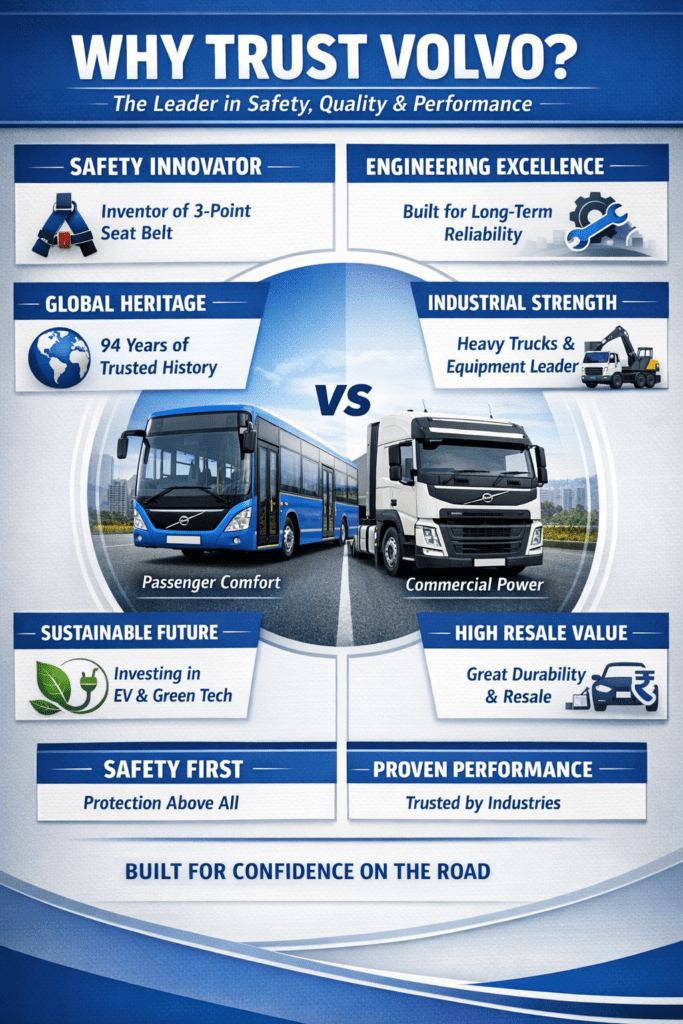
Volvo has earned global trust not through aggressive marketing, but through decades of consistent performance, safety leadership, and engineering excellence. From passenger cars to buses and heavy-duty trucks, Volvo has built a reputation for putting human life, durability, and long-term reliability first.
What makes Volvo different is its safety-first philosophy. The company didn’t just introduce safety innovations — it set industry standards that others followed. Whether it is advanced driver assistance systems in cars or stability and braking systems in heavy-duty trucks, Volvo continuously prioritizes protection and control.
In the commercial and goods transportation sector, Volvo proves its strength through powerful engines, high torque performance, and long-haul durability. Logistics companies, mining operators, and infrastructure firms rely on Volvo because downtime is costly — and reliability is critical. That industrial trust strengthens the brand’s credibility worldwide.
In domestic public transport, Volvo improves passenger experience with smooth suspension, comfort, and advanced safety systems. Governments and private operators choose Volvo buses for premium travel standards and dependable operation.
Yes, Volvo vehicles require a higher initial investment. However, the long-term value — in safety, durability, resale strength, and brand prestige — often justifies that cost. It is a brand suited for those who prioritize quality, protection, and long-term performance over short-term savings.
In simple words:
Volvo doesn’t just build vehicles.
Volvo builds confidence on the road.