🌍 Understanding the Bulker Transport Industry
The bulker transport industry forms a critical backbone of modern industrial logistics. Across the world, many industries rely on the movement of raw materials in bulk quantities. Unlike traditional freight transport, which often involves packaged goods or containerized shipments, bulker transportation deals with loose materials that are transported in specialized vehicles designed to handle powders, grains, chemicals, and other bulk commodities. These vehicles are commonly known as bulkers or bulk tankers.
Bulk transportation plays an essential role in industries such as cement manufacturing, agriculture, mining, power generation, food processing, and chemical production. These sectors require the regular movement of massive quantities of raw materials from production facilities to processing plants, warehouses, ports, and distribution centers. Without efficient bulker logistics systems, industrial supply chains would face significant disruptions.
In India, the bulker transport industry has grown rapidly over the past two decades due to increased infrastructure development, expansion of cement manufacturing, and growing agricultural exports. Large-scale infrastructure projects such as highways, airports, railways, and urban development projects require constant supplies of cement, fly ash, and other bulk materials. As a result, specialized bulker trucks have become an essential component of the logistics ecosystem.
Globally, bulk transportation is even more prominent because of international trade in commodities such as coal, iron ore, grains, fertilizers, and petroleum products. Countries with strong manufacturing economies depend heavily on bulk logistics systems to move large volumes of industrial materials efficiently. Bulk cargo is transported through multiple modes, including road transport, rail networks, and maritime shipping using large bulk carrier vessels.
Technological advancements have also transformed the bulker transport industry. Modern bulk vehicles now use pneumatic loading and unloading systems, automated silo integration, GPS tracking, and fleet management software. These innovations help improve efficiency, reduce material loss, and ensure safe handling of bulk commodities.
As industrial production continues to expand globally, the demand for reliable bulker transport services is expected to grow significantly. Logistics companies that operate specialized bulk transport fleets are becoming increasingly important partners in supporting manufacturing, construction, and agricultural supply chains worldwide.
📦 What is Bulker Transportation?
Bulker transportation refers to the movement of large quantities of loose materials that are transported without individual packaging. These materials are typically loaded directly into specially designed tanker-like trailers or silo-based transport vehicles. The purpose of bulker transportation is to move materials efficiently while minimizing packaging costs, manual handling, and contamination risks.
Bulk cargo is generally divided into two major categories: dry bulk and liquid bulk. Dry bulk materials include commodities such as cement, fly ash, grains, fertilizers, sand, minerals, and plastic granules. Liquid bulk materials include chemicals, petroleum products, edible oils, and other industrial liquids. Each type of material requires specific transportation equipment designed to maintain safety and product integrity during transit.
One of the biggest advantages of bulker transportation is its ability to handle very large volumes of material in a single trip. Bulk tankers often carry between 20 to 40 tons of cargo depending on vehicle configuration and regulatory limits. This makes bulk transport far more efficient than traditional bagged cargo transport.
In industrial supply chains, bulk transport vehicles typically operate between production facilities and storage locations. For example, cement bulkers transport powdered cement directly from cement plants to ready-mix concrete plants or large construction sites. Similarly, grain bulkers move agricultural produce from farms or storage silos to food processing facilities and export terminals.
Another important aspect of bulker transportation is the use of pneumatic unloading systems. Instead of manually unloading materials, compressed air systems push the cargo through pipes into storage silos or tanks. This process significantly reduces unloading time and minimizes labor requirements.
Bulker transportation also improves hygiene and product protection. Since materials are transported in sealed tanks or containers, they are protected from environmental contamination such as dust, moisture, or pests. This is especially important for food-grade materials such as grains and edible products.
Today, bulker transportation has become an integral part of modern logistics systems. Industries across the world rely on bulk transport fleets to maintain uninterrupted supply chains and ensure the efficient movement of large quantities of raw materials.
🚚 Types of Bulker Transport Vehicles
Bulker transport vehicles are specially designed to carry bulk materials safely and efficiently. These vehicles come in several configurations depending on the type of material being transported, the required capacity, and the unloading mechanism. Different industries use different types of bulkers to ensure that their materials are transported under appropriate conditions.
One of the most commonly used bulker vehicles is the cement bulker. Cement bulkers are designed to transport powdered cement from manufacturing plants to construction sites, ready-mix concrete plants, and distribution centers. These vehicles usually have cylindrical tanks and pneumatic discharge systems that allow cement to be unloaded directly into storage silos. Cement bulkers help reduce packaging costs by eliminating the need for cement bags.
Grain bulkers are another widely used type of bulk transport vehicle. These bulkers are used in the agricultural sector to transport commodities such as wheat, rice, corn, and barley. Grain bulkers are designed with special loading hatches and discharge mechanisms that ensure smooth loading and unloading without damaging the grains. Maintaining cleanliness and moisture control is particularly important when transporting agricultural products.
Chemical bulkers are used to transport industrial chemicals in both dry and liquid form. These vehicles are built with specialized materials that prevent chemical reactions or contamination. Chemical bulk transport requires strict safety regulations and careful handling to ensure that hazardous materials are transported safely.
Fly ash bulkers are commonly used by thermal power plants and cement industries. Fly ash is a fine powder produced during coal combustion in power plants. This material is often transported in bulk from power plants to cement factories or construction companies where it is used in concrete production.
Mineral bulkers are used to transport powdered minerals such as limestone, gypsum, coal dust, and other mining products. These vehicles are often used in mining regions where large volumes of minerals need to be transported from extraction sites to processing plants.
Modern bulkers are also equipped with advanced features such as GPS tracking systems, automated pressure monitoring, and high-capacity compressors for faster unloading. These technological improvements help logistics companies operate bulk transport fleets more efficiently and safely.
The availability of different types of bulk transport vehicles allows industries to select the most appropriate solution for their specific material handling requirements. As industrial demand continues to grow, the diversity and sophistication of bulker transport vehicles are also expected to increase.
🇮🇳 Bulker Transport Industry in India
The bulker transport industry in India has experienced remarkable growth over the past two decades due to rapid industrialization, infrastructure development, and expanding manufacturing sectors. Bulk transportation is essential for industries that require large volumes of raw materials to be moved efficiently across long distances. Materials such as cement, fly ash, grains, fertilizers, coal powder, plastic granules, and industrial chemicals are regularly transported through specialized bulker vehicles.
India’s construction boom has been one of the biggest drivers of bulker logistics demand. Major infrastructure projects including highways, metro rail systems, airports, ports, bridges, and large urban developments require constant supplies of cement and construction materials. Cement manufacturers rely heavily on bulk transport vehicles to move cement powder from production plants to ready-mix concrete plants and construction sites.
The power generation sector is another major contributor to bulker transport demand. Thermal power plants produce large quantities of fly ash as a byproduct of coal combustion. Instead of disposing of fly ash as waste, industries now transport it in bulk to cement manufacturing plants where it is used as an additive in cement production. Specialized fly ash bulkers equipped with pneumatic unloading systems make this process efficient and environmentally safe.
Agriculture also contributes significantly to bulk logistics in India. Grain bulkers are widely used to transport wheat, rice, maize, and other agricultural commodities from farms and storage silos to food processing plants, warehouses, and export terminals. Efficient bulk transport helps reduce food wastage and ensures smooth agricultural supply chains.
Several industrial corridors and economic zones across India have further boosted demand for bulk transportation. Corridors such as the Delhi Mumbai Industrial Corridor and Chennai Bengaluru Industrial Corridor have created major manufacturing hubs that require reliable logistics services. These corridors connect factories with ports, rail terminals, and distribution centers, making bulk transportation a critical component of industrial operations.
Technological advancements are also shaping the Indian bulker transport sector. Logistics companies are increasingly adopting GPS tracking, fleet management software, automated loading systems, and improved pneumatic unloading mechanisms. These technologies help improve operational efficiency, reduce transit time, and enhance cargo safety.
As India continues to expand its manufacturing and infrastructure sectors, the demand for bulk transportation services will continue to grow. Logistics companies operating modern bulker fleets are becoming essential partners in supporting the country’s industrial development.
🌍 Global Bulker Transport Market
The global bulker transport market plays a crucial role in supporting international trade and industrial production. Bulk transportation is widely used for commodities that are produced and consumed in large quantities. These commodities include coal, iron ore, cement, grains, fertilizers, petroleum products, and industrial chemicals.
Globally, bulk cargo is transported through three main modes: road transport, rail transport, and maritime shipping. Each mode plays a specific role in the overall bulk logistics ecosystem. Maritime shipping is typically used for transporting bulk commodities between countries and continents, while rail and road transport handle domestic distribution.
Large ocean vessels known as bulk carriers transport enormous quantities of commodities across international waters. These ships are capable of carrying hundreds of thousands of tons of cargo in a single voyage. Bulk shipping is particularly important for global trade in minerals, energy resources, and agricultural products.
However, road-based bulk transport is equally important because it connects factories, warehouses, ports, and distribution centers. Even when commodities arrive at ports through maritime shipping, they must still be transported inland using trucks or rail networks. This is where bulk transport vehicles such as cement bulkers, grain bulkers, and chemical tankers become essential.
Many developed economies rely heavily on advanced bulk transport systems to support industrial supply chains. Countries such as the United States, Germany, China, Japan, and South Korea operate sophisticated bulk logistics networks that integrate road transport, rail freight, and port infrastructure.
Automation and digital technology are also transforming global bulk transportation. Fleet tracking systems, automated loading facilities, and real-time cargo monitoring technologies have significantly improved efficiency and safety in bulk logistics operations. Many logistics companies now use advanced data analytics to optimize routes, reduce fuel consumption, and improve delivery schedules.
Sustainability is another important factor shaping the future of bulk transport globally. Governments and logistics companies are exploring environmentally friendly solutions such as LNG-powered trucks, electric vehicles, and improved fuel efficiency technologies. These initiatives aim to reduce emissions and promote sustainable logistics operations.
With global trade volumes continuing to grow, the demand for efficient bulk transportation systems will remain strong. Bulk logistics will continue to play a key role in supporting global industrial supply chains.
🏭 Industries Dependent on Bulker Transport
Many major industries depend heavily on bulker transport systems to move raw materials efficiently. Bulk transportation allows these industries to move large quantities of materials quickly, reducing packaging costs and improving supply chain efficiency.
The cement industry is one of the largest users of bulker transportation. Cement plants produce massive quantities of powdered cement that must be delivered to construction companies, ready-mix concrete plants, and infrastructure projects. Transporting cement in bags would be inefficient and costly, which is why cement bulkers are widely used. These vehicles transport cement directly from factory silos to storage facilities at construction sites.
The agriculture industry also relies extensively on bulk transportation. Farmers and grain storage facilities transport commodities such as wheat, rice, corn, barley, and soybeans in bulk vehicles. Grain bulkers are designed to protect agricultural products from moisture, pests, and contamination during transit.
Power generation plants are another major contributor to bulk transport demand. Thermal power plants produce fly ash as a byproduct of coal combustion. Instead of disposing of fly ash, industries transport it in bulk to cement plants where it is used as a valuable construction material. Specialized fly ash bulkers are used for this purpose.
The chemical industry also depends on bulk transport vehicles for moving industrial chemicals between production facilities. Chemical bulkers must meet strict safety standards because many chemicals can be hazardous if not handled properly. These vehicles are designed with corrosion-resistant materials and specialized containment systems.
Mining and mineral industries also require bulk transportation for moving powdered minerals and raw materials such as limestone, gypsum, coal dust, and metal ores. These materials are often transported from mining sites to processing plants or export terminals.
Food processing industries rely on bulk transport systems for transporting ingredients such as flour, sugar, salt, and other powdered food products. Maintaining hygiene and contamination control is especially important when transporting food-grade materials.
The reliance of these industries on bulk transport highlights the importance of efficient logistics infrastructure. Bulk transportation systems ensure that industrial supply chains remain uninterrupted and cost-effective.
🚛 Bulker Truck Capacity and Specifications
Bulker trucks are designed to transport large volumes of loose materials safely and efficiently. These vehicles are typically built with cylindrical or silo-shaped tanks that allow powdered or granular materials to flow easily during loading and unloading. The capacity of bulker trucks varies depending on vehicle size, design, and regulatory limits on road transport.
Small to medium-sized bulkers usually have a capacity of around 20 to 25 tons. These vehicles are commonly used for transporting materials between factories and nearby distribution points. Their relatively compact size makes them suitable for operations in areas with limited road space or smaller loading facilities.
Larger bulkers can carry between 30 and 35 tons of material. These high-capacity vehicles are commonly used for long-distance transportation between major industrial facilities. Large cement plants and power generation facilities often use these bulkers to transport materials across states or regions.
Some bulkers are designed with multi-compartment tanks. These vehicles allow different types of materials to be transported simultaneously without mixing. Multi-compartment bulkers are especially useful for transporting different grades of cement or multiple types of powdered chemicals.
Bulker trucks are also equipped with specialized pneumatic systems that enable efficient unloading. Air compressors installed on the vehicle generate compressed air that pushes bulk materials through discharge pipes into storage silos or tanks. This system eliminates the need for manual unloading and significantly reduces unloading time.
Modern bulker trucks are also equipped with advanced safety and monitoring systems. Pressure gauges monitor internal tank pressure during unloading operations, while temperature sensors help ensure that materials are transported under safe conditions.
Fleet operators also install GPS tracking devices on bulker vehicles to monitor location and route progress. This helps logistics companies track deliveries in real time and improve operational efficiency.
The design and capacity of bulker trucks play a crucial role in ensuring efficient bulk transportation. By selecting the appropriate vehicle configuration, logistics companies can optimize load capacity, reduce transportation costs, and improve delivery reliability.
🚀 Future of Bulker Transport Industry
The future of the bulker transport industry looks highly promising as industrial growth continues to expand worldwide. Increasing demand for construction materials, agricultural commodities, and industrial chemicals will continue to drive the need for efficient bulk logistics systems.
One of the biggest trends shaping the future of bulk transport is digital transformation. Logistics companies are increasingly adopting advanced fleet management systems that allow them to monitor vehicle performance, fuel consumption, and delivery schedules in real time. Data analytics tools help optimize routes and reduce operational costs.
Automation is also transforming bulk transport operations. Many factories now use automated silo loading systems that allow bulk materials to be loaded directly into bulker trucks without manual intervention. Automated unloading systems also help improve efficiency at storage facilities and processing plants.
Sustainability will play an increasingly important role in the future of bulk logistics. Governments around the world are introducing stricter environmental regulations to reduce emissions from transportation vehicles. As a result, logistics companies are exploring alternative fuels such as LNG, CNG, and electric power for bulk transport fleets.
Infrastructure development will also support the growth of bulk transport systems. New highways, dedicated freight corridors, and improved port infrastructure will help reduce transit times and improve connectivity between industrial regions.
Global trade will continue to influence bulk logistics demand. As countries increase their production of commodities such as minerals, grains, and chemicals, the need for efficient transportation systems will become even more critical.
Overall, the bulker transport industry is expected to remain an essential component of industrial supply chains. Companies that invest in modern fleets, digital technology, and sustainable transport solutions will be well positioned to lead the future of bulk logistics.
🚛 Conclusion:

The global logistics and transportation industry is evolving rapidly as industries expand, infrastructure projects increase, and supply chains become more interconnected. From construction materials and agricultural commodities to chemicals, minerals, and industrial products, businesses require reliable transportation systems capable of moving large quantities of goods safely and efficiently. Bulker transport has emerged as one of the most essential components of this ecosystem because it enables the cost-effective movement of bulk materials such as cement, fly ash, grains, fertilizers, plastic granules, and powdered minerals.
However, modern industries require more than just a single type of transport service. Today’s businesses look for logistics partners that can provide complete trucking solutions under one roof, ensuring that every type of cargo—whether bulk, containerized, oversized, or general freight—can be handled efficiently without relying on multiple service providers. This is where integrated logistics companies play a crucial role by offering comprehensive transportation solutions that simplify supply chain management.
A one-window trucking solution provides significant advantages for businesses. Instead of coordinating with multiple transporters, companies can rely on a single logistics partner to manage the entire transportation process. This includes bulk cargo movement, full truckload shipments, heavy equipment transport, specialized trailers, and customized logistics planning. Such integrated services improve operational efficiency, reduce administrative complexity, and ensure better control over delivery schedules.
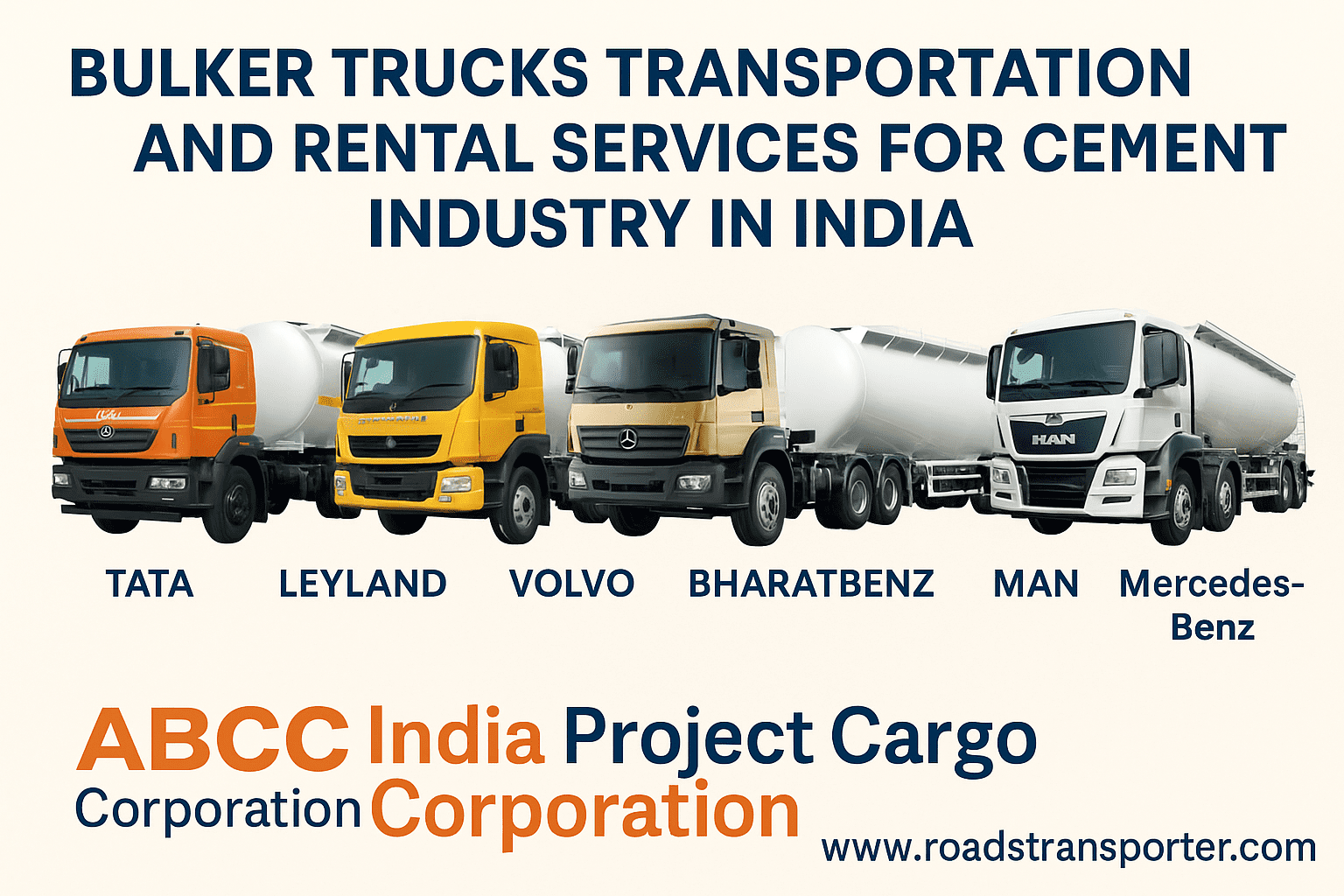
In this evolving logistics environment, ABCC INDIA PROJECT CARGO CORPORATION stands out as a dependable partner offering complete trucking and bulker transportation solutions across India. With a strong focus on industrial logistics, the company provides services designed to meet the needs of diverse sectors including cement manufacturing, power generation, agriculture, construction, chemicals, and infrastructure development.
ABCC provides bulker transportation services for bulk materials such as cement, fly ash, minerals, and industrial powders using specialized bulker vehicles equipped with modern pneumatic unloading systems. In addition to bulk logistics, the company also supports a wide range of trucking solutions including general cargo transport, heavy equipment movement, project cargo logistics, and long-distance freight services. This integrated approach allows businesses to access multiple logistics services through a single reliable provider.
By combining industry expertise, modern fleet capabilities, and efficient logistics planning, ABCC offers a complete one-window transportation solution that supports both domestic and industrial supply chains. Businesses that partner with such logistics providers benefit from streamlined operations, improved delivery reliability, and reduced transportation costs.
As industrial growth continues to accelerate across India and globally, the importance of professional trucking and bulker logistics services will only increase. Companies that offer integrated transportation solutions will play a key role in supporting industrial development and ensuring the smooth movement of essential materials.
For industries seeking reliable logistics support, ABCC INDIA PROJECT CARGO CORPORATION provides a comprehensive one-window solution for all trucking and bulker transport requirements, helping businesses move materials efficiently, safely, and cost-effectively across the country.

