DOMESTIC OVER DIMENSIONAL CARGO TRANSPORTATION IN INDIA
Introduction: The Backbone of India’s Heavy Industrial Development
Over Dimensional Cargo Transportation in India is one of the most specialized segments of the road freight, heavy haulage and project logistics industry. It supports the movement of large industrial machinery, power generation equipment, refinery components, wind turbine structures, mining machinery, infrastructure materials and other indivisible loads that cannot be accommodated within normal vehicle dimensional limits.
When a manufacturing plant needs to move a large transformer from Gujarat to a power project in Uttar Pradesh, the assignment involves considerably more than hiring a truck. The transport team must understand the cargo’s weight, height, width, length, centre of gravity, support points, road conditions, bridge capacities, government permissions and unloading requirements.
A similar challenge arises when a wind turbine manufacturer needs to deliver long blades to a remote installation site, or when a refinery contractor must move a pressure vessel through congested industrial roads.
The importance of ODC transportation becomes even greater when the cargo must cross international borders into Nepal, Bhutan or Bangladesh, or travel by sea to Sri Lanka and Maldives.
Across South Asia, specialized cargo transportation connects industrial production centres with infrastructure development sites.
What Makes ODC Transportation Different?
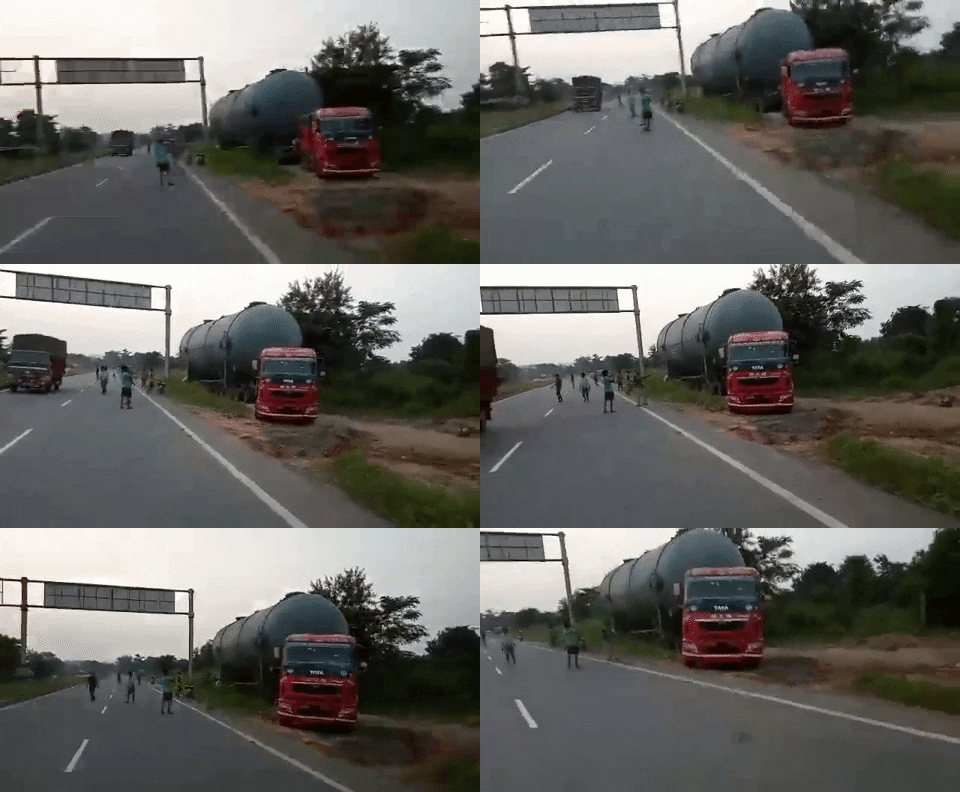
Conventional road freight transportation generally involves vehicles operating within prescribed dimensional and weight limits. ODC transportation may require a special transport configuration, a route-specific feasibility assessment, permission from relevant authorities and a carefully managed movement plan.
The distinction is not simply the size of the machinery. The complete loaded transport combination must be evaluated.
A cargo item measuring 10 metres in length might travel on a suitable vehicle without exceeding applicable limits. Another item with a shorter length but excessive width or height may require ODC classification and special movement arrangements.
The transporter’s responsibility is to determine the correct legal and engineering requirements for each shipment.
Major Industrial Applications

| Industrial sector | Typical ODC cargo | Transportation requirement |
|---|---|---|
| Thermal power | Generators, turbines, transformers | Heavy haulage |
| Hydropower | Turbine runners, generators, penstocks | Heavy haulage and mountain-route survey |
| Wind energy | Blades, towers, nacelles | Extendable and specialized trailers |
| Solar energy | Large transformers and power equipment | Lowbed or modular trailer |
| Oil refineries | Reactors, columns, pressure vessels | Heavy and over-dimensional movement |
| Petrochemicals | Process modules, separators | Specialized trailers |
| Cement plants | Kiln shells, mill equipment | Long-load transportation |
| Steel plants | Furnace shells, rolling mill equipment | Heavy machinery movement |
| Mining | Crushers, excavators, large components | Heavy haulage |
| Rail infrastructure | Bridge girders, equipment | Long-load and heavy-lift logistics |
| Metro projects | Tunnel boring machine components | Modular heavy transport |
| Ports | Cranes, fabricated structures | Heavy-lift and multimodal transport |
| Shipbuilding | Hull sections, industrial modules | SPMT and heavy transport |
| Defence manufacturing | Specialized equipment and structures | Project-specific regulated movement |
| Construction | Precast beams and large structures | Bolster and long trailers |
What Is Over Dimensional Cargo?
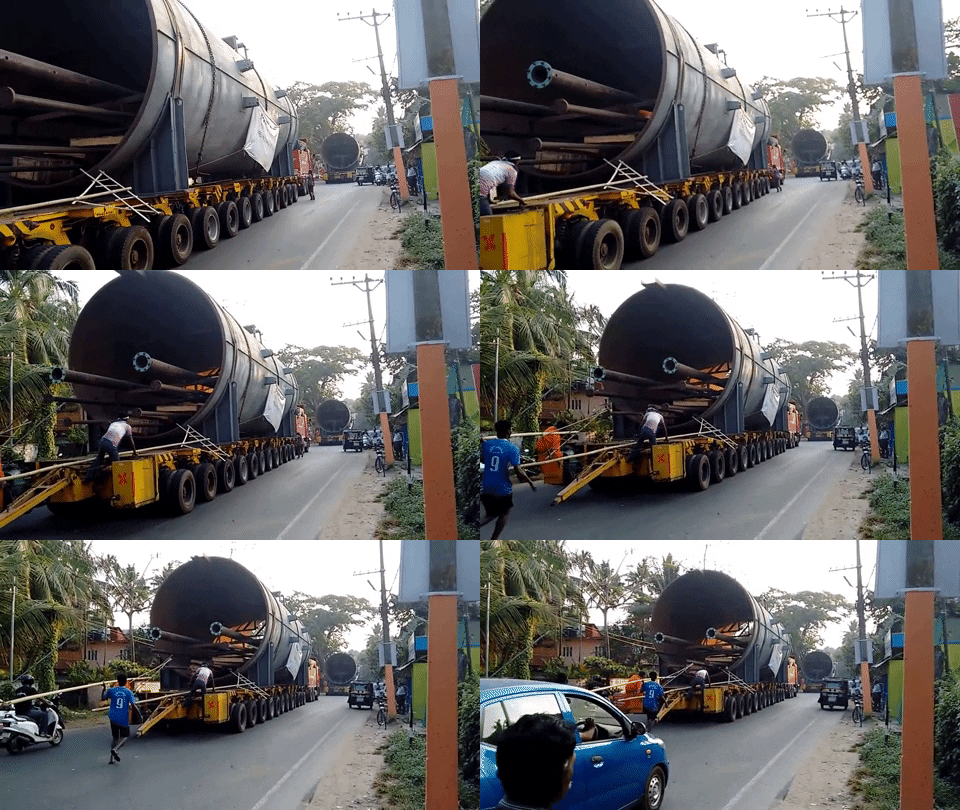
Over Dimensional Cargo (ODC) is a term used for an indivisible cargo unit whose transportation exceeds applicable vehicle dimensional limits.
In India, the GST e-way bill framework expressly connects ODC classification to the dimensional limits under Rule 93 of the Central Motor Vehicles Rules, 1989. TGC थाने
The actual dimensions of the cargo and the loaded vehicle are both important.
Dimensions Used in ODC Assessment
Length
Overall longitudinal dimension, including cargo projection and transport configuration.
Width
Maximum lateral dimension of the loaded combination, including projections.
Height
Total loaded height from road surface to the highest point.
Weight
Cargo mass, gross vehicle weight and individual axle or axle-row loads.
ODC, OWC, OOG and Heavy Lift Cargo
| Category | Full form | Explanation |
|---|---|---|
| ODC | Over Dimensional Cargo | Exceeds applicable dimensions |
| OWC | Over Weight Cargo | Exceeds applicable weight limits |
| OOG | Out of Gauge | Exceeds standard equipment envelope, commonly in shipping |
| Heavy Lift Cargo | — | Requires specialized lifting equipment |
| Breakbulk Cargo | — | Transported as individual pieces rather than in standard containers |
| Project Cargo | — | Cargo forming part of a larger industrial project |
| Super Heavy Cargo | — | Commercial description of exceptionally heavy cargo |
| Long Cargo | — | Cargo presenting significant longitudinal handling challenges |
| Wide Load | — | Cargo exceeding applicable width limits |
| High Load | — | Cargo exceeding applicable height limits |
These terms overlap but are not interchangeable.
Types of ODC Cargo by Shape, Weight and Industrial Application
Long-Length ODC Cargo
Long-length cargo creates problems related to turning radius, rear overhang, swept path and road alignment.
Typical examples include wind turbine blades, bridge girders, steel beams, fabricated structures, industrial pipes and large tower sections.
Main challenges: Negotiating sharp turns, roundabouts, narrow bridges, toll plazas and industrial gates.
Common equipment: Telescopic trailers, bolster trailers, steerable dollies and specialized blade transport systems.
Wide ODC Cargo
Wide cargo may occupy more than one traffic lane or require special lateral clearance.
Examples include large industrial vessels, prefabricated modules, equipment skids, heavy construction components and certain transformers.
The route survey must examine road width, roadside obstructions, bridge parapets, median barriers and available clearance at toll plazas.
Over-Height Cargo
Tall cargo can encounter obstacles even on roads that otherwise accommodate heavy commercial vehicles.
Important obstacles include flyovers, railway bridges, electrical lines, overhead structures, industrial gates and road signs.
Low-deck trailers may reduce the total loaded height, but the final configuration must be calculated.
Overweight Cargo
Overweight cargo is primarily an engineering and infrastructure issue.
A transformer weighing substantially more than a conventional road vehicle’s permissible loading may require a modular hydraulic trailer, additional axle rows and bridge assessment.
The critical consideration is not merely the cargo’s total mass. It is how the load is distributed through the vehicle to the road and bridge structures.
High Centre-of-Gravity Cargo
Some cargo items have a relatively high centre of gravity.
This can increase overturning risk during cornering, braking, road camber changes and uneven-ground movement.
Transport planning must evaluate stability, trailer suspension, support arrangements and operating conditions.
Fragile and High-Value Project Cargo
Power transformers, generators, precision industrial equipment and sensitive manufacturing machinery may require special handling.
Possible controls include shock monitoring, tilt monitoring, moisture protection, controlled lifting, specialized cradles and transit insurance.
Cylindrical Cargo
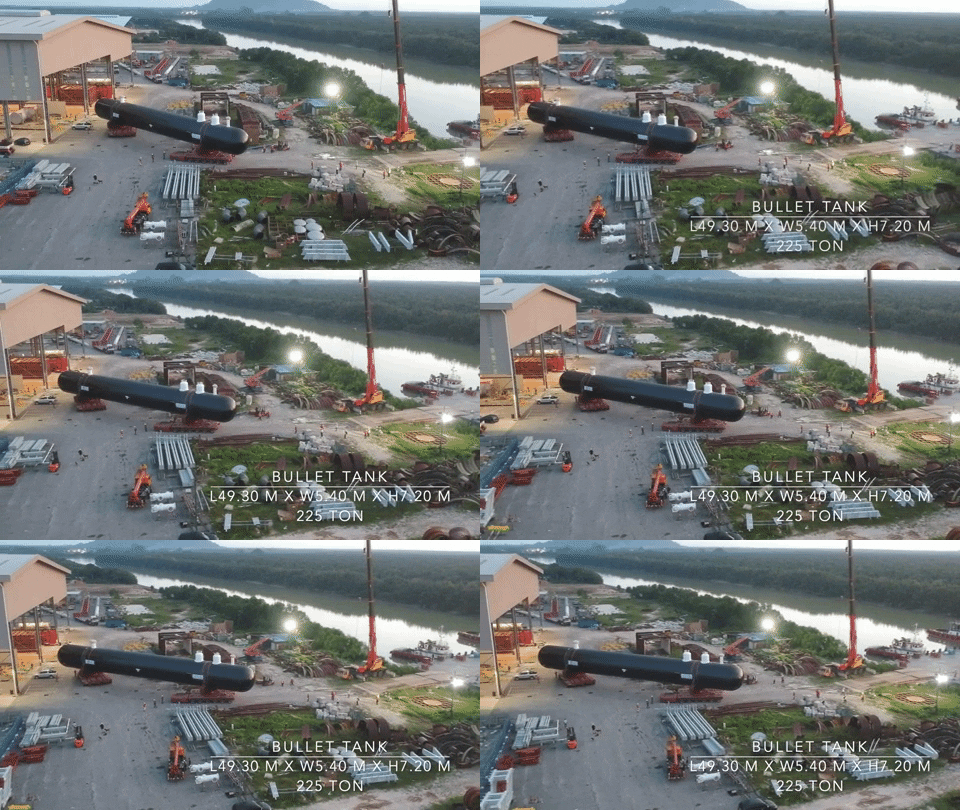
Boilers, pressure vessels, reactors, kiln shells and large pipes often require purpose-designed saddles.
Securing must prevent rolling, sliding and unwanted movement without damaging the equipment.
Irregular-Shaped Cargo
Industrial modules and prefabricated structures may have protrusions, uneven weight distribution or unusual lifting arrangements.
Such cargo requires detailed drawings and engineered handling plans.
Complete Guide to ODC Transportation Vehicles and Trailers in India

The selection of an ODC vehicle depends on the cargo’s dimensions, mass, support requirements, road geometry, axle-load restrictions and handling arrangements.
A trailer that is suitable for one industrial project may be unsafe or commercially inefficient for another.
Highbed Trailer

A highbed trailer is a commonly used industrial transport platform with a comparatively elevated loading deck.
It may be used for fabricated steel structures, industrial machinery, equipment skids, construction materials and cargo that does not require a very low loading height.
Advantages
- Comparatively straightforward loading arrangements.
- Widely used for industrial transportation.
- Useful for suitable long and heavy fabricated components.
- Can be commercially efficient for cargo within the trailer’s engineered capacity.
Disadvantages
- Higher loading platform increases overall loaded height.
- Not suitable for every tall or exceptionally heavy machine.
- Cargo securing and weight distribution remain critical.
- Limited usefulness on routes with low overhead clearance.
Best applications: Fabricated structures, compatible machinery and industrial equipment.
Flatbed Trailer
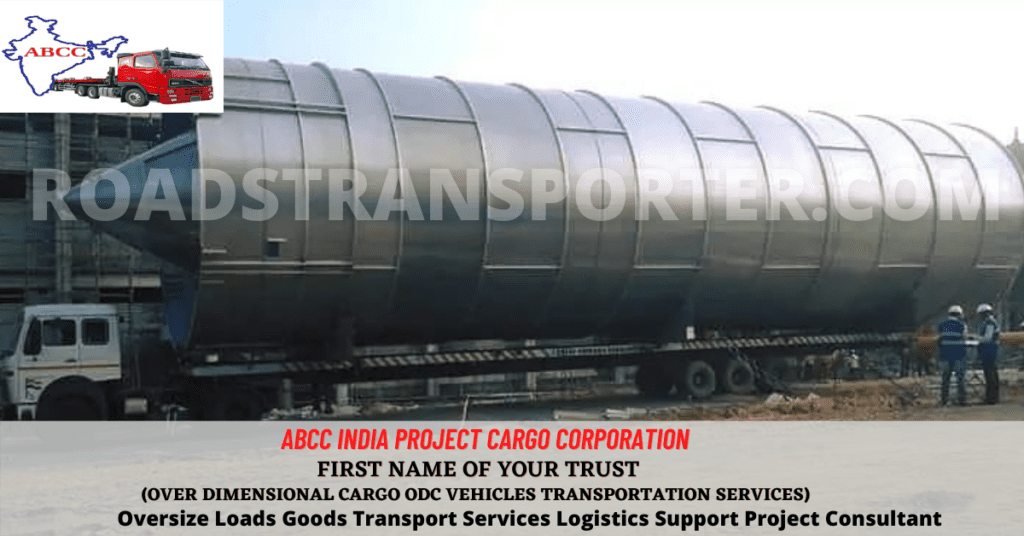
A flatbed trailer provides an open loading platform without permanent sidewalls.
It is useful for machinery, structural steel, fabricated components and cargo requiring overhead crane loading.
Pros: Flexible loading access, simple cargo positioning and suitability for many industrial loads.
Cons: Cargo remains exposed to weather, requires appropriate securing and may not provide sufficient height reduction for tall ODC loads.
Semi-Lowbed Trailer

A semi-lowbed trailer offers a lower loading platform than many conventional highbed arrangements.
It can be useful when equipment height is an important consideration but a full lowbed or modular hydraulic arrangement is unnecessary.
Pros: Reduced loaded height, useful machinery-handling geometry and potential cost advantages over more specialized equipment.
Cons: Deck-length limitations, ground-clearance considerations and restricted suitability for exceptionally heavy loads.
Lowbed and Lowboy Trailer

Lowbed trailers are widely associated with transporting construction machinery and tall industrial equipment.
Their lowered deck can reduce the overall loaded height.
Pros: Lower centre of gravity, reduced transport height and compatibility with selected heavy equipment.
Cons: Ground-clearance difficulties, risk of grounding on uneven roads, limited suitability for some long cargo and dependence on the particular trailer’s rated capacity.
Typical applications include excavators, cranes, crushers and industrial machinery.
Double-Drop Trailer
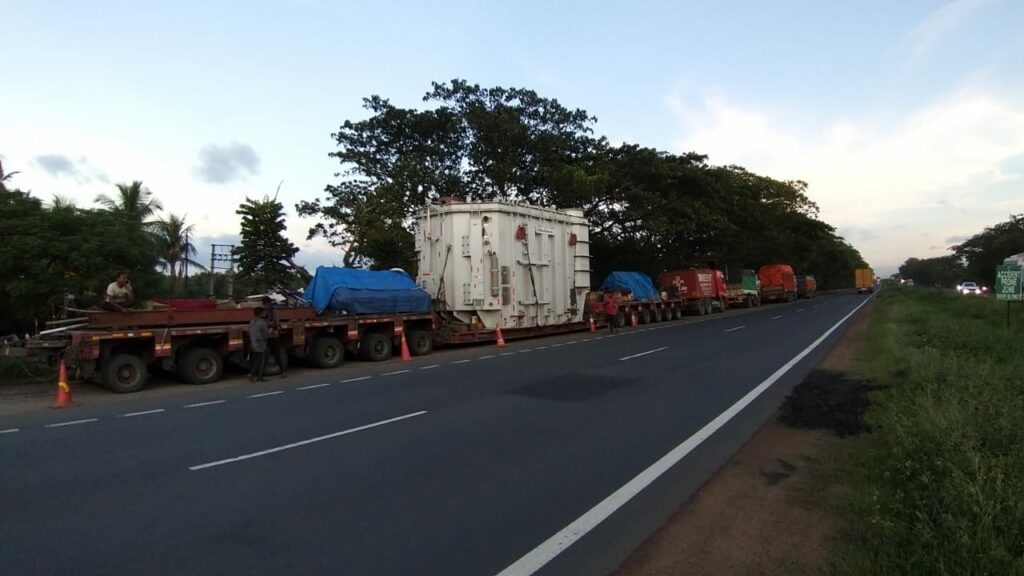
A double-drop trailer features a lower central deck section between raised portions.
It is designed for loads requiring reduced transport height.
Pros: Low loading height and suitability for selected tall equipment.
Cons: Restricted well length, loading-access challenges and potential difficulties on steep road transitions.
Telescopic or Extendable Trailer
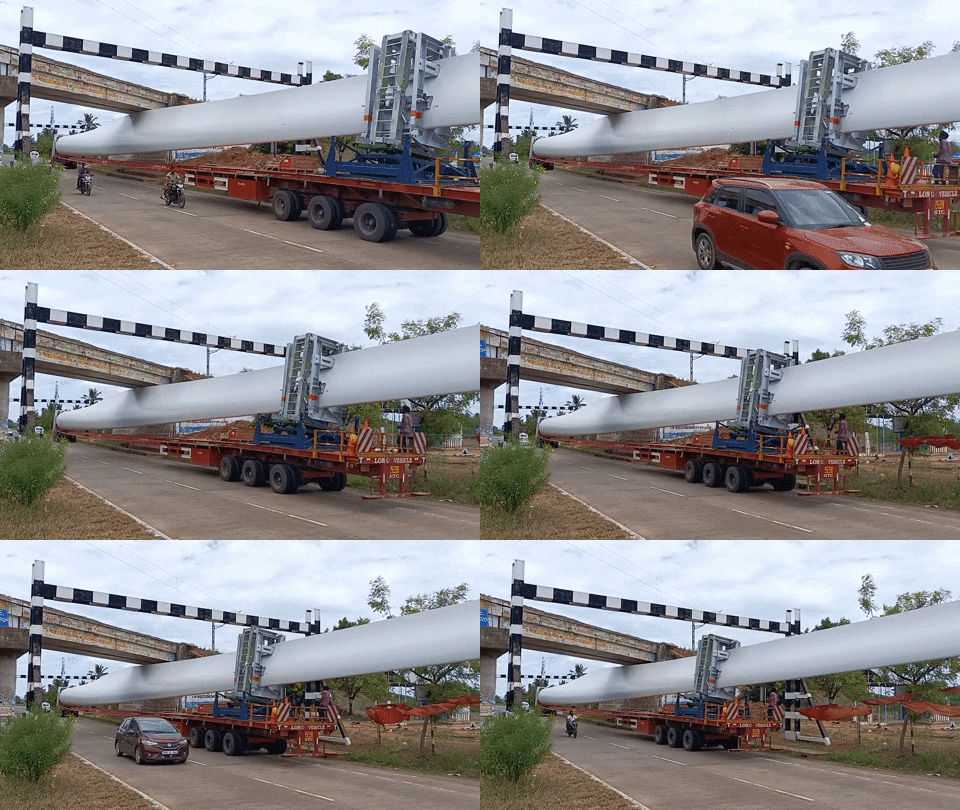
A telescopic trailer incorporates an extendable chassis arrangement for long cargo.
It is commonly associated with wind turbine blades, long steel structures and other extended loads.
Pros: Adjustable length, specialized long-load support and compatibility with selected steerable configurations.
Cons: Large turning envelope, route sensitivity, complex support positioning and reduced manoeuvrability in confined areas.
Bolster Trailer
A bolster arrangement supports long cargo at defined support positions, sometimes using separate front and rear units.
It can be suitable for long beams, structural components and certain fabricated loads.
Pros: Supports selected long cargo efficiently and may accommodate substantial longitudinal spacing.
Cons: Requires careful coordination between support units, detailed turning analysis and suitable cargo structural strength.
Steerable Dolly Trailer
Steerable dollies can support long cargo or form part of specialized heavy transport combinations.
Pros: Improved manoeuvrability for suitable configurations and flexible support arrangements.
Cons: Complex steering coordination, additional operational requirements and configuration-specific limitations.
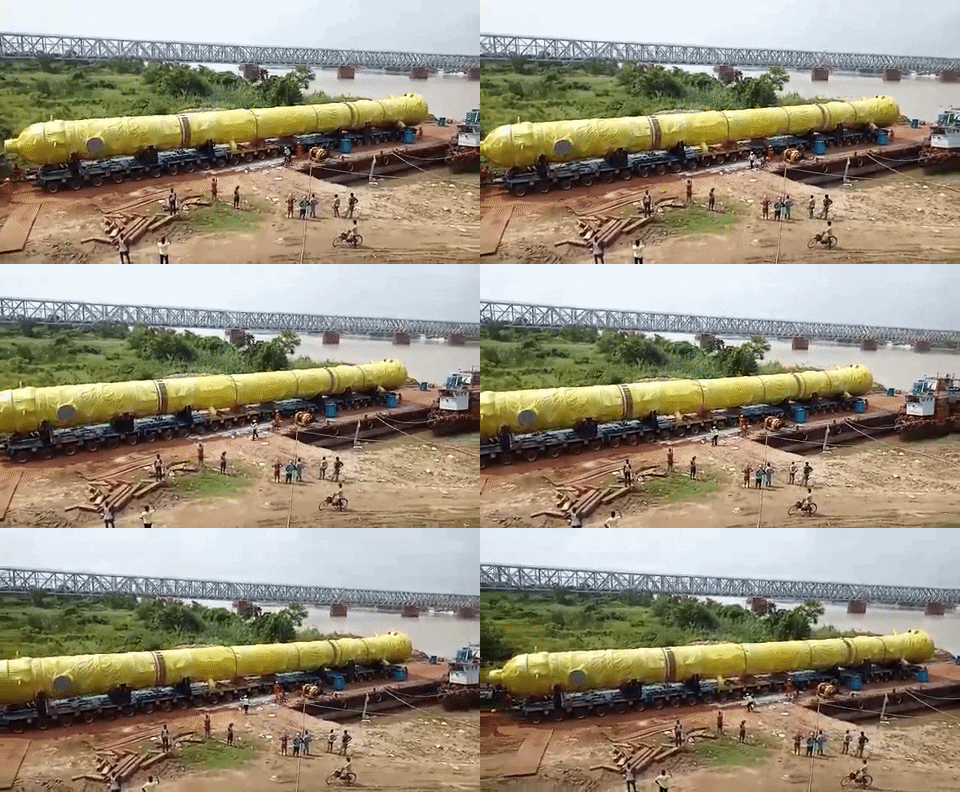
Hydraulic Modular Multi-Axle Trailer
Hydraulic modular trailers are among the most important equipment categories in heavy project cargo transportation.
They use multiple axle rows and hydraulic suspension arrangements to distribute heavy loads.
Depending on the configuration, they may be coupled longitudinally or laterally and combined with specialized attachments.
Advantages
- Engineered load distribution across multiple axle rows.
- Configurable transport arrangements.
- Hydraulic suspension and leveling capability.
- Suitable for selected exceptionally heavy industrial cargo.
- Compatibility with specialized bolster or girder arrangements.
Disadvantages
- High mobilization and operating costs.
- Complex engineering and maintenance.
- Significant route and bridge restrictions.
- Need for competent operators and specialized prime movers.
- Additional regulatory requirements.
Government HT-1 to HT-13 Trailer Classifications
A MoRTH circular identifies modular hydraulic trailer combinations HT-1 through HT-13, with specified gross vehicle weight figures excluding the puller tractor. These are regulatory configuration figures, not interchangeable cargo payload capacities. Ministry of Road Transport & Highways
| Type | Trailer axle rows | Stated trailer GVW |
|---|---|---|
| HT-1 | 4 | 72 tonnes |
| HT-2 | 6 | 108 tonnes |
| HT-3 | 8 | 144 tonnes |
| HT-4 | 10 | 180 tonnes |
| HT-5 | 12 | 216 tonnes |
| HT-6 | 14 | 252 tonnes |
| HT-7 | 16 | 288 tonnes |
| HT-8 | 18 | 324 tonnes |
| HT-9 | 20 | 360 tonnes |
| HT-10 | 8 + 8 | 288 tonnes |
| HT-11 | 10 + 10 | 360 tonnes |
| HT-12 | 14 + 14 | 504 tonnes |
| HT-13 | 16 + 16 | 576 tonnes |
Figures reproduced from the cited MoRTH configuration table for regulatory reference. Actual permissible movement depends on the applicable circular, equipment approval, route, bridge conditions and specific permission.
Girder Bridge Trailer
A girder bridge trailer is a highly specialized arrangement for selected heavy industrial cargo.
It uses engineered structural members to carry or suspend the cargo between transport modules.
Pros: Specialized load distribution, potential reduction of concentrated loading in suitable configurations and applicability to exceptionally heavy equipment.
Cons: High cost, extensive engineering requirements, complex assembly and strict route feasibility constraints.
Self-Propelled Modular Transporter (SPMT)
An SPMT is a self-propelled modular transport platform used for highly specialized heavy movements.
SPMTs are particularly valuable inside ports, shipyards, manufacturing plants, fabrication yards and large industrial construction sites.
Pros: Precise manoeuvring, configurable platform combinations, controlled movement and suitability for large modules.
Cons: High operating cost, substantial ground-bearing requirements, complex planning and limited practicality for many ordinary public-road routes.
SPMT deployment on public roads must not be assumed permissible without specific regulatory and engineering review.
Additional Specialized ODC Equipment
| Equipment | Typical use | Advantage | Limitation |
|---|---|---|---|
| Double-crown semi-trailer | Selected industrial cargo | Specialized deck arrangement | Configuration-specific |
| Beam trailer | Long fabricated loads | Long-load support | Swept-path restrictions |
| Schnabel-type carrier | Certain very heavy transformers | Specialized suspended-load support | High engineering complexity |
| Blade lifter | Wind blade movement | Can adjust blade orientation | Stability and route-specific constraints |
| Hydraulic platform trailer | Industrial modules | Hydraulic support and leveling | High cost |
| Heavy-duty extendable trailer | Long structures | Adjustable cargo support | Turning restrictions |
| Rear-steering trailer | Long industrial equipment | Improved steering control | Operator and maintenance complexity |
| Heavy-duty machinery carrier | Construction equipment | Equipment-specific loading | Restricted cargo flexibility |
| Multi-axle prime mover combination | Heavy transport | Traction and hauling capability | Route and legal limitations |
| Push-pull transport arrangement | Difficult gradients and heavy movements | Additional controlled tractive effort | Complex coordination |
How to Select the Right ODC Vehicle
| Cargo requirement | Potential equipment |
|---|---|
| Long wind blade | Telescopic trailer or blade transport system |
| Tall industrial machinery | Lowbed or double-drop trailer |
| Large transformer | Engineered modular or girder arrangement |
| Bridge girder | Bolster or specialized long trailer |
| Large refinery vessel | Lowbed or modular trailer |
| Heavy fabricated module | Hydraulic modular trailer or SPMT |
| Construction excavator | Suitable lowbed or machinery carrier |
| Long industrial pipe | Flatbed, telescopic or bolster arrangement |
| Large turbine component | Engineered heavy trailer |
| Shipyard module | SPMT or modular platform |
This chart provides possible equipment choices, not automatic recommendations. The final selection requires engineering verification.
Domestic ODC Transportation Process in India
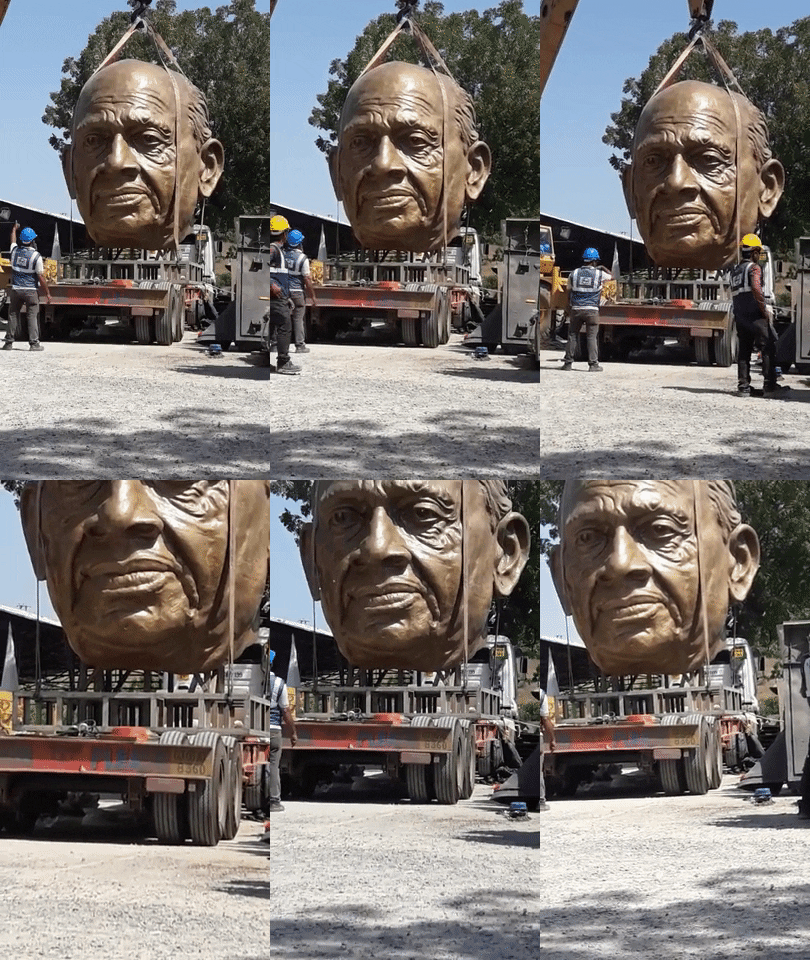
Domestic ODC transportation refers to the movement of over-dimensional consignments between locations within India.
A typical project may involve a factory, fabrication yard, port, industrial estate, power plant, mining site or infrastructure construction location.
Stage 1: Cargo Engineering Data
The first step is collecting complete information about the cargo.
Important documents include general arrangement drawings, cargo dimensions, verified weight, centre of gravity, lifting points, support points and packing specifications.
For sensitive machinery, the manufacturer should also provide transport restrictions and handling instructions.
Stage 2: Preliminary Transportation Feasibility
The logistics team examines possible trailer types, transport modes and routes.
At this stage, it should identify whether the cargo can be transported as one indivisible unit and whether the proposed road movement requires special permission.
Stage 3: Road Route Survey
The proposed route must be evaluated for physical and structural suitability.
The survey should cover bridges, culverts, flyovers, sharp turns, gradients, road widths, railway crossings, utility lines and site access.
A route survey report should distinguish confirmed clearances from assumptions requiring further investigation.
Stage 4: Vehicle and Trailer Selection
Equipment is selected based on cargo geometry, mass, support requirements, route feasibility and applicable legal conditions.
For complex cargo, engineering calculations may be necessary to verify stability and axle-load distribution.
Stage 5: Government Permissions
Relevant authorities are identified and permission applications are prepared.
The approval process depends on the actual route and transport configuration.
Stage 6: Loading and Securing
Cargo loading must follow an approved methodology.
Crane capacity, rigging, ground-bearing conditions, lifting points and cargo securing arrangements must be checked.
Stage 7: Transportation Execution
Movement takes place under the applicable permissions and approved operating plan.
The team may use escort vehicles, communication systems, route monitoring and planned stopping locations.
Stage 8: Delivery and Unloading
The receiving site must be ready before the vehicle arrives.
Unloading arrangements, crane positioning, access roads and handover procedures should be confirmed.
Stage 9: Documentation and Project Closure
After delivery, the parties should complete the required receipt, inspection and contractual handover records.
Government Permissions for Domestic ODC Transportation in India
ODC movement may require several distinct categories of approval. A single permit does not necessarily cover every aspect of a shipment.
Central Government and National Highway Permissions
MoRTH has issued guidelines for movement of over-dimensional and overweight consignments on National Highways, including modular hydraulic trailer arrangements.
Its guidance considers bridge infrastructure, trailer configurations and permission procedures. Ministry of Road Transport & Highways+1
The operator should confirm the applicable process through the official ministry portal.
Official portal: MoRTH OWC/ODC Permission Portal
State Road Permissions
When an ODC route includes state highways, district roads or local roads, the relevant road-owning authority may need to review the movement.
Requirements can differ between states and routes.
Vehicle Registration and Transport Compliance
Depending on the vehicle and operation, relevant compliance may include registration, fitness, insurance, applicable transport permits, driver licensing and other statutory documents.
Specialized transport equipment may also require configuration-specific approvals.
Traffic Police Coordination
Traffic management may be necessary for wide loads, restricted intersections, urban movements or other operations affecting normal traffic.
The operator should follow the conditions imposed by the competent authority.
Bridge Crossing Approval
Heavy transport movements may require bridge capacity assessment.
MoRTH guidance identifies bridge categories for which certain permissions do not apply, including single-lane bridges, steel truss or Bailey bridges, curved bridges, specified skew bridges, timber bridges and structurally restricted bridges. Ministry of Road Transport & Highways
A route approval must not be treated as permission to disregard bridge-specific restrictions.
Railway Crossing Coordination
Railway infrastructure may require separate coordination, particularly where clearance, loading or operational restrictions arise.
No railway crossing should be modified or obstructed without authorization.
Electrical Utility Permissions
If a proposed movement affects electrical infrastructure, the responsible utility must assess and authorize any necessary action.
Transport personnel must not independently lift, disconnect or interfere with live electrical lines.
Municipal and Local Authority Permissions
Urban movements may require coordination for road closures, traffic diversions, temporary obstacle management or other municipal restrictions.
Port and Industrial Estate Permissions
Port authorities and industrial facilities may impose their own access, safety, handling and movement conditions.
Special Project and Equipment Approvals
Certain specialized transport arrangements may require additional technical approvals or specific government authorization.
Domestic ODC Permission Matrix
| Permission or document | Responsible authority or party | When relevant |
|---|---|---|
| National Highway ODC/OWC movement approval | MoRTH / competent highway authority | Applicable NH movement |
| State-road movement clearance | State road authority | Applicable state-road movement |
| Vehicle registration and fitness | Competent transport authority | Vehicle compliance |
| Vehicle configuration approval | Competent authority | Where legally required |
| Traffic management permission | Traffic police | Restricted traffic movements |
| Bridge-specific clearance | Bridge-owning authority | Heavy or restricted crossings |
| Railway infrastructure clearance | Railway authority | Relevant crossings or structures |
| Electrical line coordination | Electricity utility | Overhead-line conflicts |
| Municipal permissions | Local authority | Urban road restrictions |
| Port entry and handling approval | Port/operator | Port movement |
| Industrial site entry permit | Site operator | Plant access |
| E-way bill | GST system | Applicable goods movement |
| Dangerous goods compliance | Relevant competent authorities | If cargo is regulated as hazardous |
| Insurance documentation | Insurer and contracting parties | As required by law or contract |
This is a planning matrix, not a statement that every listed approval is mandatory for every ODC movement.
ODC Transportation Under GST
An ODC consignment may qualify for special e-way bill validity based on the applicable GST rules.
The official e-way bill guidance states that qualifying ODC movement receives one day of validity for every 20 kilometres or part thereof. eWay Bill GST
| Distance | Illustrative ODC validity |
|---|---|
| Up to 20 km | 1 day |
| 21–40 km | 2 days |
| 41–60 km | 3 days |
| 61–100 km | 5 days |
| 101–200 km | 6–10 days |
| 201–400 km | 11–20 days |
| 401–600 km | 21–30 days |
| 601–1,000 km | 31–50 days |
For imported or exported cargo, the Indian e-way bill distance is calculated for the relevant domestic leg as explained in the official guidance. eWay Bill GST
The e-way bill and ODC movement permission serve different purposes. Both must be evaluated independently.
PART II — INTERNATIONAL OVER DIMENSIONAL CARGO TRANSPORTATION IN SAARC COUNTRIES
International ODC Transportation: South Asia’s Cross-Border Heavy Logistics Network
International Over Dimensional Cargo Transportation involves moving oversized or overweight industrial equipment between countries through road, rail, sea, inland waterways or a combination of transport modes.
The South Asian Association for Regional Cooperation (SAARC) has eight member states: Afghanistan, Bangladesh, Bhutan, India, Maldives, Nepal, Pakistan and Sri Lanka. SAARC
For project logistics companies, this region presents diverse transportation challenges.
India has extensive road, rail, industrial and port infrastructure. Nepal and Bhutan have mountainous terrain and limited alternative transport corridors. Bangladesh has river systems, bridges, ports and industrial growth centres. Sri Lanka and Maldives depend heavily on maritime connectivity for freight originating in India.
Pakistan and Afghanistan present additional regulatory, political, transit and security considerations.
The movement of a large industrial machine from India to another SAARC country must therefore be designed around the destination country’s actual infrastructure and legal framework.
SAARC Country-Wise ODC Transportation Overview
| Country | Primary transport options from India | Major ODC consideration |
|---|---|---|
| India | Road, rail, coastal shipping, inland waterways | Domestic permits and infrastructure |
| Nepal | Road, rail-road, multimodal | Mountain roads, border customs and vehicle entry |
| Bhutan | Road and multimodal via India | Steep terrain, narrow roads and border compliance |
| Bangladesh | Road, rail, inland waterway, sea | Bridge capacity, border handling and waterways |
| Sri Lanka | Sea followed by road | Port handling and island road restrictions |
| Maldives | Sea and island-specific handling | Limited road networks and marine logistics |
| Pakistan | Sea or other legally authorized routes | Bilateral restrictions and regulatory uncertainty |
| Afghanistan | Multimodal through authorized transit countries | Landlocked access, transit permissions and security |
Important: SAARC membership does not create a universal road-transport permit. Border entry, vehicle movement, customs, cargo importation and ODC movement are separate regulatory matters.
India to Nepal ODC Transportation
Nepal is an important destination for industrial machinery, hydropower equipment, transformers, construction equipment and infrastructure-related project cargo.
Many shipments originating from Indian manufacturing centres require movement through designated land customs points before entering Nepal.
Important Logistics Corridors
Potential corridors for feasibility evaluation include:
| Indian gateway | Nepal-side destination or gateway | Typical logistics relevance |
|---|---|---|
| Raxaul | Birgunj | Major trade and logistics gateway |
| Jogbani | Biratnagar | Eastern Nepal access |
| Sonauli | Bhairahawa | Central-western trade corridor |
| Rupaidiha | Nepalgunj | Western Nepal access |
| Panitanki | Kakarbhitta | Eastern Nepal connectivity |
| Banbasa | Mahendranagar area | Far-western Nepal access |
The suitability of any corridor for ODC must be independently established. A functioning commercial border crossing is not necessarily suitable for an exceptionally wide, tall or heavy consignment.
Government Permissions and Documents
India-to-Nepal project cargo may require export customs documentation, relevant Indian ODC movement permissions, Nepal customs clearance, vehicle entry documentation and destination-road approvals.
The Consulate General of India in Birgunj explains the temporary import arrangements for Indian-registered vehicles entering Nepal, including Nepal’s Temporary Import Vehicle/Bhansar process. Consulate General of India, Birgunj
Official source: India–Nepal Vehicle Permit Information
Road and Terrain Challenges
Nepal’s geography creates major challenges for heavy transport.
Steep gradients, narrow mountain roads, sharp hairpin bends, slope instability, seasonal landslides and bridge limitations can affect the feasibility of transporting large equipment.
For hydropower cargo, the final access road may be substantially more difficult than the international highway portion.
Recommended Transportation Method
The planning process should examine road transport, compatible rail-road movement and other multimodal alternatives.
The India–Nepal Treaty of Transit and the Rail Services Agreement provide a framework for trade and rail freight connectivity, but project-specific ODC feasibility and permissions remain necessary. Embassy of India Kathmandu
Suitable ODC Equipment
Potential equipment includes lowbed trailers, telescopic trailers, modular hydraulic trailers and specialized heavy transport combinations.
The equipment must be suitable for Nepal’s route geometry and applicable local regulations.
India to Bhutan ODC Transportation
Bhutan’s hydropower and infrastructure requirements create demand for specialized industrial cargo logistics.
Transportation from India to Bhutan may involve machinery manufactured in Indian industrial centres and delivered to project locations in mountainous terrain.
Important Border Corridors
Potential trade gateways include Jaigaon–Phuentsholing, Samdrup Jongkhar and other authorized crossings.
The final corridor must be selected according to current border arrangements and the destination site.
Main Transportation Challenges
Bhutan’s mountain roads may present steep gradients, narrow carriageways, tight bends and limited bridge capacity.
For large transformers or hydropower components, route feasibility may determine whether the cargo can be delivered as a single unit.
Government Permissions
The logistics plan should verify Indian export clearance, Bhutan import customs requirements, applicable vehicle entry permissions, destination-country road movement approvals and any project-specific authorizations.
Indian road permissions do not replace Bhutanese requirements.
Suitable Vehicles
Lowbed trailers, modular hydraulic combinations and selected long-load transport systems may be considered.
For steep routes, traction, braking, turning geometry and emergency recovery capability require particular attention.
India to Bangladesh ODC Transportation
Bangladesh is a significant destination for industrial machinery, power generation equipment, textile machinery, manufacturing systems and infrastructure components.
ODC transportation can involve road, rail, sea and inland-waterway combinations.
Major Logistics Gateways
Potential land gateways include Petrapole–Benapole, Ghojadanga–Bhomra, Hili and other authorized crossings.
Port-based movement may involve Chattogram, Mongla or other suitable terminals, subject to cargo handling and current access conditions.
Road Transportation Challenges
Major challenges may include bridge loading restrictions, road congestion, border handling capacity, urban access and industrial site constraints.
Long or wide cargo can be particularly difficult to manoeuvre through congested road networks.
Inland Waterway Opportunities
For suitable project cargo, inland-waterway movement may reduce dependence on difficult road corridors.
However, the operator must verify vessel suitability, navigable depth, bridge clearances, terminal capacity, seasonal conditions and cargo transfer arrangements.
Cross-Border Permissions
Relevant requirements may include Indian export clearance, Bangladesh import clearance, applicable road transport and border permissions, customs transit arrangements and cargo-specific approvals.
The Bangladesh–Bhutan–India–Nepal Motor Vehicles Agreement was signed in 2015, but it should not be treated as an unrestricted operational right for any foreign heavy vehicle to cross every border. Actual movement must follow implemented protocols and applicable national permissions. LPAI
India to Sri Lanka ODC Transportation
Sri Lanka is an island nation, so industrial cargo originating in India generally requires a maritime leg.
A typical movement may involve road transportation from an Indian factory to a suitable port, loading onto a vessel, sea transportation, discharge at a Sri Lankan port and final delivery by road.
Potential Indian Ports
Depending on the shipment and service availability, ports such as Chennai, Kamarajar, V.O. Chidambaranar and other suitable Indian ports may be evaluated.
Potential Sri Lankan Ports
Colombo, Hambantota and other capable terminals may be assessed according to vessel access, cargo-handling equipment and onward transportation requirements.
ODC Shipping Methods
| Method | Suitable application |
|---|---|
| Breakbulk shipping | Large non-containerized machinery |
| Heavy-lift vessel | Exceptionally heavy cargo |
| Flat-rack container | Compatible out-of-gauge cargo |
| Ro-Ro | Suitable wheeled or trailer-based equipment |
| Project cargo vessel | Multiple large industrial components |
| Barge movement | Selected port or coastal transfers |
Government Permissions
Requirements may include Indian export customs clearance, port permissions, maritime documentation, Sri Lankan import clearance and relevant destination road movement approvals.
The logistics provider should also verify the availability and capacity of unloading equipment.
India to Maldives ODC Transportation
Maldives presents a different transportation environment from mainland South Asia.
Large industrial cargo may be required for airport development, resort construction, power generation, water infrastructure and other projects.
Most international project cargo requires a maritime movement.
Main Transportation Challenges
- Limited island road networks.
- Port and jetty handling constraints.
- Cargo transfer between vessels and barges.
- Marine weather and sea-state limitations.
- Restricted space for cranes and heavy equipment.
- Ground-bearing capacity at construction sites.
Transportation Planning
The project team should assess the Indian origin port, ocean vessel, Maldivian discharge location, local barge availability, lifting equipment and final installation site.
A shipment may require multiple marine and land handling stages.
Permissions
Applicable customs, port, maritime, local handling and site approvals must be verified for the specific island and project.
India to Pakistan ODC Transportation
International heavy cargo transportation between India and Pakistan requires special attention to the prevailing legal and diplomatic environment.
It would be misleading to describe a particular land crossing as a routinely available commercial ODC route without current authorization.
Potential Transportation Considerations
Possible options must be assessed according to the prevailing trade restrictions, customs rules, maritime services, sanctions and other applicable government directions.
Important Risks
Regulatory restrictions, unavailable transit routes, insurance limitations, customs uncertainty and security concerns may affect feasibility.
Required Approach
Before accepting a shipment, the logistics provider should obtain current written confirmation that the proposed trade, transport route, consignee, cargo and transaction are legally permitted.
No general SAARC transit entitlement should be assumed.
India to Afghanistan ODC Transportation
Afghanistan is landlocked, making international heavy cargo transportation dependent on transit through other countries or combinations of air, sea and road transport.
Major Planning Issues
The logistics provider must assess the legally available transit corridor, customs arrangements, border operations, security, infrastructure and destination access.
Transit Route Restrictions
Transit through Pakistan cannot be assumed available. A carrier notice issued in January 2026 reported suspension of commercial cargo transit operations at the Pakistan–Afghanistan border at that time. Current status requires fresh confirmation before any shipment commitment. Hapag-Lloyd
Alternative Logistics Planning
Where legally available, multimodal routes through authorized ports and transit countries may be evaluated.
Each transit jurisdiction may impose its own customs, vehicle, security and road movement requirements.
High-Risk Cargo Planning
For valuable industrial equipment, the transport plan should address security, insurance coverage, handling responsibility, contingency arrangements and potential border delays.
International ODC Customs and Government Permission Matrix
International ODC transportation involves multiple legal layers. These should be treated separately.
| Permission or document | India export side | Destination / transit side |
|---|---|---|
| Commercial invoice | As applicable | Import customs use |
| Packing list | As applicable | Import customs use |
| IEC and exporter compliance | As applicable | Not a substitute for importer registration |
| Shipping bill | For applicable exports | Not applicable as Indian export filing |
| Bill of lading | Maritime shipment | Cargo release |
| Air waybill | Air shipment | Cargo release |
| Certificate of origin | When required | Import/tariff assessment |
| Cargo insurance | Contract-specific | Coverage across borders |
| ODC road permission | Relevant Indian road leg | Separate local permission |
| Vehicle entry authorization | Applicable outbound/transit requirements | Destination-specific |
| Customs transit documentation | If required | Transit-country requirements |
| Import declaration | — | Destination customs |
| Project-specific import approval | If applicable | Destination-specific |
| Port handling approval | Origin port | Destination port |
| Dangerous goods documentation | If applicable | Destination and mode-specific |
| Temporary import / re-export papers | When applicable | Destination-specific |
| Escort and traffic approval | Relevant road authorities | Local road authorities |
| Bridge or structural approval | Indian road infrastructure | Destination infrastructure |
| Tax and duty documentation | Indian export treatment | Destination import treatment |
This matrix is a general project-planning reference. It is not a country-specific legal clearance checklist.
Domestic vs International ODC Transportation
| Parameter | Domestic India | International SAARC |
|---|---|---|
| Customs | Normally no import/export customs crossing | Import, export and possibly transit customs |
| GST e-way bill | Applicable Indian rules | Applicable Indian leg plus foreign requirements |
| Road permits | Indian competent authorities | Separate country-wise authorities |
| Vehicle movement | Indian vehicle compliance | Foreign entry and transit compliance |
| Insurance | Domestic transit coverage as arranged | Cross-border/multimodal coverage |
| Documentation | Domestic commercial and transport records | Customs, shipping and international trade records |
| Route survey | Indian roads and infrastructure | Multiple countries and border interfaces |
| Currency | Primarily INR | Contract-dependent currencies |
| Taxation | Applicable Indian taxes | Import duties, taxes and bilateral arrangements |
| Cargo handling | Origin and destination | May include border or port transfers |
| Main risk | Road, engineering and operational | Additional border, customs and geopolitical risks |
PART III — TECHNICAL ENGINEERING, COST, SAFETY AND COMMERCIAL LOGISTICS
ODC Road Route Survey and Feasibility Engineering
Route feasibility is one of the most important factors in both domestic and international ODC transportation.
A conventional freight operator may prioritize the shortest road. A project cargo specialist must identify the safest technically feasible and legally authorized corridor.
Route Survey Parameters
| Parameter | Survey requirement | Risk if ignored |
|---|---|---|
| Overall loaded height | Measure overhead clearance | Collision with overhead structure |
| Loaded width | Check road and structure clearance | Roadside collision |
| Vehicle length | Evaluate turning geometry | Vehicle immobilization |
| Axle loads | Assess road and bridge compatibility | Infrastructure damage |
| Road gradients | Evaluate traction and braking | Loss of control |
| Road camber | Assess lateral stability | Overturning risk |
| Bridge structures | Obtain appropriate engineering assessment | Structural failure |
| Railway crossings | Verify clearance and authorization | Infrastructure conflict |
| Electrical lines | Utility-authorized assessment | Electrocution or service disruption |
| Road surface | Evaluate pavement and bearing conditions | Grounding or road failure |
| Industrial gates | Check entry dimensions | Delivery failure |
| Unloading area | Verify crane access and ground capacity | Unsafe unloading |
Route Survey Deliverables
A professional route survey should produce a route map, obstacle register, critical-dimension records, structural-assessment requirements, photographic evidence, proposed mitigation measures and a list of pending approvals.
For long vehicles, swept-path analysis can identify whether the transport combination can negotiate a particular turn.
For exceptionally heavy cargo, competent engineers may need to evaluate bridge loading and ground-bearing conditions.
A survey report must clearly distinguish verified information from preliminary assumptions.
ODC Loading and Unloading Engineering
Heavy industrial cargo handling is a safety-critical activity.
A large machine can suffer serious damage during a relatively short lifting operation even when the subsequent road journey is uneventful.
Pre-Lifting Assessment
The lifting team should establish the verified cargo mass, centre of gravity, lifting points, rigging geometry, crane capacity, crane operating radius and ground conditions.
Manufacturer instructions should take precedence over informal handling practices.
Crane Selection
Potential equipment includes mobile cranes, crawler cranes, gantry systems, strand-jack systems and other engineered lifting arrangements.
The appropriate equipment depends on the lift plan.
Hydraulic Jacking and Skidding
Some industrial equipment cannot be loaded using a conventional crane.
Engineered jacking and skidding systems may be used for suitable equipment, particularly where site access is restricted.
These methods require competent engineering supervision.
Cargo Securing and Lashing
Securing arrangements may involve chains, rated tensioners, blocking, support saddles, cradles and other approved restraint systems.
The plan must consider longitudinal, lateral and vertical forces.
Unverified chains, damaged slings, improvised welds or unsuitable anchor points should not be used.
Loading and Unloading Safety Checklist
| Check | Purpose |
|---|---|
| Verified cargo weight | Prevent equipment overload |
| Centre-of-gravity data | Maintain stability |
| Certified lifting equipment | Ensure suitable lifting capability |
| Approved lift plan | Control lifting risks |
| Ground-bearing assessment | Prevent crane or support failure |
| Correct trailer position | Maintain loading stability |
| Engineered cargo supports | Prevent cargo damage |
| Approved securing arrangement | Restrict unwanted movement |
| Communication procedure | Coordinate personnel |
| Emergency response plan | Manage unexpected incidents |
ODC Freight Rates and Transportation Cost Factors
ODC freight pricing depends on the actual transport assignment.
It is not appropriate to publish a universal per-kilometre rate for all modular trailers, lowbeds or heavy-lift equipment without defining the cargo and service conditions.
Major Freight Cost Components
| Component | Domestic ODC | International ODC |
|---|---|---|
| Trailer mobilization | Yes | Yes |
| Prime mover | Yes | Where road movement applies |
| Route survey | As required | Often multiple jurisdictions |
| Bridge engineering | As required | Country-specific |
| Government permissions | Applicable charges | Multiple authorities |
| Escorts | As required | Country-specific |
| Loading and unloading | Contract-dependent | Contract-dependent |
| Port charges | If applicable | Often significant |
| Ocean freight | If applicable | For maritime legs |
| Customs clearance | Normally not for purely domestic movement | As applicable |
| Cargo insurance | Contract-dependent | Cross-border coverage |
| Waiting and detention | Possible | Possible at borders and ports |
| Empty return mobilization | Possible | May be more complex |
Illustrative ODC Freight Calculation Method
A preliminary commercial estimate may be structured as:
{Total Cost} = {Equipment} + {Mobilization} + {Survey} + {Permissions} + {Handling} + {Escorts} + {Other Project Costs}
The actual quotation should specify taxes, exclusions, waiting charges, additional engineering work and responsibilities for unforeseen route restrictions.
What Customers Should Provide for an ODC Freight Quotation
The customer should supply the cargo description, technical drawing, dimensions, weight, centre of gravity where available, loading address, delivery address, required delivery schedule and lifting arrangements.
International enquiries should additionally identify the destination country, customs status, proposed Incoterms and responsibility for import clearance.
ODC Cargo Insurance and Risk Management
Heavy project cargo can involve substantial financial exposure.
A transport-related incident may damage the cargo itself, delay a major project or affect surrounding infrastructure.
Insurance planning should therefore begin before dispatch.
Potential policies may include cargo transit, marine cargo, project-related insurance and other coverage appropriate to the transaction.
The parties should review exclusions, deductibles, insured values, route limitations, handling conditions and claims procedures.
Insurance cannot replace safe engineering or regulatory compliance.
ODC Transportation by Road, Rail, Sea, Inland Waterway and Air

| Mode | Advantages | Disadvantages | Suitable application |
|---|---|---|---|
| Road | Direct delivery and route flexibility | Bridge, width and height restrictions | Factory-to-site machinery |
| Rail | Useful for compatible heavy cargo | Loading gauge and terminal constraints | Selected industrial consignments |
| Sea | Suitable for very large project cargo | Port dependency and additional handling | International heavy lift |
| Inland waterway | Can reduce difficult road movement | Navigation and terminal restrictions | Suitable river-connected projects |
| Air | Fast for compatible urgent cargo | Very high cost and strict dimensions | Specialized urgent equipment |
| Multimodal | Combines suitable transport methods | Complex interfaces | Large industrial projects |
Indian Railways applies its own over-dimensional consignment procedures and technical requirements. Railway ODC should be evaluated independently from road ODC.
Common ODC Transportation Failures and Their Prevention
| Problem | Likely consequence | Prevention |
|---|---|---|
| Incorrect cargo dimensions | Route obstruction | Verified measurement |
| Inaccurate weight declaration | Overloading | Certified weight data |
| Poor route survey | Vehicle immobilization | Detailed feasibility assessment |
| Wrong trailer selection | Instability or clearance failure | Engineering review |
| Inadequate lashing | Cargo movement | Approved securing plan |
| Unapproved bridge crossing | Infrastructure risk | Structural clearance |
| Incomplete permits | Regulatory delay | Pre-dispatch compliance review |
| Unprepared unloading site | Detention and safety risk | Site readiness inspection |
| Inadequate insurance | Financial exposure | Policy review |
| Poor border planning | International delays | Customs and permit coordination |
Future of ODC and Heavy Haulage Transportation in South Asia

Several developments may influence the future of project cargo transportation.
These include improved industrial corridors, specialized trailers, digital route surveys, infrastructure monitoring, port modernization, renewable energy projects and more integrated multimodal logistics.
Technology can assist through digital mapping, swept-path simulation, vehicle monitoring, electronic documentation and engineering analysis.
However, software cannot replace verified road measurements, competent engineering or approval from the relevant authorities.
For South Asian project logistics, better coordination between manufacturers, transport operators, infrastructure owners, customs authorities and project developers will remain essential.
How to Choose an ODC Transportation Company
A reliable heavy haulage provider should be assessed on technical competence, relevant experience, access to suitable equipment, route-planning methodology, documentation practices and safety management.
Customers should request a clear scope of work and understand which party is responsible for permits, surveys, lifting, insurance, customs and site readiness.
A quotation that excludes important activities may appear cheaper while creating substantial project risk.
ABCC India Project Cargo Corporation – Heavy Haulage and Project Logistics Coordination
ABCC India Project Cargo Corporation works in the goods transportation and project cargo logistics sector, supporting enquiries involving industrial machinery and specialized transportation requirements.
For domestic ODC movements, customers can discuss equipment requirements, route feasibility, transport coordination and project-specific freight planning.
For SAARC-related enquiries, the scope should be established only after verifying the destination-country requirements, available transport corridors, customs arrangements and suitable logistics partners.
The guiding principle is straightforward:
Every heavy cargo movement begins with correct information, realistic engineering and responsible planning.
Frequently Asked Questions
What is Over Dimensional Cargo Transportation?
It is the specialized transportation of indivisible cargo exceeding applicable statutory dimensional limits.
What is the difference between ODC and OWC?
ODC relates to excessive dimensions, while OWC relates to excessive weight.
Which vehicles are used for ODC transportation?
Depending on the cargo, operators may use highbed, flatbed, semi-lowbed, lowbed, telescopic, bolster, hydraulic modular, girder bridge and other specialized transport equipment.
Is a modular hydraulic trailer necessary for every ODC shipment?
No. Equipment selection depends on the cargo’s characteristics and route requirements.
Is an ODC permit required for every oversized shipment?
The applicable permissions depend on the vehicle, cargo, road network and relevant law. The competent authorities must be consulted.
Can ODC be transported from India to Nepal?
Yes, subject to the applicable customs, vehicle entry, road movement and other project-specific requirements.
Can Indian ODC trailers enter Bhutan or Bangladesh automatically?
No. Entry and movement must comply with the destination country’s applicable requirements.
Is ODC transportation possible from India to Sri Lanka?
Yes. Maritime transport combined with domestic road movement may be used where feasible.
Can heavy cargo be transported to Maldives?
Yes, subject to suitable shipping, terminal handling, local infrastructure and permissions.
Is there one SAARC permit for ODC transportation?
No universal SAARC ODC permit should be assumed.
Is an e-way bill the same as an ODC permit?
No. The e-way bill addresses GST-related movement documentation, while ODC permissions concern relevant transport and infrastructure requirements.
What is the best trailer for transporting a transformer?
It depends on transformer dimensions, weight, support points, route conditions and engineering requirements.
Why is route survey important?
A route survey identifies physical and infrastructure constraints before movement.
What affects ODC freight rates?
Equipment, cargo characteristics, route, permits, handling, engineering, escorts and other project costs.
Can ODC travel by rail?
Yes, when the cargo and transport arrangement satisfy applicable railway requirements and approvals.
Can ODC be transported by sea?
Yes. Breakbulk, heavy-lift and other suitable maritime arrangements are commonly considered for project cargo.
Does cargo insurance cover every type of damage?
No. Coverage depends on the actual policy wording and exclusions.
What documents are needed for international ODC transport?
Depending on the transaction, documents may include commercial invoices, packing lists, customs filings, transport documents, insurance records, permits and country-specific approvals.
Can a single ODC shipment use road and sea transport?
Yes. Multimodal transportation is often appropriate for large industrial cargo.
What is the most important factor in successful ODC transportation?
Accurate cargo information, engineering feasibility, legal compliance and coordinated execution are all essential.
Government and Industry Reference Library
These are the principal original sources to use in the published article. Government references should take priority over commercial blogs where legal requirements are discussed.
| Reference | Subject |
|---|---|
| MoRTH Modular Hydraulic Trailer Circular | ODC/OWC trailer arrangements and permissions |
| MoRTH ODC/OWC Online Permission Guidelines | National Highway movement |
| Official GST E-Way Bill FAQs | ODC definition and validity |
| Indian Railways ODC User Manual | Railway ODC |
| Land Ports Authority of India – BBIN | Cross-border transport framework |
| India–Nepal Vehicle Permits | Nepal vehicle entry |
| India–Nepal Trade and Transit Framework | Bilateral trade and transit |
| SAARC Secretariat | Member countries and regional context |
| Ministry of Ports, Shipping and Waterways Annual Report | Maritime infrastructure |
| Maharashtra Transport Department | State transport notifications |
Blog Conclusion
Over Dimensional Cargo Transportation in India and SAARC countries is an essential part of industrial development and infrastructure construction.
From transporting a transformer between Indian industrial centres to delivering hydropower machinery in Nepal or moving large equipment by sea to Sri Lanka, every project presents a different combination of engineering, operational and regulatory challenges.
There is no single trailer, route, permit or transportation method suitable for every oversized consignment.
Successful heavy haulage depends on selecting appropriate equipment, understanding the complete cargo configuration, assessing the proposed route, obtaining applicable permissions and coordinating loading, transportation and unloading safely.
For international movements, these responsibilities extend to customs, border entry, multimodal handling and the legal requirements of every relevant country.
The future of project logistics will depend not simply on larger transport equipment, but on better planning, stronger engineering practices, reliable infrastructure information and responsible cooperation across the supply chain.

