🛢️Introduction — What Is Oil, Gas & Petrochemicals

Oil, Gas & Petrochemicals form the lifeblood of modern civilization. Every car that moves, every plastic bottle that’s molded, every fertilizer that feeds our fields — all trace their origin to these resources buried deep beneath the Earth’s crust.
In simple terms:
Oil is liquid fossil fuel extracted from underground reservoirs.
Gas is a lighter hydrocarbon — mostly methane — used for energy and heating.
Petrochemicals are products derived from oil and gas, forming raw materials for plastics, fibers, detergents, paints, and pharmaceuticals.
🌍 Who Discovered It, When, and Why?
- Ancient Roots: The Babylonians and Egyptians used natural bitumen to waterproof boats and buildings.
- Modern Birth: The modern petroleum era began in 1859 when Edwin Drake drilled the first successful oil well in Titusville, Pennsylvania (USA).
- Industrial Purpose: The discovery was driven by the need for affordable lighting fuel (kerosene) before electricity existed.
- Later, oil’s role expanded — powering engines, creating plastics, and fueling economic revolutions.
💡 Imagine a world before electricity — dark, dependent on whale oil and candles.
Then came a few visionaries who dared to drill the ground instead of the sea, believing that “energy” could be found beneath the soil. That spark created an energy empire — one that today powers planes, cars, industries, and economies.
“The journey from darkness to light began when humankind discovered energy beneath its feet.”
🏭 The Industrialization of Oil, Gas & Petrochemicals — When, Where & How It Happened

The industrialization of oil and gas is a saga of innovation, geopolitics, and ambition.
🏗️ Era 1: Birth of the Oil Age (1850–1900)

- 1859: Edwin Drake’s well marks the beginning of commercial oil.
- 1870: John D. Rockefeller forms Standard Oil, pioneering large-scale refining and supply chains.
- 1890s: Refineries emerge in Europe; kerosene becomes global commodity.
🚘 Era 2: The Automobile Revolution (1900–1950)

- Henry Ford’s mass-produced automobiles make gasoline indispensable.
- World War I & II expand the strategic need for fuel and lubricants.
- Birth of multinational oil giants: BP, Shell, Chevron, Exxon.
💣 Era 3: The Petrochemical Explosion (1950–1980)
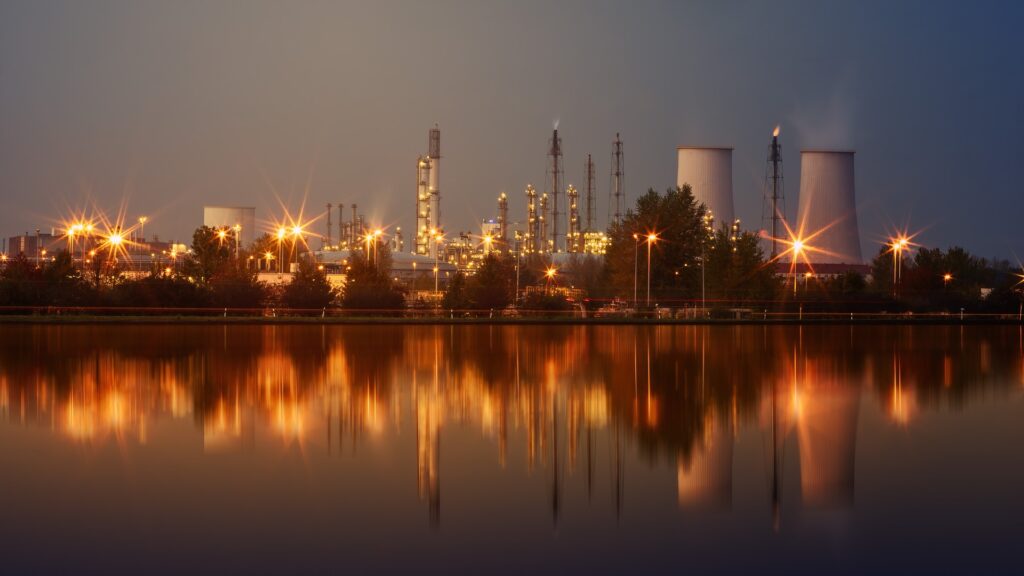
- Refined oil transforms into plastics, nylon, fertilizers, and synthetic rubber.
- 1970s Oil Crisis → birth of OPEC; energy becomes a weapon of global influence.
🌏 Era 4: Liberalization & Global Expansion (1990–2010)
- Emerging markets like India, China, and the Gulf nations become refining hubs.
- Indian companies such as ONGC, IOCL, BPCL, and Reliance Industries modernize refineries.
⚡ Era 5: Digital & Green Energy Transition (2010–Present)
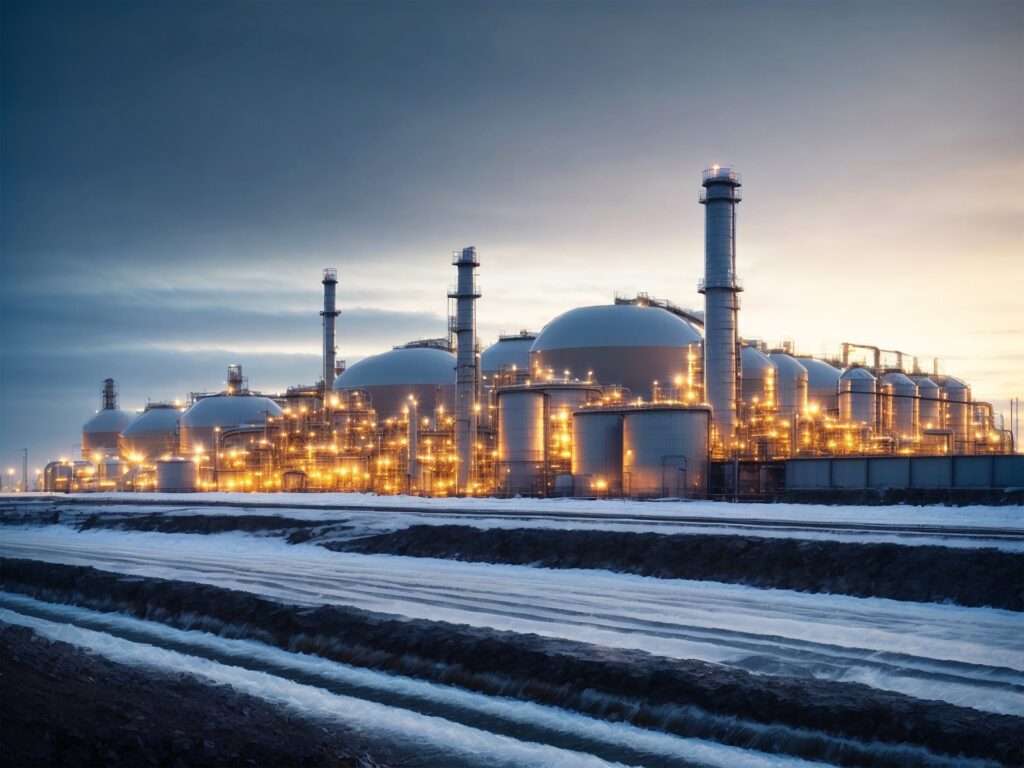
- Smart refineries, automation, carbon capture, and biofuels redefine the sector.
- Petrochemicals now integrate with renewables — hydrogen, bio-ethanol, and green ammonia.
🧭 “From oil rigs to data rigs — industrialization never stopped; it simply changed fuel.”
⚙️Types of Oil, Gas & Petrochemicals – Uses and Tentative Price Range

| Category | Product Examples | Primary Uses | Tentative Average Price (₹) |
|---|---|---|---|
| 🛢️ Crude Oil | Brent, WTI, Indian Basket | Source for fuels & petrochemical feedstocks | ₹6,800 – ₹7,200 per barrel |
| 🔥 Natural Gas (LNG/LPG) | CNG, Propane, Butane | Power generation, cooking, vehicles | ₹65 – ₹90 per m³ |
| ⛽ Refined Petroleum | Gasoline, Diesel, Jet Fuel | Transport, aviation, industrial machines | ₹95 – ₹115 per litre |
| 🧴 Petrochemicals | Ethylene, Propylene, Benzene | Plastics, paints, fibers, pharma | ₹70 – ₹150 per kg |
| 🌿 Lubricants & Waxes | Engine oil, Grease, Paraffin | Engines, mechanical equipment | ₹250 – ₹500 per litre |
| 🧪 Fertilizer Feedstock | Ammonia, Urea | Agriculture productivity | ₹30 – ₹70 per kg |
⚙️ Prices fluctuate with global crude index & currency exchange — logistics efficiency directly shapes profitability.
🔁Oil, Gas & Petrochemical Industry Manufacturing & Product Lifecycle

🏗️ Step-by-Step Production & Manufacturing Structure
- Exploration & Survey – Geologists locate hydrocarbon reserves using seismic mapping.
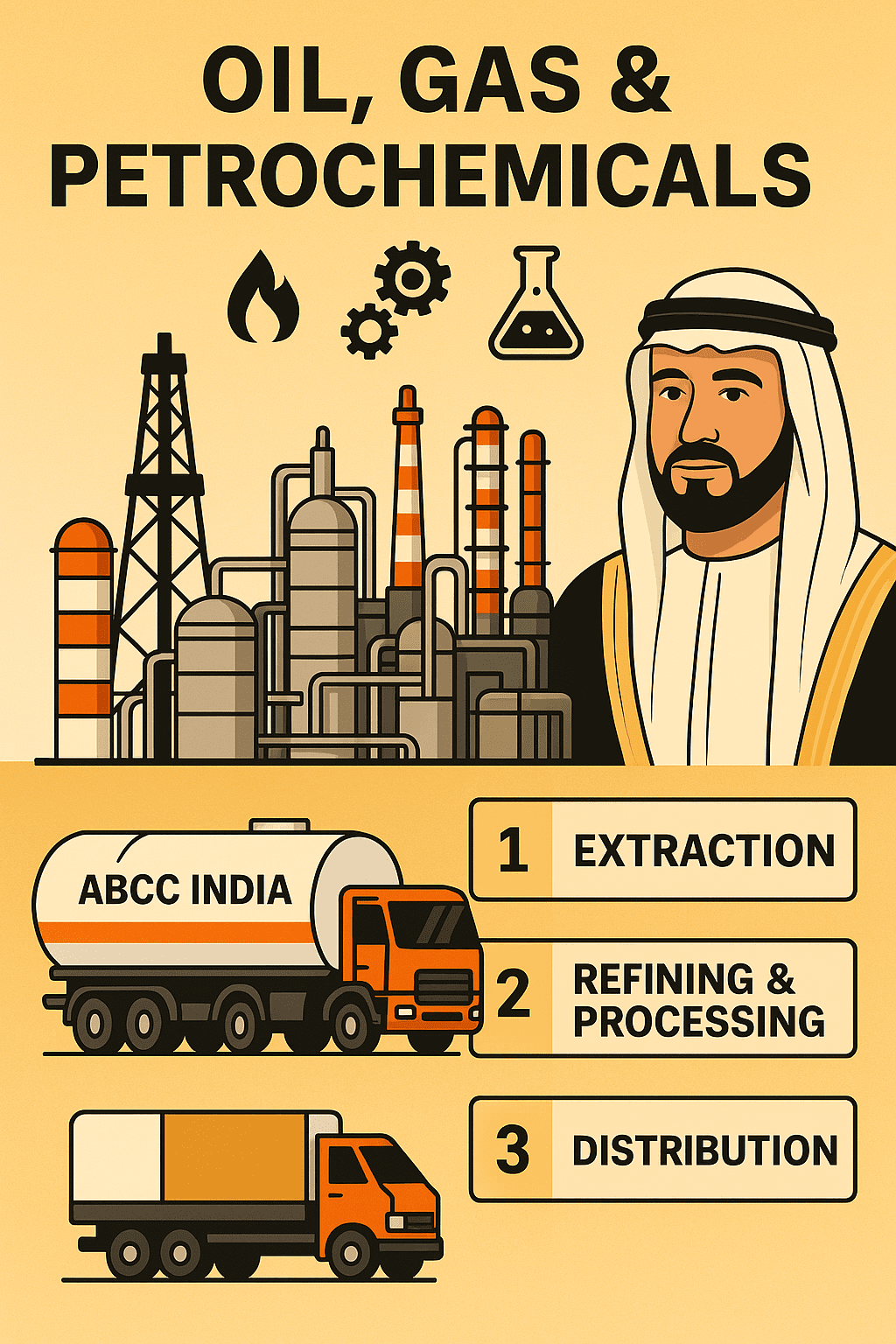
- Drilling & Extraction – Crude oil and gas drawn via onshore/offshore rigs.
- Transportation (Primary) – Pipelines, tankers, and trucks deliver crude to refineries.
- Refining Process – Crude separated into usable components via distillation columns.
- Petrochemical Conversion – Conversion of fractions (naphtha, ethane) into plastics, fibers, solvents.
- Storage & Warehousing – Strategic reserves and tank farms ensure steady supply.
- Distribution (Secondary) – Retail fuels, LPG cylinders, polymer resins to end-users.
- Recycling & Sustainability – Focus on cleaner fuels, circular polymers, carbon capture.
🔄 Product Lifecycle
| Stage | Operation | Key Goal | Technology Used |
|---|---|---|---|
| 🔍 Exploration | Geological & seismic studies | Discover new reserves | 3D seismic mapping, AI geodata |
| ⛏️ Extraction | Drilling & production | Maximize output | Directional drilling, fracking |
| 🏭 Refining | Separation & conversion | Quality fuels & feedstocks | Distillation & cracking units |
| 🧴 Manufacturing | Petrochemical synthesis | Value-added products | Polymerization reactors |
| 🚛 Distribution | Retail & export logistics | Market reach | Pipelines, tankers, multimodal logistics |
| ♻️ Sustainability | Waste & carbon management | Net-zero transition | CCS, biofuel integration |

💬 “From drilling wells to filling shelves — every drop travels through science, strategy, and sustainability.”
🌏 Oil, Gas & Petrochemical Industry Evolution — India vs Global

| Era / Period | Global Milestone | Indian Evolution in Parallel |
|---|---|---|
| ⚙️ 1850 – 1900 | Drake Well (1859) launches modern oil era in USA | Digboi Assam (1889): Asia’s first refinery set up by British India |
| 🚗 1900 – 1950 | Automobile revolution creates global fuel demand | Burmah Oil & Assam Oil lead early exploration efforts |
| 🏗️ 1950 – 1980 | Formation of OPEC (1960) redefines global pricing | ONGC founded (1956), IOCL (1959); public sector backbone built |
| 🌐 1980 – 2000 | Privatization and MNC expansion worldwide | Reliance Industries (1973) and private refineries emerge |
| 💻 2000 – 2020 | Digital refineries, LNG trade, green policies | India becomes 3rd largest energy consumer; Jamnagar World’s largest refinery |
| 🌱 2020 – Future | Net-zero targets, bio-fuels, hydrogen | India drives ethanol blending and green hydrogen initiatives |
🧭 “India didn’t follow the energy revolution — it refined its own.”
💰 Market Size — Local (India) and Global
🌍 Global Energy Market 2025 Projection
- Size: ≈ USD 7.8 Trillion
- Oil share: 31% of total primary energy
- Gas share: 23%
- Petrochemicals: USD 550 Billion segment
- Top Consumers: China, USA, India
🇮🇳 Indian Oil & Gas Market 2025
| Segment | Value (₹ Crore) | Key Drivers |
|---|---|---|
| Crude Oil Import | ₹9,00,000 + | Transportation & refining demand |
| Natural Gas | ₹3,00,000 | Power, fertilizer, household |
| Petrochemicals | ₹5,50,000 | Plastics & chemical exports |
| Refining Capacity | 250 MMTPA (3rd globally) | Jamnagar, Reliance, IOCL |
| GDP Contribution | 7–8% | Direct + indirect impact on logistics and manufacturing |
💡 India imports ~85% of its crude but exports refined products worth billions — a unique industrial paradox.
🏢 Top 10 Global Oil, Gas & Petrochemical Companies

| Rank | Company | Headquarters | Key Area / Highlight |
|---|---|---|---|
| 1️⃣ | Saudi Aramco | Saudi Arabia | World’s largest oil producer & refiner; valuation > $2 trillion |
| 2️⃣ | ExxonMobil | USA | Leader in upstream R&D and chemical manufacturing |
| 3️⃣ | Shell PLC | UK/Netherlands | Major in LNG and clean energy transition |
| 4️⃣ | BP | UK | Diversified energy portfolio and solar investments |
| 5️⃣ | Chevron | USA | Strong presence in deep-water exploration |
| 6️⃣ | TotalEnergies | France | Pioneer in bio-fuel and renewable integration |
| 7️⃣ | Gazprom | Russia | Dominant in natural gas pipeline network |
| 8️⃣ | Sinopec | China | Largest refining capacity in Asia |
| 9️⃣ | CNPC (PetroChina) | China | Vertically integrated energy giant |
| 🔟 | Eni S.p.A. | Italy | Focus on green hydrogen and carbon capture |
🧠 “Energy leadership is not about pumping faster — it’s about innovating cleaner.”
🇮🇳 Top 10 Indian Oil, Gas & Petrochemical Companies

| Company | Founded / HQ | Core Business | Strength |
|---|---|---|---|
| 1️⃣ Reliance Industries Ltd. | 1973 / Mumbai | Refining & petrochemicals | World’s largest single-site refinery at Jamnagar |
| 2️⃣ ONGC | 1956 / Dehradun | Exploration & production | India’s largest upstream player |
| 3️⃣ IOCL | 1959 / New Delhi | Refining, marketing | Massive retail network & R&D labs |
| 4️⃣ BPCL | 1952 / Mumbai | Fuel distribution | Digital marketing integration |
| 5️⃣ HPCL | 1974 / Mumbai | Refining & LPG distribution | Energy efficiency & storage capacity |
| 6️⃣ GAIL India | 1984 / New Delhi | Natural gas processing & pipeline | Owns India’s longest gas pipeline grid |
| 7️⃣ Nayara Energy | 2017 / Vadinar | Refining & fuel retail | Strategic export refinery |
| 8️⃣ MRPL | 1988 / Mangaluru | Refining | Part of ONGC Group – South India hub |
| 9️⃣ Petronet LNG | 1998 / Delhi | LNG import & regasification | Bridges India’s gas supply gap |
| 🔟 Adani Total Gas | 2017 / Ahmedabad | City gas distribution | Expanding green energy footprint |
🛢️ Indian States – Major Local Oil, Gas & Petrochemical Hubs

| State / UT | Major Oil & Gas / Petrochemical Hub | Key Companies / Refineries | Major Industrial Area / City | Specialty / Product Focus |
|---|---|---|---|---|
| Andhra Pradesh | Visakhapatnam | HPCL, ONGC, Coromandel | Vizag, Kakinada | Refinery, LPG, Fertilizer Chemicals |
| Arunachal Pradesh | Kharsang | Oil India Ltd | Changlang District | Onshore Oil & Gas Exploration |
| Assam | Digboi, Duliajan | IOCL, OIL, Numaligarh Refinery | Tinsukia, Dibrugarh | Crude Oil, Gasoline, Refining |
| Bihar | Barauni | Indian Oil Corporation | Begusarai | Refinery, Lubricants |
| Chhattisgarh | Korba, Raigarh | Jindal, ONGC | Bilaspur, Korba | Coal-to-Liquid, Petrochem Feedstock |
| Goa | Verna | Zuari Agro Chemicals | Mormugao | Petrochemical Fertilizer |
| Gujarat | Jamnagar, Vadodara, Dahej | Reliance, ONGC, GAIL, IOCL | Bharuch, Hazira | Petrochemical Hub of India |
| Haryana | Panipat | IOCL, NRL | Panipat Industrial Zone | Refinery, Polymer, Aromatics |
| Himachal Pradesh | Nalagarh | Small Gas Filling Units | Solan District | Industrial Gas Distribution |
| Jharkhand | Sindri, Jamshedpur | Fertilizer Corp, Tata Chemicals | Dhanbad, Bokaro | Coal Gasification, Ammonia |
| Karnataka | Mangalore | MRPL, ONGC | Mangalore SEZ | Refinery, Petrochemicals, LPG |
| Kerala | Kochi | BPCL, FACT | Kochi Refinery Zone | Refinery, Fertilizers, Ammonia |
| Madhya Pradesh | Guna, Nagda | GAIL, Grasim Industries | Bina, Katni | Petrochemical & Synthetic Fibers |
| Maharashtra | Mumbai, Nagothane, Ratnagiri | RCF, BPCL, HPCL, ONGC | Navi Mumbai, Raigad | Refinery, Plastic Polymers, Gas |
| Manipur | Jiribam | ONGC Exploratory | Tamenglong Area | Early Stage Gas Exploration |
| Meghalaya | Garo Hills | Oil India Exploration | Tura Region | Oil & Gas Survey Zone |
| Mizoram | Kolasib | ONGC Exploration | North Mizoram | Gas Prospecting Region |
| Nagaland | Champang | Oil India Ltd | Mon District | Crude Oil Reserves |
| Odisha | Paradip | IOCL, GAIL | Paradip Port, Dhamra | Refinery, LNG, Polypropylene |
| Punjab | Bathinda | HPCL-Mittal Energy | Bathinda Refinery Complex | Petroleum Refining, Gas Supply |
| Rajasthan | Barmer | Cairn Energy, Vedanta | Barmer Basin | Crude Oil Extraction |
| Sikkim | Rangpo | Small Gas Distribution | East Sikkim | LPG & Industrial Gas |
| Tamil Nadu | Chennai, Nagapattinam | CPCL, IOCL, Nagarjuna | Manali Industrial Belt | Refinery, Petrochemical, LNG |
| Telangana | Hyderabad | HPCL, Bharat Gas | Sangareddy, Patancheru | LPG, Gas Pipeline Distribution |
| Tripura | Agartala | ONGC, GAIL | South Tripura | Natural Gas Extraction |
| Uttar Pradesh | Mathura | IOCL Refinery | Mathura, Kanpur | Refinery, Lube Blending |
| Uttarakhand | Haridwar | Indian Glycols Ltd | Roorkee, Haridwar | Industrial Gas, Glycol |
| West Bengal | Haldia | HPL, IOCL | Haldia Industrial Area | Petrochemical & Polymers |
| Delhi (NCT) | Delhi NCR | IGL, BPCL | Bawana, Narela | CNG & PNG Supply Hub |
| Puducherry | Karaikal | ONGC | Puducherry District | Offshore Gas Exploration |
| Chandigarh | Baddi Access | HP Gas Depot | Baddi–Nalagarh Belt | LPG & Small Gas Distribution |
| Ladakh | Leh | IOC Fuel Depot | Kargil | Diesel Storage, Supply Chain |
| Jammu & Kashmir | Samba | IOCL Depot | Srinagar, Jammu | Petroleum Storage & Retail |
| Andaman & Nicobar Islands | Port Blair | IOCL | Port Blair | Marine Fuel & LPG |
| Dadra & Nagar Haveli & Daman & Diu | Silvassa | HPCL Depot | Daman | Gas & Industrial Solvents |
| Lakshadweep | Kavaratti | IOCL Storage | Lakshadweep Jetty | Marine Fuel Supply |
🏗️ India’s oil, gas, and petrochemical hubs form the backbone of the nation’s industrial and logistics network. From Jamnagar’s mega refineries to Paradip’s coastal terminals, every region contributes to energy security and industrial growth.
⏳ Best Era & Recession Time for Oil, Gas & Petrochemical Industry

| Period | Event / Context | Industry Impact | Why It Mattered |
|---|---|---|---|
| 1950–1970 | Post-war industrial boom & automobile growth | Golden Age of Oil | High global demand and investment |
| 1973 & 1979 | OPEC Oil Crises | Short-term recession, price spikes | Showed political power of oil |
| 1990–2014 | Liberalization + China’s growth | Massive market expansion | Petrochemical industrial surge |
| 2020 | COVID-19 Lockdowns | Demand collapse, negative oil prices | Triggered digital logistics innovation |
| 2022–2025 | Russia–Ukraine war & energy re-alignment | Volatile but profitable phase for India | Energy security prioritized |
💬 “Every recession refined the industry — every boom expanded its boundaries.”
🌿 Environmental & Seasonal Effects on Oil, Gas & Petrochemical Industry

The Oil & Gas sector is both a creator of prosperity and a custodian of responsibility.
While it powers industries and mobility, it also contributes to carbon emissions, climate change, and ecological pressure — making environmental management a business priority.
☀️ Seasonal Impact on Energy Demand
| Season / Period | High-Demand Products | Impact on Production & Logistics | Example |
|---|---|---|---|
| 🌞 Summer | Petrol, Diesel, Aviation Fuel | Increased transport & travel demand | Tourism, logistics peak |
| ❄️ Winter | Natural Gas, LPG | Higher domestic consumption | Heating, household usage |
| 🌾 Monsoon | Petrochemicals, Fertilizers | Supply disruptions due to rainfall | Fertilizer logistics |
| 🏛️ Festive Season | Industrial Lubricants, Plastics | Boost in consumer goods demand | Manufacturing surge |
🧭 “Every season drives a new rhythm in the oil market — from refineries to retail.”
🌍 Environmental Effects & Corporate Response
🌬️ Air Emissions: Refineries emit CO₂, SO₂, and NOₓ — driving global warming.
🌊 Marine Pollution: Offshore drilling risks oil spills.
🛢️ Waste Disposal: Industrial waste and sludge management critical.
🌱 Solutions:
Carbon capture & storage (CCS)
Renewable integration (solar/wind)
Green hydrogen & biofuel initiatives
💡 Sustainability is no longer a CSR activity — it’s a license to operate.
🧰 Industry Unions & Higher Authorities (India & Global)

Oil, Gas, and Petrochemical industries are governed by specialized agencies ensuring safety, transparency, and policy balance.
🇮🇳 India — National Authorities
| Authority | Full Name | Key Responsibility |
|---|---|---|
| MoPNG | Ministry of Petroleum & Natural Gas | Formulates exploration & refining policies |
| DGH | Directorate General of Hydrocarbons | Regulates upstream oil & gas blocks |
| PNGRB | Petroleum & Natural Gas Regulatory Board | Ensures fair retail pricing & pipeline control |
| IOCL / BPCL / HPCL / ONGC | Public Sector Undertakings | National backbone for oil & gas supply |
| CPCB | Central Pollution Control Board | Environmental & emission compliance |
🌐 Global Energy Bodies
| Organization | Headquarters | Primary Role |
|---|---|---|
| OPEC | Vienna, Austria | Controls global crude supply & pricing |
| IEA | Paris, France | Promotes energy security & research |
| API | Washington DC, USA | Technical & safety standards for oil equipment |
| IMO | London, UK | Regulates shipping & marine fuel standards |
| UNEP | Geneva, Switzerland | Climate & emission monitoring framework |
⚙️ “Strong regulation doesn’t slow progress — it stabilizes it.”
⚖️ Legal & Compliance Framework for Oil, Gas & Petrochemical Industry

🇮🇳 Indian Legal Framework
| Act / Regulation | Purpose / Function |
|---|---|
| Petroleum Act (1934) | Governs storage, transport & refining of petroleum products |
| Oilfields Regulation & Development Act (1948) | Defines upstream exploration rules |
| PNGRB Act (2006) | Monitors pipelines, city gas, and retail competition |
| Environment (Protection) Act (1986) | Regulates refinery emissions & effluent discharge |
| Factories Act (1948) | Ensures worker safety & process control in refineries |
🌍 Global Standards & Certifications
| Standard / Certification | Description |
|---|---|
| ISO 29001 | Oil & gas quality management systems |
| API Q1 / Q2 | Equipment & process reliability standards |
| ISO 14001 | Environmental management systems |
| OSHA 1910 | Occupational safety for refineries |
| MARPOL Convention | Marine pollution prevention framework |
🧾 “Compliance in oil & gas isn’t paperwork — it’s performance assurance.”
📊 Advantages & Disadvantages of Oil, Gas & Petrochemical Industry

| Aspect | Advantages | Disadvantages / Challenges |
|---|---|---|
| ⚙️ Production | High global demand & scalability | Resource depletion & capital intensive |
| 💰 Economy | Major GDP contributor, job creation | Market volatility & inflation risk |
| 🚛 Logistics | Multimodal export potential | High cost of transportation & accidents |
| 🌍 Market | Energy security, foreign exchange savings | Price dependency on geopolitics |
| 🌱 Environment | Technological evolution in clean energy | High carbon footprint |
| 🔬 Innovation | Drives R&D, digital transformation | Complex risk management |
💬 “The world runs on oil — but the future runs on innovation.”

🇮🇳 India and Indian Government Role in the Oil, Gas & Petrochemical Industry
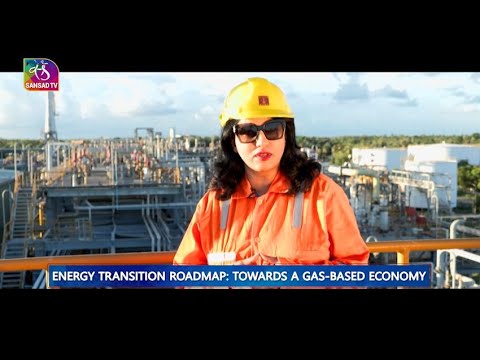
The Indian government plays a strategic leadership role in balancing energy security, affordability, and sustainability.
🏗️ Major Government Policies & Missions
| Policy / Initiative | Objective |
|---|---|
| Hydrocarbon Exploration & Licensing Policy (HELP) | Simplifies exploration & production licensing |
| Discovered Small Fields (DSF) Policy | Encourages private sector exploration |
| PM Gati Shakti Yojana | Enhances logistics connectivity for refineries |
| National Biofuel Policy | Targets ethanol blending & bio-CNG usage |
| Make in India | Promotes local equipment manufacturing |
| National Hydrogen Mission (2021) | Builds India’s green energy export potential |
📊 Government’s Strategic Goals 2030
- Reduce oil import dependency by 10%.
- Achieve 20% ethanol blending in petrol.
- Double natural gas share in India’s energy mix from 6% → 15%.
- Establish 100+ LNG stations and 5+ petrochemical hubs.
🇮🇳 “India’s energy future will be powered by both crude and conscience.”
🏗️ Oil, Gas & Petrochemical Industry Hubs and Big Markets in India

| Region / State | Major Hub or Project | Core Operation | Key Companies Involved | Logistics Advantage |
|---|---|---|---|---|
| Gujarat | Jamnagar Refinery Cluster | World’s largest refining hub | Reliance Industries Ltd & Nayara Energy | Deep-water port & ABCC ODC routes |
| Maharashtra | Mumbai & Navi Mumbai | Refining & fuel trading | BPCL & HPCL | Coastal connectivity + import terminals |
| Tamil Nadu | Manali & Nagapattinam | Downstream petrochemicals | CPCL & Tanfac | Proximity to southern ports |
| Odisha | Paradip & Dhamra | Refining & export | IOCL Paradip Refinery | Eastern coastal corridor |
| Assam | Digboi & Numaligarh | Oldest refineries in Asia | ONGC & Numaligarh Refinery Ltd | North-East energy gateway |
| Rajasthan | Barmer Block | On-shore crude production | Cairn Vedanta | Desert terrain transport expertise |
| Andhra Pradesh | Kakinada & Krishnapatnam | LNG & petrochemical ports | HPCL & GAIL | Deep-sea export terminals |
| West Bengal | Haldia Petrochemicals | Polymer manufacturing | HPL & MCPI | Eastern industrial corridor |
| Uttar Pradesh | Mathura Refinery | Inland fuel distribution | IOCL & BPCL | Northern pipeline network |
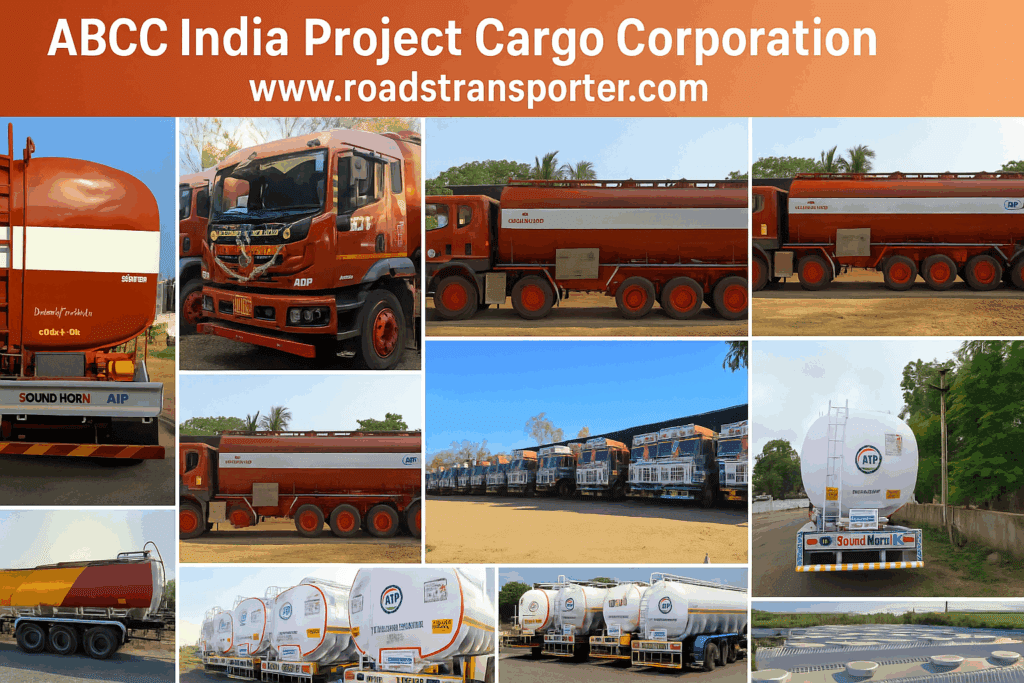
🚛 ABCC India Project Cargo Corporation connects all major refineries through customized heavy-haul and multimodal transport solutions.

💰 Most Selling Products & Raw Material Tentative Rate Chart
| Product Type | Example Brands / Category | Primary Raw Material | Avg Rate (₹) | Major Suppliers |
|---|---|---|---|---|
| Petrol (Gasoline) | Premium / Normal Fuel | Crude Oil | ₹102 – ₹115 /litre | IOCL, BPCL, HPCL |
| Diesel | Automotive Diesel | Crude Oil | ₹90 – ₹100 /litre | Reliance, HPCL |
| LPG / CNG | Domestic & Auto Gas | Natural Gas | ₹65 – ₹90 /m³ | GAIL, Adani Gas |
| Jet Fuel (ATF) | Aviation Turbine Fuel | Crude Oil | ₹120 – ₹140 /litre | IOCL, BPCL |
| Petrochemicals | Polyethylene, Polypropylene | Naphtha, Ethane | ₹80 – ₹150 /kg | RIL, HPL, IOCL |
| Fertilizer Feedstock | Ammonia, Urea | Methane Gas | ₹25 – ₹60 /kg | GNFC, NFL |
| Lubricants & Waxes | Engine Oil, Grease | Base Oil | ₹250 – ₹500 /litre | Castrol, Shell, Valvoline |
📦 Raw-material logistics accounts for 30–40% of final product cost — ABCC India reduces that through multi-axle fleet optimization.
📈 Market Trends and Growth Drivers
🔍 Key Trends
- Digital Transformation of Refineries – IoT, AI and predictive maintenance.
- Green Refining & Biofuel Shift – Ethanol & compressed biogas integration.
- Gas as Transition Fuel – Shift from coal to natural gas for industry power.
- Private Investment Rise – Reliance, Adani, Vedanta expanding domestic capacity.
- Strategic Storage & Energy Security – ISPRL underground reserves built across India.
- Global Energy Partnerships – India–Middle East–Europe corridor emerging.
💡 “Innovation and integration are the two new fuels for India’s energy future.”
⚙️ Indian Regulatory Changes

| Policy / Reform | Year | Impact on Industry |
|---|---|---|
| Deregulation of Petrol and Diesel Prices | 2014 – 2015 | Encouraged competition & private retailers |
| Natural Gas Pricing Reform | 2022 | Linked domestic gas to global indices for transparency |
| Ethanol Blending Programme (20%) | Target 2030 | Reduces oil imports & carbon emission |
| Hydrogen Mission | 2021 | Promotes green hydrogen as next-gen fuel |
| Energy Data Transparency Platform | 2023 | Improves forecasting and supply chain efficiency |
🧭 India’s reforms turn energy policy into economic strategy.
🔮Industry Forecast (2025 – 2040)

| Indicator | 2025 Projection | 2030 Projection | 2040 Vision |
|---|---|---|---|
| Market Value (Global) | USD 8 Trillion | USD 9.8 Trillion | USD 12 Trillion |
| Indian Refining Capacity | 260 MMTPA | 320 MMTPA | 400 MMTPA |
| Gas Share in Energy Mix | 7% | 12% | 15% |
| Renewable Integration | 10% | 25% | 40% |
| Employment Generation | 6 Million | 7.5 Million | 9 Million |
🔋 “Oil fuels today — hydrogen will fuel tomorrow.”
👥 Key Stakeholders in Oil & Gas Ecosystem

| Stakeholder Type | Role | Impact Area |
|---|---|---|
| ⛏️ Exploration Firms | Discover & extract crude oil and gas | Resource availability |
| 🏭 Refineries & Processors | Convert crude into usable fuels & feedstocks | Product quality & efficiency |
| 🚛 Logistics Partners | Transport crude & products nationwide | Supply chain continuity |
| 🧮 Government & Regulators | Policy framework & pricing control | Market stability |
| 👨👩👦 Consumers & Industries | End use in transport, power, fertilizer | Demand creation |
| 🌿 Environmental Agencies | Regulate emission and safety | Sustainability |
🧠 “Oil and gas connect not just industries — they connect civilizations.”
⚠️ Problems & Challenges / Solutions & Innovations
| Challenge | Description | Innovative Solution |
|---|---|---|
| 💸 Price Volatility | Global geopolitical fluctuations | Long-term contracts & energy hedging |
| 🌍 Environmental Pollution | Carbon and oil-spill impact | Carbon capture & green refineries |
| ⛽ Import Dependency | High foreign exchange outflow | Domestic exploration & biofuel substitution |
| 🧰 Aging Infrastructure | Old pipelines & refineries | Digital automation & retrofitting |
| 🧑🏫 Skill Gap | Lack of trained technicians | Skill development centers & AI-based training |
| 🔋 Energy Transition | Shift toward renewables | Hybrid energy policy and investments |
💬 “Challenges drill the path to innovation — the real fuel of progress.”

🚛 Warehousing, Supply Chain & Multimodal Logistics in Oil, Gas & Petrochemical Industry
The lifeline of this sector lies not just in drilling wells — but in moving molecules safely, swiftly, and strategically.
🏗️ Integrated Supply Chain Structure
| Stage | Activity | Transport Mode | Key Infrastructure |
|---|---|---|---|
| Upstream | Crude Extraction → Pipeline transfer | Pipelines / Road | Gathering stations & pump stations |
| Midstream | Refining → Tank storage → Distribution | Rail / Sea / Road | Refineries, terminals, tank farms |
| Downstream | Retail fuel & chemical supply | Road / Air freight | Petrol pumps, warehouses, ports |
🧱 ABCC India Project Cargo Corporation’s Role
- Specialized multi-axle trailers & girder bridge carriers for refinery equipment.
- FTL & LTL operations for bulk and containerized petrochemical shipments.
- End-to-end logistics from port to plant across 36 states.
- Safety certified drivers & GPS fleet management.
- Warehousing support near Jamnagar, Paradip, Kochi & Mumbai.
💬 “From drilling site to refining gate — ABCC India keeps the energy economy in motion.”
💸 New Tax Slab Impact on Domestic & Global Oil Business

| Region | Tax Framework | Impact on Pricing & Logistics |
|---|---|---|
| 🇮🇳 India | GST excluded on crude oil & fuels (central excise + VAT model) | Multiple state taxes increase fuel price variation |
| 🇪🇺 European Union | Carbon tax & high VAT (20 % avg) | Push towards green energy investments |
| 🇺🇸 USA | Moderate state fuel tax (8–12 %) | Encourages domestic refining capacity |
| 🌏 Global Trend | Emerging “Green Tax” policies | Incentivizes bio-fuel and renewable integration |
🧾 “Tax policy is the steering wheel that drives energy transition costs.”
🏛️ Political Clash & Geopolitical Influence
| Event / Region | Outcome | Industry Effect |
|---|---|---|
| Russia–Ukraine War (2022– ) | Supply chain disruption & price spikes | India buys discounted crude → exports refined fuel |
| OPEC Production Cuts | Controlled supply to raise prices | Volatile market for import-dependent countries |
| Middle East Tensions | Freight insurance and shipping delays | Increases logistics and fuel premiums |
| India–USA Energy Cooperation | LNG imports and tech transfer | Strengthened energy security |
| Asia Energy Corridor 2025 | Pipeline connectivity project | Reduced sea route dependency |
🌍 “Politics defines price, but logistics defines availability.”

🌱 Future of Oil, Gas & Petrochemicals (2030 – 2050)

| Focus Area | Future Trend | Expected Outcome |
|---|---|---|
| Hydrogen Economy | Green hydrogen production & storage | Carbon-neutral energy corridor |
| Bio-Energy | Bio-CNG, ethanol, and algae fuels | Rural economic uplift |
| AI & Automation | Predictive maintenance & smart refineries | Reduced downtime & costs |
| Recycling Petrochemicals | Circular plastic economy | Sustainability and zero waste |
| Digital Logistics | Real-time route optimization | Faster delivery & cost saving |
🔋 “Tomorrow’s oil industry will be driven by data, not diesel.”

📚 Best Books on Oil, Gas & Petrochemicals Industry

| Book Title | Author / Publisher | Focus Area | Approx. Price (₹) |
|---|---|---|---|
| The Prize: The Epic Quest for Oil, Money & Power | Daniel Yergin | Global history of oil industry | 900 |
| Oil 101 | Morgan Downey | Fundamentals of exploration & refining | 850 |
| The New Map: Energy, Climate, and the Clash of Nations | Daniel Yergin | Geopolitics & energy future | 1 000 |
| Twilight in the Desert | Matthew Simmons | Saudi oil production analysis | 950 |
| Energy for Future Presidents | Richard Muller | Simplified global energy overview | 700 |
| Oil and Gas Company Analysis | Aloke Chakrabarti | Indian industry valuation | 600 |
| Petrochemical Processes Handbook | Gulf Publishing | Technical manufacturing guide | 1 200 |
| Crude Volatility | Robert McNally | Economics of oil price fluctuations | 800 |
| Hydrogen Economy | Jeremy Rifkin | Future clean energy revolution | 750 |
| Deepwater Horizon’s Final Hours | National Geographic Editors | Safety lessons in oil operations | 650 |
🎬 Best Movies & Web Series on Oil, Gas & Petrochemicals
| Title | Year | Type | Key Theme | Relevance to Industry |
|---|---|---|---|---|
| There Will Be Blood | 2007 | Film | Early oil drilling era | Entrepreneurial vision & greed |
| Deepwater Horizon | 2016 | Film | Rig explosion & safety failure | Importance of safety compliance |
| Syriana | 2005 | Film | Oil politics & corruption | Energy geopolitics |
| BP Oil Spill: Inside the Disaster | 2010 | Documentary | Environmental impact | Crisis management |
| Big Men | 2013 | Documentary | African oil ventures | Risk & reward in exploration |
| The Prize (PBS Series) | 1992 | Docu-Series | Global history of oil | Industrial evolution |
| Gasland | 2010 | Documentary | Fracking controversy | Environmental issues |
| Oil Crash | 2006 | Documentary | Global energy dependence | Futuristic forecast |
| Hellfighters | 1968 | Classic Film | Oil-well firefighting | Heroism in operations |
| The Age of Big Oil | 2020 | Docu-Series | Rise of energy giants | Corporate strategy |
🛢️ The Game of Oil: Power, Money, Conspiracy, Rivalry, Shock, Profit & Loss

| Corporate Emotion / Factor | Industrial Meaning | Example / Case Study | Impact on Global Industry |
|---|---|---|---|
| ⚡ Power | Energy equals control — nations that control oil control influence. | OPEC nations deciding global oil output quotas. | Oil becomes a geopolitical weapon, driving global inflation and diplomacy. |
| 💰 Money | Oil is the world’s costliest addiction — it fuels every economy. | Aramco, Shell, and Reliance reporting record profits amid crises. | Billion-dollar profits shape stock markets and trade balances. |
| 🧩 Conspiracy | Every barrel of oil hides a negotiation, a sanction, or a secret alliance. | Russia–Ukraine war, U.S.–Iran sanctions, OPEC+ decisions. | Political agendas manipulate prices and logistics corridors. |
| 🔥 Rivalry | Industrial and national competition to dominate energy markets. | U.S. vs OPEC; India vs China in crude imports; Reliance vs PSU refineries. | Creates innovation in technology but weakens global unity. |
| ⚠️ Shock | Oil industry faces repeated crises that test its resilience. | 1973 Oil Crisis, 2020 COVID lockdown, Suez Canal blockage. | Price crashes and supply chain disruptions cause worldwide panic. |
| 📈 Profit | Every crisis eventually drives reinvention and investment. | India’s refinery modernization and hydrogen economy initiatives. | New opportunities in LNG, renewables, and logistics expansion. |
| 📉 Loss | The hidden cost — environmental degradation and economic volatility. | Oil spills, carbon emissions, subsidy burden. | Accelerates transition toward clean, renewable alternatives. |
💬 “The oil barrel is not just filled with fuel — it’s filled with ambition, strategy, and survival.”
🧭 Corporate Lessons from “The Game of Oil”

| Phase | Strategic Business Lesson | India’s Direction / Insight |
|---|---|---|
| ⚡ Power | True leadership is about controlling energy ethically, not politically. | Build self-reliant refining and renewable capacity. |
| 💰 Money | Profit without sustainability is a short-term victory. | Integrate carbon credits and green logistics. |
| 🧩 Conspiracy | Transparency builds durable alliances. | Strengthen India’s global energy diplomacy. |
| 🔥 Rivalry | Competition drives evolution and efficiency. | Encourage private–public partnerships and innovation. |
| ⚠️ Shock | Crisis is the best catalyst for reinvention. | Invest in digital refineries and resilient supply chains. |
| 📈 Profit | The future belongs to those who adapt fastest. | Embrace EV, LNG, and hydrogen-powered logistics. |
| 📉 Loss | Preventive measures cost less than reactive cleanups. | Enforce strong environmental and transport safety norms. |
🧠 “In business, every barrel teaches a lesson — how to rise again after every fall.”
🏗️ The Seven Forces of the Oil World

| Element | Represents | Long-Term Insight |
|---|---|---|
| ⚡ Power | Control | Nations rise and fall by how they manage resources. |
| 💰 Money | Motivation | Wealth flows where energy flows. |
| 🧩 Conspiracy | Strategy | Politics hides behind every pipeline. |
| 🔥 Rivalry | Innovation | Competition is the real catalyst of progress. |
| ⚠️ Shock | Reality | Disruption breeds reinvention. |
| 📈 Profit | Opportunity | Every crisis creates a new market. |
| 📉 Loss | Awareness | Sustainability is the final balance sheet. |
💼 “The Game of Oil is not only about energy — it’s a mirror of global ambition, fear, and transformation.”
⚡ The Electric Vehicle Revolution and Its Impact on the Oil, Gas & Petrochemical Industry

Electric Vehicles (EVs) are no longer just futuristic concepts — they are the new engines of mobility, transforming how energy is produced, distributed, and consumed. With global EV adoption accelerating, the Oil, Gas & Petrochemical industry — which has powered the world for 150 years — is entering its most significant period of transformation since industrialization began.
🔋 Why EVs Are Changing the Energy Equation
For decades, crude oil has been the world’s dominant transportation fuel source.
Around 60–70% of crude oil globally goes into making petrol, diesel, and aviation fuels — the lifeblood of mobility. But as electric vehicles replace internal combustion engines (ICEs), this core demand segment of oil begins to shrink.
🌍 Key EV Growth Drivers:
- Government incentives and zero-emission policies.
- Rapid decline in battery costs and improvement in range.
- Corporate sustainability goals and ESG mandates.
- Urban pollution control and renewable energy integration.
According to the International Energy Agency (IEA), by 2030, over 250 million EVs will be on global roads, reducing oil demand by nearly 5–7 million barrels per day.
💡 “The world won’t stop using energy — it will simply start using cleaner energy.”
🛢️ The Decline of Traditional Fuel Demand

The first major impact is on refineries and petroleum retailers.
If fuel demand falls, refineries processing crude oil for transport fuels must either diversify into petrochemicals or risk redundancy.
⚙️ Refinery Transition Strategy
| Old Focus | Future Focus |
|---|---|
| Gasoline & Diesel | Petrochemical feedstocks (ethylene, propylene) |
| Furnace Oil | Hydrogen & Ammonia production |
| Asphalt & Lube | Biofuel and circular plastic feedstock |
This shift converts refineries into “integrated energy hubs”, where crude isn’t just burned — it’s transformed into materials that still power modern life.
🧭 Refineries that reinvent become sustainable; those that resist become obsolete.
🧪 Petrochemicals Will Remain the Lifeline
Even if mobility electrifies, the petrochemical segment (plastics, fertilizers, fibers, detergents) remains indispensable.
From solar panels to EV batteries, every green technology still requires petrochemical derivatives — polymers, lubricants, coolants, and synthetic materials.
Thus, oil’s use will shift — not vanish.
📊 Future Composition of Oil Demand (IEA 2040 Forecast)
| Sector | Current Share | 2040 Share |
|---|---|---|
| Transport Fuels | 60% | 35% |
| Petrochemicals | 15% | 35% |
| Industrial & Others | 25% | 30% |
So, while EVs may reduce petrol and diesel sales, oil companies will invest heavily in petrochemical capacity — especially in India, China, and the Middle East.
🚛 Logistics & Infrastructure Transformation
As oil demand diversifies, the logistics network behind it also evolves.
🔄 Key Changes:
- Fuel Distribution Shrinkage:
Fewer fuel trucks, but higher demand for chemical tankers and LNG logistics. - Warehouse Conversion:
Traditional depots will convert into battery storage or chemical terminals. - Energy Corridors Modernization:
EV supply chains will require transport of lithium, nickel, hydrogen, and battery packs — opening new logistics opportunities.
🚚 ABCC INDIA’s Role
ABCC INDIA PROJECT CARGO CORPORATION — already a leader in ODC & heavy cargo logistics — is poised to play a pivotal role here:
- Transport of hydrogen plant reactors, electrolyzers, LNG storage tanks, and refinery upgrade equipment.
- Development of EV-component logistics routes across ports, industrial parks, and renewable corridors.
- Use of GPS-enabled trailers & multimodal hubs under India’s PM Gati Shakti plan.
🧠 “EV revolution doesn’t end oil logistics — it redefines what we move.”
💰 Economic Impact on Oil-Producing Nations
Oil-rich economies (like Saudi Arabia, Russia, and Gulf nations) are already preparing for the post-oil era.
Saudi Arabia’s Vision 2030 focuses on diversifying away from crude dependency into renewables and petrochemicals — a clear indication that global power centers understand the inevitable shift.
For India, which imports 85% of its oil, EVs present a strategic advantage — lowering import bills while boosting local manufacturing (batteries, chargers, and electronics).
🌱 The Rise of Hydrogen and Biofuels
EVs are the first step, not the final solution. The next frontier is hydrogen — especially for long-haul trucks, ships, and industries.
Petrochemical firms will now invest in green hydrogen, biofuels, and synthetic fuels that bridge fossil and renewable energy.
India’s National Hydrogen Mission and ethanol blending program already show how the country is balancing traditional energy with modern alternatives.
🔋 “From petrol pumps to power grids — the transition is technological, not ideological.”
🧭 India’s Dual Energy Future
Unlike Western nations moving rapidly toward EVs, India will follow a hybrid model — where:
- Urban transport electrifies, but
- Rural logistics, aviation, and industry still depend on traditional fuels for decades.
Hence, both energy systems will co-exist, creating parallel growth opportunities in:
- EV infrastructure manufacturing
- LNG & CNG expansion
- Bio-refineries and petrochemical clusters
This dual energy economy ensures India’s stability during the transition period.
🔮 The Road Ahead – Reinvention, Not Replacement
The Oil, Gas & Petrochemical industry will not disappear — it will reinvent itself through:
- Integration with renewable energy systems
- Large-scale carbon capture technologies (CCS)
- Circular economy models where waste plastics re-enter production
- Heavy logistics digitization
In this evolution, logistics pioneers like ABCC India Project Cargo Corporation will lead the movement of future energy assets, turning transport into transformation.
🏁 The EV revolution signals a massive economic shift, not an extinction event for the oil industry.
Yes, traditional fuel sales will decline — but demand for chemicals, hydrogen, and logistics infrastructure will surge.

The winners will be those who adapt early — integrating digital logistics, renewable technology, and circular manufacturing.
India’s biggest strength lies in its adaptability, and companies like ABCC INDIA PROJECT CARGO CORPORATION are already building the roads — literally and figuratively — for the next energy revolution.
🧭 Industry Summary & Conclusion
The oil, gas & petrochemical sector is the engine of modern civilization — powering transport, manufacturing, and innovation.
India’s journey from Digboi’s colonial well to Jamnagar’s global refinery proves its industrial resilience and technological vision.
The future will not abandon oil — it will transform it through green hydrogen, bio-energy, and digital supply chains.
With strong logistics partners like ABCC INDIA PROJECT CARGO CORPORATION, this transition becomes smarter, safer, and more sustainable.
🧠 “Energy isn’t just fuel — it’s freedom, and freedom needs movement.”
🏁 ABCC India Message
ABCC INDIA PROJECT CARGO CORPORATION is India’s most trusted heavy cargo and energy equipment transporter, supporting refineries, gas plants, and petrochemical zones with custom trailers and multimodal solutions.
🔧 Our Capabilities
- ODC & super-heavy cargo handling for refinery units.
- Pan-India road network linked to ports and industrial corridors.
- 24×7 fleet tracking, insurance & compliance support.
- Dedicated team for energy sector logistics planning.