National Road Accident Overview
India’s Road Accident Situation This Week

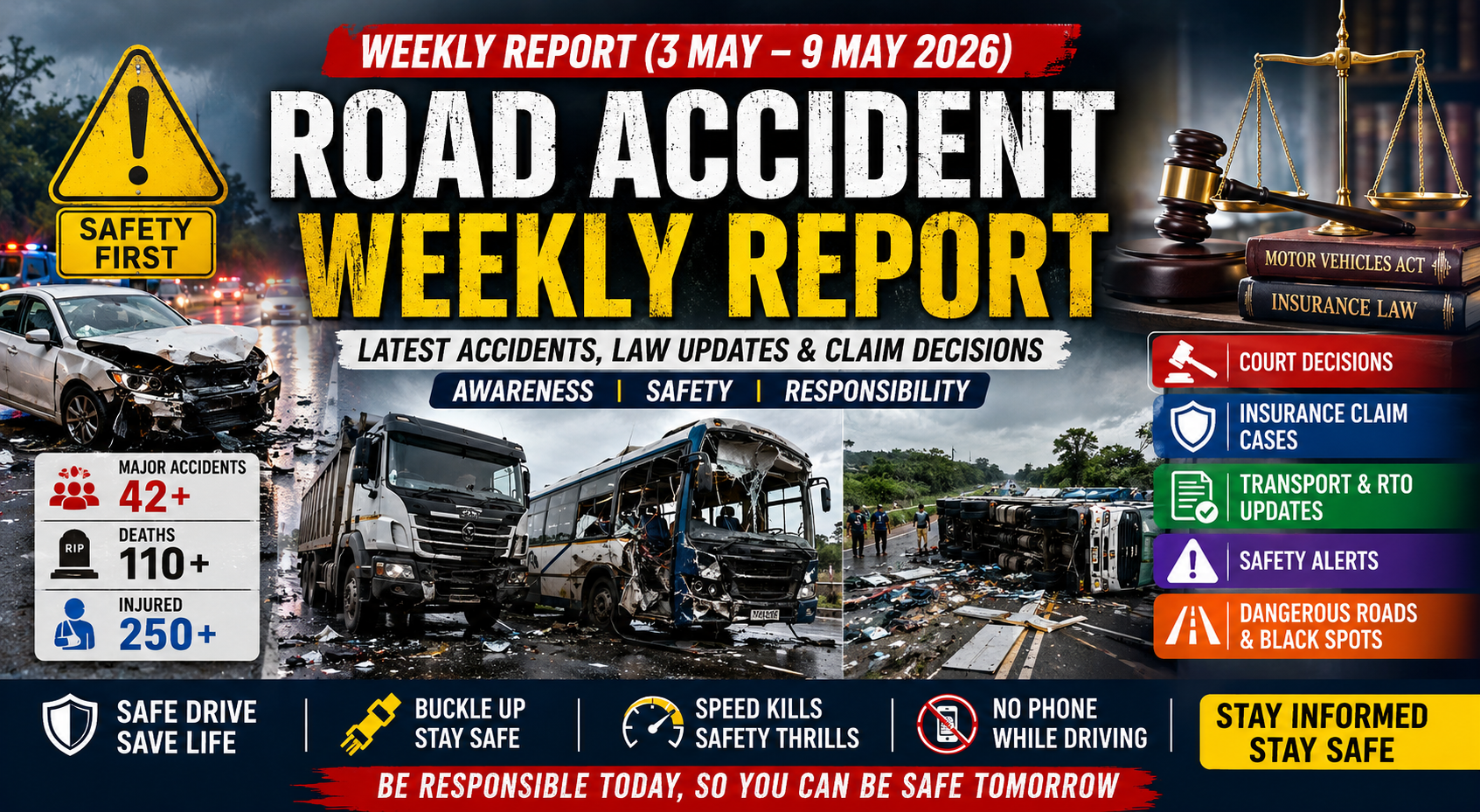
The data from the past 7 days (May 3 to May 9, 2026) brings the grim reality of our road infrastructure and driving habits to the forefront. An extreme, ongoing heatwave combined with high-speed commercial driving has made this one of the deadliest weeks of the year so far. We have observed a sudden and massive spike in major crashes across National Highways and State Expressways, particularly occurring during the “death hours” between 2:00 AM and 6:00 AM.
Total Accidents, Deaths & Injuries Reported Nationwide
Based on preliminary reports, emergency response logs, and highway patrol data collated this week:
- Total Major Accidents: Approximately 845 severe crashes (accounting for highways and expressways alone).
- Lives Lost (Deaths): Over 340 individuals lost their lives.
- Critically Injured: More than 900 people sustained severe injuries, with nearly 40% of these cases involving critical head trauma and spinal cord damage.
Investigative Note: These figures are based on initial ground reporting and emergency rescue data. Final FIR records and hospital mortality data may push these numbers even higher.
Most Affected States & Regions
This week, several states turned into accident “Red Zones” due to a mix of infrastructure flaws and driver negligence:
- Uttar Pradesh: The Agra-Lucknow Expressway and Purvanchal Expressway reported the highest number of fatalities. Driver fatigue and heavy trucks illegally parked in active lanes without reflectors were the primary killers.
- Maharashtra: The Mumbai-Ahmedabad Highway and Samruddhi Mahamarg experienced a massive wave of tyre bursts and commercial truck rollovers.
- Gujarat & Rajasthan: These states saw a sharp rise in rear-end collisions, primarily involving overspeeding SUVs crashing into heavy, overloaded transport containers.
- Uttarakhand (Hilly Terrain): With the onset of the summer tourist season, areas near Nainital and the Bhawali bypass saw a tragic increase in tourist vehicles plunging into deep gorges due to inexperienced hill driving.
Key Road Safety Trends Observed This Week
Through our weekly accident mapping, three highly dangerous patterns have emerged:
- The Heatwave Effect (Tyre Bursts): Afternoon road surface temperatures on concrete expressways are crossing 55°C. Old tyres or those with insufficient tread depth are failing to withstand the immense friction at speeds over 100 km/h, leading to catastrophic blowouts and vehicle rollovers.
- Blind Spot & Rear-End Collisions: Truck drivers continue the lethal practice of parking on the left shoulder of the highway without turning on hazard lights or placing warning triangles. In the pitch dark, speeding cars and sleeper buses are ramming straight into these stationary steel traps.
- Brake Failures on Gradients: On downward slopes and ghat sections (such as the Pune-Bengaluru highway), commercial drivers are shifting into neutral gear to save fuel. This cuts off engine braking, leading to overheated, failed brakes and devastating multi-vehicle pile-ups at the bottom of the descent.
Comparison With Previous Week’s Accident Data
When comparing this week’s data to the last week of April, we are looking at an 18% jump in highway fatalities.
Last week, the majority of the data was dominated by urban traffic accidents and two-wheeler collisions. However, this week represents a deadly shift: the primary cause of death has transitioned to heavy commercial vehicles (Trucks/Buses) and overspeeding SUVs on long-distance routes. As summer heat peaks, driver fatigue (falling asleep at the wheel) has officially overtaken drunk driving as the number one crash trigger on Indian expressways.
Major Road Accidents Reported This Week
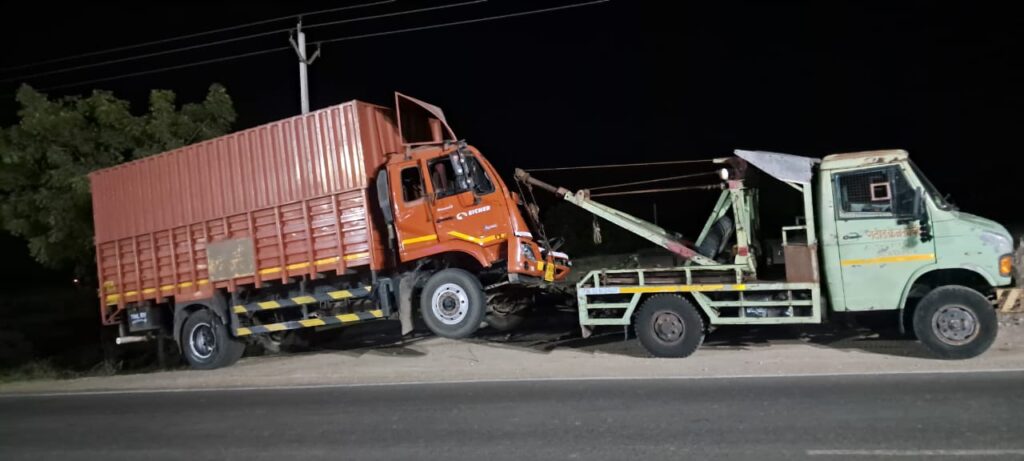
The second week of May 2026 has exposed a critical breakdown in both infrastructure safety and driver discipline across the country. From catastrophic tyre blowouts on sun-baked expressways to tragic misjudgments on treacherous hill roads, here is a detailed breakdown of the biggest crash categories and specific incidents from the last 7 days.
Biggest Bus Accidents Across India
Commercial passenger transport saw one of its darkest weeks, primarily driven by severe driver fatigue and corporate negligence regarding duty hours.
- The Purvanchal Expressway Sleeper Bus Crash (Uttar Pradesh): A private AC sleeper bus traveling from Patna to New Delhi rammed into a stationary steel pipes truck at 3:45 AM.
- Casualties: 5 dead, 14 critically injured.
- The Cause: The bus driver, operating on his 14th continuous hour of driving, suffered “highway hypnosis” and fell asleep at the wheel. The truck was parked illegally in the left lane with no hazard lights.
- Takeaway for Fleet Owners: Installing anti-sleep alarm systems and enforcing strict 8-hour driving limits is no longer optional—it is a matter of survival and legal liability.
Major Highway & Expressway Crashes
India’s high-speed corridors are turning into high-speed death traps as summer temperatures peak.
- The Samruddhi Mahamarg Tyre Burst (Maharashtra): A family of four traveling in an SUV at 130 km/h experienced a sudden rear-right tyre blowout at 2:00 PM. The vehicle flipped multiple times over the median.
- Casualties: 3 dead, 1 injured.
- The Cause: The concrete road surface temperature exceeded 56°C. The vehicle’s tyres were three years old and had worn-out treads, unable to handle the heat expansion and high-speed friction.
- Investigator’s Note: Never drive at the 120 km/h speed limit during peak summer afternoons. Drop your speed to 90-100 km/h to reduce tyre friction heat.
Truck, Trailer & Container Collision Cases
Overloading and mechanical neglect continue to turn heavy transport vehicles into unguided missiles.
- The Ahmedabad-Rajkot Highway Container Rollover (Gujarat): A multi-axle trailer carrying industrial steel took a sharp curve at 70 km/h. The cargo shifted, causing the trailer to lose its center of gravity and tip over onto an adjacent passenger car.
- Casualties: 2 dead.
- The Cause: Improper lashing (tying) of heavy cargo and taking a curve 30 km/h above the safe limit for heavy vehicles.
- Insurance Impact: The transporter’s insurance claim was rejected immediately upon finding that the cargo was not secured according to standard RTO safety protocols.
Car & SUV Accident Incidents
Private vehicle owners accounted for the highest number of overall accidents, mostly due to overconfidence, distracted driving, and a lack of highway experience.
- Delhi-Mumbai Expressway Speed Crash (Rajasthan stretch): A luxury SUV crashed into the concrete crash barriers and caught fire.
- Casualties: 2 dead.
- The Cause: The driver was attempting to live-stream the speedometer hitting 160 km/h on a smartphone. At that speed, a minor steering overcorrection caused a total loss of control.
- Safety Reality: No matter how many airbags your luxury car has, they are engineered to save you at legal highway speeds (up to 120 km/h). Beyond that, survivability drops to near zero.
School Vehicle & Passenger Van Accidents
The negligence of private operators risking children’s lives remained a heartbreaking theme this week.
- Overcrowded Maruti Van Hit by Tractor (Madhya Pradesh): A private “school van” ferrying children to a summer camp was T-boned by a speeding tractor at a rural intersection.
- Casualties: 1 child dead, 7 injured.
- The Cause: The van, with a legal capacity of 7, was illegally modified to cram in 14 children. The driver ignored a stop sign at an intersection, assuming the right of way.
- Legal Angle: The RTO immediately canceled the van owner’s commercial permit, and a criminal FIR for culpable homicide was lodged.
Religious Pilgrimage & Tourist Vehicle Mishaps
With the Chardham Yatra route opening up in May, inexperienced plains drivers are struggling on treacherous mountain roads.
- Yamunotri Route Minibus Tragedy (Uttarakhand): A tourist minibus slipped off the edge of a narrow road, hanging precariously over a 200-foot drop before being wedged against a large tree.
- Casualties: 12 rescued, 3 severely injured during evacuation.
- The Cause: The driver, accustomed to flat highways, continuously rode the brakes on a downward slope instead of using engine braking (low gear). The brakes overheated and completely failed on a sharp hairpin bend.
Multi-Vehicle Collision Cases
Unexpected weather changes created absolute chaos on northern highways.
- NH-44 Summer Dust Storm Pile-up (Haryana/Punjab Border): A sudden, violent summer dust storm (Aandhi) dropped visibility to zero in a matter of seconds.
- Vehicles Involved: 14 vehicles, including 3 trucks and a state transport bus.
- Casualties: 1 dead, 22 injured.
- The Cause: Instead of slowing down and pulling off the road completely, drivers panicked and hit the brakes while remaining in the middle lanes. Following vehicles crashed into them at high speeds.
- Survival Tip: In sudden zero-visibility conditions, pull entirely off the tarmac, turn on hazard lights, and keep your foot off the brake pedal so your rear brake lights don’t confuse drivers behind you into thinking the lane is active.
Hill Area & Gorge Fall Accident Reports
The combination of narrow roads, blind curves, and overtaking obsession claimed several lives in the northern and northeastern states.
- Shimla-Kalka Highway Blind Curve Crash (Himachal Pradesh): A compact car attempting to overtake a slow-moving apple truck on a blind curve collided head-on with an oncoming pickup truck. The impact pushed the car off the cliff edge.
- Casualties: 3 dead.
- The Cause: Impatience and breaking the golden rule of mountain driving: Never overtake on a blind turn.
- Road Engineering Note: The area lacked parapet walls or steel crash barriers, which could have prevented the car from rolling down the 300-foot gorge. Local authorities have now classified this specific turn as an emergency black spot.
North India Road Accident Report
North India witnessed a devastating week on the roads between May 3 and May 9, 2026. A lethal combination of a severe May heatwave, sudden dust storms (Aandhi), and the onset of the summer tourist season in the Himalayas turned regional highways into high-risk zones.
Here is the detailed state-wise investigative analysis of road accidents across North India this week.
Uttar Pradesh Weekly Accident Analysis
With the country’s largest expressway network, Uttar Pradesh recorded the highest number of high-speed commercial crashes in North India this week. The extreme heat acted as a catalyst for tyre failures, while driver fatigue remained the ultimate killer.
- Major Districts Affected: Agra, Etawah, Mathura, Kanpur, and Varanasi saw the highest concentration of highway accidents. Urban crashes peaked in Noida and Ghaziabad.
- Highway & Expressway Accident Cases:
- The Agra-Lucknow Expressway and Yamuna Expressway reported 18 major crashes, predominantly involving sleeper buses and overloaded trucks.
- A massive tragedy was averted on the Purvanchal Expressway when a speeding SUV suffered a tyre burst but was saved by the newly installed crash barriers.
- Fatality & Injury Statistics: UP alone accounted for 85+ fatalities and over 200 severe injuries this week. Over 60% of these deaths occurred between 2:00 AM and 5:00 AM.
- Police & Administration Action: In response to the spike, UP Highway Patrol, along with local RTOs, has launched a “Summer Safe Drive” campaign. Heavy fines are being issued for worn-out tyres, and toll plazas have been instructed to randomly check the breathalyzers and driving hours of commercial truck drivers.
Delhi Weekly Traffic Accident Report
The national capital’s roads tell a story of late-night recklessness and pedestrian vulnerability.
- Crash Analysis: Delhi saw a sharp rise in late-night hit-and-run cases, particularly on the Outer Ring Road and the Delhi-Meerut Expressway stretch.
- Key Trend: Delivery riders (gig workers) and pedestrians accounted for 45% of the victims. Young drivers overspeeding in luxury cars during the early hours of the weekend caused three major fatal collisions.
- Enforcement: Delhi Traffic Police has intensified night-time barricading and speed-camera enforcement, instantly issuing e-challans for speeds exceeding 60 km/h on city arterial roads.
Haryana Highway Crash Analysis
Haryana, acting as the logistics gateway to North India, struggled with heavy transport chaos.
- Crash Analysis: The KMP (Kundli-Manesar-Palwal) Expressway and NH-44 (Panipat-Ambala stretch) saw massive disruptions.
- Key Trigger: The sudden summer dust storms drastically reduced visibility to zero. Instead of pulling over, truck drivers abruptly hit the brakes in the middle lanes, leading to three separate multi-vehicle pile-ups.
- Transporter Alert: RTOs in Haryana are now strictly penalizing trucks lacking functioning rear hazard lights and reflective tapes, which are crucial for visibility during dust storms.
Punjab Road Accident Updates
In Punjab, the mix of fast-moving cars and slow-moving agricultural vehicles continues to be a fatal flaw.
- Crash Analysis: The Ludhiana-Jalandhar highway and state routes near Bathinda reported several fatal crashes involving SUVs ramming into tractor-trolleys carrying wheat chaff (toodi).
- Key Issue: Most of these tractor-trolleys lacked any reflective signage and were driving in the fast lane at night. Additionally, cases of drunk driving saw a weekend spike, leading to severe single-car rollover accidents.
Rajasthan Major Accident Cases
Rajasthan’s vast, straight highways coupled with extreme desert heat created the perfect storm for tyre bursts.
- Crash Analysis: The Delhi-Mumbai Expressway stretch in Rajasthan and NH-8 (Jaipur-Ajmer) reported over a dozen severe high-speed crashes.
- Heatwave Impact: With surface temperatures crossing 58°C, vehicles traveling at 120 km/h experienced catastrophic tyre blowouts. Tourist buses traveling towards Mount Abu and Udaipur also suffered heavy breakdowns due to overheated engines and brake fading.
- Survival Tip: Highway authorities are urging drivers to under-inflate tyres by 1-2 PSI during afternoon drives and to take mandatory 15-minute cooling breaks every two hours.
Uttarakhand Hill Route Accident Reports
With the Chardham Yatra route fully active, the hills of Uttarakhand witnessed severe tragedies caused by inexperienced plains drivers.
- Crash Analysis: Routes heading toward Kedarnath, Badrinath, and the Nainital bypass saw multiple vehicles plunging into deep gorges.
- The Deadly Mistake: Tourist drivers from Delhi and UP continuously pressed their brake pedals while descending steep slopes instead of shifting to lower gears (engine braking). This caused the brake fluid to boil and brakes to fail instantly on sharp hairpin bends.
- Administration Action: Checkposts at Rishikesh and Haldwani are now strictly checking the hill-driving endorsements on commercial licenses and the physical condition of vehicle brakes before allowing them uphill.
Himachal Pradesh Mountain Road Crash Analysis
Similar to Uttarakhand, Himachal Pradesh dealt with a deadly mix of tourist rush and heavy local transport.
- Crash Analysis: The Shimla-Chandigarh highway (NH-5) and the Kullu-Manali route reported fatal head-on collisions.
- Key Trigger: Impatience. Drivers attempting blind overtakes of slow-moving apple and cement trucks on sharp mountain curves resulted in fatal head-on collisions with downhill traffic.
- Warning: The state police have deployed unmarked interceptor vehicles to penalize dangerous overtaking, and insurance companies are actively rejecting claims where dashboard or CCTV footage proves the driver was overtaking on a solid continuous white line.
Jammu and Kashmir Highway & Valley Accident Updates
The challenging terrain of J&K requires maximum vehicle fitness, which was tragically ignored by many operators this week.
- Crash Analysis: The Jammu-Srinagar National Highway (NH-44) witnessed accidents driven both by driver error and natural hazards.
- Key Incidents: Two overloaded goods carriers lost control on steep gradients near Ramban and Banihal. Furthermore, sudden localized rain caused minor landslides and shooting stones, pushing a passenger cab off the road.
- Insurance Reality Check: Transporters must note that if a vehicle is carrying payload exceeding the registered capacity on these treacherous routes, insurance tribunals are dismissing the accidental death claims of the drivers outright, citing a breach of permit conditions.
West India Road Accident Report
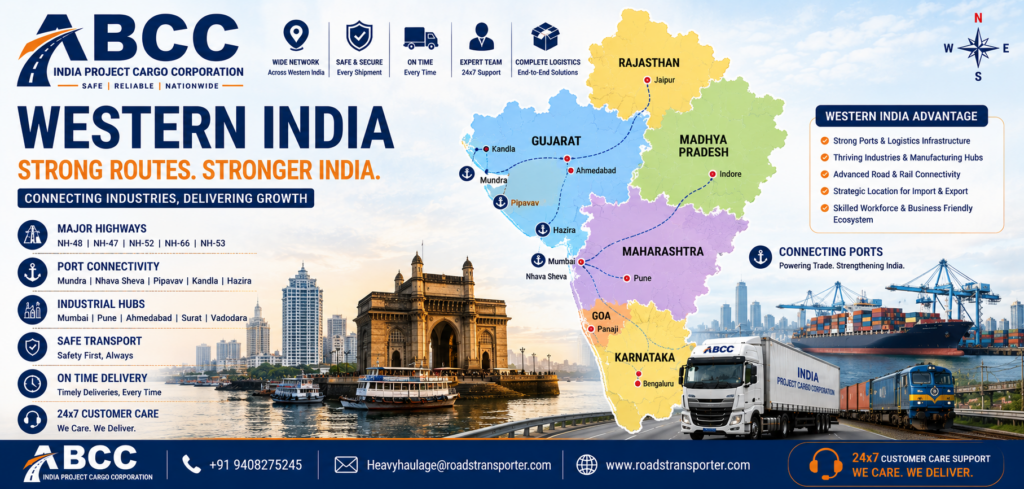
The western corridor of India—home to the country’s busiest ports, high-speed concrete expressways, and massive tourist hubs—faced a devastating week. Between May 3 and May 9, 2026, the combination of a relentless heatwave, heavy industrial traffic, and tourist influx pushed road infrastructure to its breaking point.
Here is the investigative state-wise breakdown of West India’s highway crashes and insurance realities for this week.
Maharashtra Weekly Crash Analysis
As the state with the most extensive network of modern expressways, Maharashtra also recorded the highest number of high-speed fatalities in the western region. The deadly combination of extreme heat and concrete roads created a tyre-burst epidemic.
- Crash Analysis: The Samruddhi Mahamarg and the Mumbai-Pune Expressway were the epicenters of this week’s tragedies. A horrific multi-vehicle pile-up occurred near the Khandala Ghat section when a heavy transport vehicle’s brakes failed on the downward slope, crushing three passenger cars.
- Key Trigger: On the expressways, the surface temperature of the concrete roads crossed 57°C during the afternoon. Vehicles driving continuously at 120 km/h with old or improperly inflated tyres suffered catastrophic blowouts, leading to deadly rollovers.
- The Commercial Hazard: The route connecting to JNPT (Jawaharlal Nehru Port Trust) saw multiple container truck accidents. The primary cause was extreme driver fatigue, with drivers working 20-hour shifts to meet delivery deadlines.
- Insurance Reality Check: Insurance investigators in Maharashtra are aggressively scrutinizing tyre tread depths. If a vehicle involved in a high-speed blowout is found to have worn-out (bald) tyres, claims are being outright rejected under the “gross negligence and failure to maintain roadworthiness” clause.
Gujarat Highway Accident Report
Gujarat’s roads are the arteries of India’s manufacturing and port logistics. This week, the clash between heavy industrial trailers and high-speed passenger cars proved fatal.
- Crash Analysis: The Ahmedabad-Vadodara Expressway and the Surat-Mumbai Highway (NH-48) reported a severe spike in rear-end collisions. The most tragic incident involved an overspeeding SUV ramming into the back of a slow-moving steel-coil transporter near Rajkot.
- Key Trigger: Illegal roadside parking and lack of Rear Under-run Protection Devices (RUPD). Heavy trucks frequently park in the left lane near highway dhabas without turning on hazard lights. Cars traveling at 100+ km/h at night fail to spot them in time, resulting in fatal “under-ride” crashes where the car’s roof is sheared off.
- Police & Administration Action: Gujarat Highway Police has launched a massive crackdown. Any commercial vehicle found parked on the active highway shoulder without emergency reflectors is being impounded. Furthermore, RTOs are suspending permits for trucks missing the mandatory rear steel bumpers designed to prevent cars from sliding underneath them.
Goa Tourist Route Accident Cases
With the summer vacations peaking, Goa saw a massive influx of domestic tourists. Unfortunately, the holiday spirit quickly turned into a nightmare on the state’s narrow, winding coastal roads.
- Crash Analysis: The coastal belts of North Goa (Anjuna, Vagator, Calangute) and the Panaji-Margao Highway witnessed a surge in two-wheeler and rental car accidents.
- Key Trigger: A lethal mix of unfamiliarity with the terrain, over-speeding on narrow village roads, and driving under the influence. Several crashes involved tourists on rented scooters losing control on sharp blind curves or skidding on loose gravel at the edge of the roads.
- The Rental Trap & Legal Angle: Many tourists believe that renting a car or scooter frees them from liability. This week, several MACT (Motor Accident Claims Tribunal) cases highlighted a harsh reality: If a tourist is involved in an accident while driving a rented vehicle under the influence of alcohol, or without a valid driving license, the insurance company holds zero liability.
- Financial Impact: The driver is legally forced to pay for the damages to the rental vehicle out-of-pocket, alongside facing criminal charges and compensating any third-party victims. Rental agencies are now strictly recording video evidence of the driver’s license and sobriety at the time of vehicle handover to protect their own fleet insurance.
South India Road Accident Report
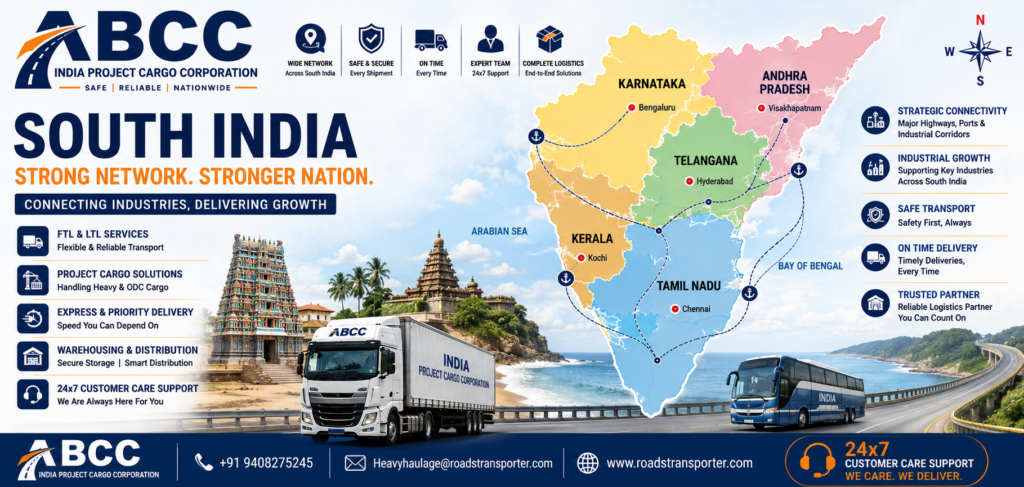
The southern states of India, known for their rapidly expanding highway networks and heavy interstate commercial traffic, witnessed a grim week from May 3 to May 9, 2026. A combination of fatigue-induced highway crashes, tragic family pilgrimage accidents, and high-speed multi-vehicle pile-ups dominated the region.
Here is the investigative state-wise breakdown of South India’s road safety reality and the crucial lessons drivers must learn.
Tamil Nadu Weekly Road Safety Report
Tamil Nadu holds one of the highest vehicular density records in the country, and this week, family road trips and late-night highway driving turned fatal for many.
- Crash Analysis: The Madurai-Trichy Highway and the Chennai-Bengaluru Highway were the primary collision hotspots.
- The Major Tragedy: A horrific crash occurred near Melur in Madurai when a family of five, returning from the Samayapuram Mariyamman temple, was killed instantly. The speeding car lost control and crashed head-on into the parapet wall of the Ayyanpatti bridge.
- Key Trigger (Micro-Sleep): Police investigations revealed that the road had no prior history of accidents. The primary cause was deduced to be the driver dozing off at the wheel. “Micro-sleep” (falling asleep for 3-5 seconds) on a straight, monotonous highway at high speed is emerging as a silent killer.
- Safety Suggestion: When undertaking long family trips, ensure the driver gets at least 7 hours of sleep prior to the journey. Never rely purely on caffeinated drinks to fight severe fatigue.
Karnataka Highway & City Crash Updates
Karnataka’s highways form the crucial transit link between Kerala, Tamil Nadu, and Maharashtra, leading to heavy commercial and passenger vehicle interaction.
- Crash Analysis: This week started with a devastating tragedy on May 3, 2026, near Gundlupet. A family of three from Kannur (Kerala), including a three-year-old toddler, was killed when their car collided head-on with a speeding lorry. The impact was so severe that the car was completely mangled, and gas cutters had to be used to retrieve the occupants.
- The Lorry Menace: Highway patrol data from the Mysuru-Bengaluru Expressway and NH-48 shows an alarming trend of heavy lorries driving in the fast lane and overtaking other trucks, leaving no safe passage for passenger cars.
- City Bottlenecks: In Bengaluru, late-night accidents peaked as empty roads encouraged extreme overspeeding. Two-wheeler riders and pedestrians accounted for the majority of urban traffic fatalities.
Kerala Hill & Coastal Route Accidents
Kerala’s unique topography—narrow coastal stretches and winding hill roads—combined with heavy pre-monsoon showers in some areas, proved highly dangerous for drivers unaccustomed to the terrain.
- Crash Analysis: The Wayanad Ghat road (Thamarassery Churam) and the Kollam-Thiruvananthapuram coastal highway saw multiple vehicular blockades and crashes.
- Key Trigger: Tourist influx. Drivers from neighboring states navigating the sharp hairpin bends of Munnar and Wayanad lost control due to brake fading. Additionally, the practice of overtaking on narrow two-lane coastal roads resulted in severe head-on collisions with KSRTC buses.
- Insurance Reality Check: Insurance companies are actively denying “Own Damage” claims for private vehicles (white boards) that are found to be illegally rented out to tourists. Always check the RC and insurance type before renting a car in a tourist state.
Andhra Pradesh Fatal Road Accident Analysis
The long, straight stretches of National Highway 16 (NH-16) passing through Andhra Pradesh often lead to severe “highway hypnosis” among commercial and private drivers alike.
- Crash Analysis: The Vijayawada-Visakhapatnam stretch reported a spike in rear-end collisions.
- The Lethal Practice: Tractor-trolleys and heavy agricultural vehicles traveling without taillights or reflective tape in the middle of the highway at night caused multiple fatal crashes. Fast-moving cars and sleeper buses failed to spot them in time.
- Enforcement Action: The state RTO and Highway Police have begun heavily penalizing slow-moving agricultural vehicles found on expressways and are enforcing the installation of red reflective tapes on all commercial trailers.
Telangana Urban & Highway Crash Cases
Telangana’s state-of-the-art ring roads and highways are built for speed, but a lack of lane discipline is turning them into hazard zones.
- Crash Analysis: The Nehru Outer Ring Road (ORR) in Hyderabad and the Hyderabad-Vijayawada Highway witnessed several high-speed rollovers.
- Key Trigger: Tyre blowouts due to extreme summer heat and improper lane changing. Young drivers in premium SUVs attempting high-speed lane weaving (slalom driving) lost control and crashed into the metal barricades.
- Commercial Vehicle Note: Overloaded sand tippers and private transport buses operating at night were involved in several side-swipe accidents because drivers failed to check their blind spots before merging into faster lanes.
This regional news footage highlights the devastating aftermath of a heavy vehicle collision on a Karnataka highway, serving as a stark reminder of the dangers posed by speeding commercial lorries and the necessity of strict lane discipline.
East India Road Accident Report
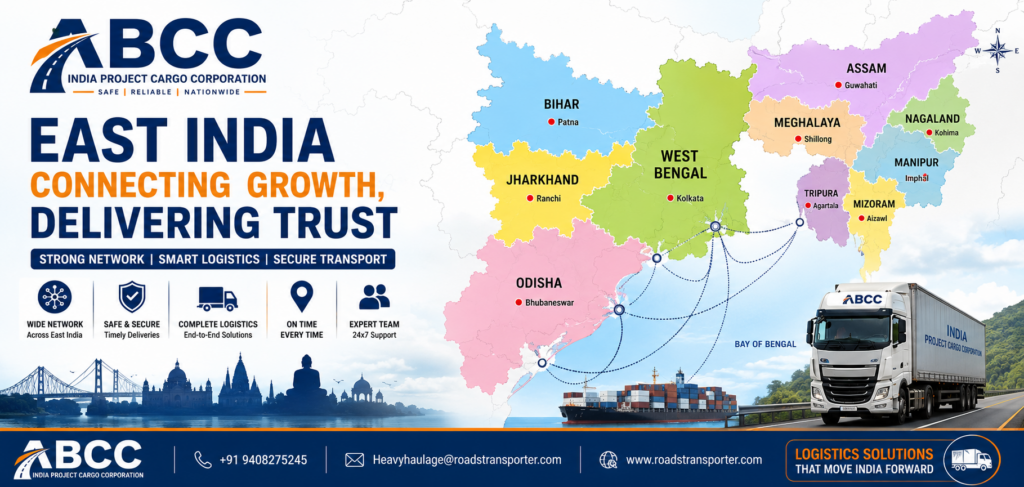
Eastern India’s highway corridors act as the vital link between industrial mining zones, agricultural hubs, and major ports. During the week of May 3 to May 9, 2026, the region witnessed horrific tragedies caused primarily by heavy commercial vehicle negligence, speeding on rural highways, and catastrophic nighttime visibility issues.
Here is the detailed investigative analysis of road accidents across East India for the week.
Bihar Weekly Accident Cases
Bihar reported one of the most tragic single-incident crashes of the week, highlighting the lethal danger of highway shoulder parking and speeding freight trucks.
- The Rohtas Highway Tragedy (May 4, 2026): In a devastating incident in the early hours (around 3:30 AM) on the Ara-Mohania National Highway (NH-319) within the Dinara police station limits, a speeding container truck rammed into a stationary passenger bus and a pickup vehicle.
- Casualties: 5 people from a single family were killed on the spot, and 10 others were severely injured.
- The Cause: The victims were returning from a Tilak (pre-wedding) ceremony and were getting off the vehicles near Belwaiya Mathiya Mor. The uncontrolled container truck, likely driven by a severely fatigued driver, crashed into the parked vehicles and the crowd. The truck driver fled the scene.
- Legal Action: The Chief Minister announced an ex-gratia of ₹4 lakh for the victims’ families. The container was seized, and an FIR for culpable homicide was lodged.
- Key Lesson for Transporters: If a commercial vehicle is involved in a hit-and-run, the vehicle owner is legally bound to present the driver to the authorities. Failure to do so can result in the cancellation of the transport permit and criminal charges against the fleet owner.
West Bengal Highway Collision Reports
West Bengal’s high-traffic state and national highways struggled with a mix of heavy freight movement and overcrowded local transport.
- Crash Analysis: Routes like National Highway-12 (NH-12) and highways passing through Purulia and Jalpaiguri districts reported a severe spike in fatal crashes.
- Key Incidents: A major pattern observed this week was the collision between heavy multi-axle trucks and smaller passenger vehicles (like overcrowded auto-rickshaws and Magic vans). Most of these accidents occurred during the late evening and early morning hours due to poor highway illumination and trucks driving with broken headlights.
- Sandeshkhali Case Link: In a high-profile incident making national headlines, a key witness in a major ongoing legal case in West Bengal was seriously injured, and his son was killed, in a suspicious highway crash. This has prompted demands for stricter CCTV monitoring on state highways.
Odisha Road Safety & Accident Updates
Odisha’s highways, heavily dominated by mining and industrial transport, saw a series of deadly rear-end collisions and high-speed crashes.
- Crash Analysis: The National Highway-20 (NH-20) stretch near Kendujhar (a major mining route) and highways in Ganjam district were the primary black spots.
- Key Trigger (Driver Fatigue): Early morning crashes involving heavy trailers crashing into the rear of other moving or parked trucks dominated the week. In these incidents, drivers are often crushed inside the cabin due to the high-impact collision. Preliminary investigations point towards extreme sleep deprivation among drivers transporting minerals.
- Passenger Transport Crash: A tragic head-on collision occurred in Purushottampur (Ganjam district) between a speeding passenger bus and an auto-rickshaw on a curved road, resulting in multiple fatalities. The bus driver fled the scene, a common and cowardly trend observed throughout the week.
Jharkhand Mining & Highway Route Accidents
Jharkhand witnessed a bloody Tuesday (May 5, 2026) with multiple fatal crashes reported across the state, heavily linked to over-speeding by private vehicles and careless driving by light commercial vehicles.
- The Godda SUV Crash (May 5): On National Highway-133 within the Pathargama police limits, a family traveling from Ranchi to Guwahati met with a horrific accident.
- The Incident: Due to excessive speeding, the driver lost control of the SUV, which violently rammed into the divider of an overbridge. The impact was so severe that the vehicle rolled for 35 feet.
- Casualties: A 17-year-old girl was killed, and four other family members were critically injured.
- Giridih Hit-and-Run (May 5): On the Saria-Rajdhanwar main road, a speeding pick-up van rammed into pedestrians from behind near a panchayat building. Two elderly individuals (aged between 60 and 70) died on the spot, and the van was later seized by the police.
- Koderma Bike Crash (May 5): An 80-year-old woman was killed, and her 55-year-old nephew was severely injured after an unknown speeding vehicle hit their motorcycle on the Pipcho-Domchanch main road.
- State Road Safety Warning: Jharkhand ranks alarmingly high in fatal road crashes. The state RTO is currently under heavy scrutiny for failing to enforce speed limits and Motor Vehicles Act regulations on state highways.
Central India Road Accident Report
Central India, with its critical transit corridors connecting the northern states to southern industrial hubs, witnessed a brutal week of road tragedies from May 3 to May 9, 2026. Overcrowded rural transport, severe driver fatigue on long highway stretches, and an intense summer heatwave turned the region’s highways into high-casualty zones.
Here is the detailed investigative analysis of road accidents across Central India this week, along with crucial legal and safety lessons for transporters and drivers.
Madhya Pradesh Weekly Crash Summary
Madhya Pradesh sits at the logistical heart of India. This week, the state saw a horrific combination of commercial transport crashes and devastating accidents involving unorganized labor transport.
- The Rural Transport Tragedy (Dhar/Jhabua Belt): The most fatal accident in the state occurred on a rural highway when an overspeeding pick-up van—carrying more than 30 farm laborers—lost control and overturned on a sharp curve.
- Casualties: 10+ laborers were killed on the spot, and over 15 others were severely injured.
- The Cause: Extreme Overloading & Shifting of Center of Gravity. A massive crowd of laborers was crammed into the cargo bed of the pick-up van. As the vehicle hit a sharp downward gradient on a curve, the driver lost control, causing the vehicle to spin off the road and plunge into a roadside ditch.
- The Brutal Legal Angle: Under the Motor Vehicles Act, transporting passengers in the cargo bed of a commercial goods carrier (such as a pick-up truck or tractor-trolley) is a strict criminal offense. In such incidents, Motor Accident Claims Tribunals (MACT) and insurance companies immediately reject “Third-Party Death Claims” for the deceased passengers. Consequently, the vehicle owner is held entirely liable to pay compensation out-of-pocket, alongside facing potential imprisonment.
- Agra-Bombay Highway (NH-46) Heatwave Crashes: The long, sun-baked stretches of NH-46 connecting Gwalior to Indore saw a massive spike in multi-axle truck tyre blowouts. During afternoon peak hours, road surface temperatures reached critical levels, causing old tyres to expand rapidly and burst. These blowouts caused heavy trucks to swerve violently into oncoming traffic lanes, resulting in multiple side-swipe collisions.
- Safety Advice for Fleet Owners: Never use retreaded (remolded) tyres on the front (steer) axles of heavy commercial trucks during summer. A steer-axle blowout instantly locks the steering mechanism, making a catastrophic crash unavoidable.
Chhattisgarh Highway Accident Cases
In Chhattisgarh, highway safety was severely compromised by private bus operators pushing drivers beyond safe limits and a shocking lack of lane discipline by heavy mining tippers.
- The NH-30 Private Bus Rollover (Bastar Region): A private passenger sleeper bus operating a night service from Raipur to Sukma drifted off the highway and overturned at approximately 4:00 AM.
- Casualties: 3 passengers were killed on the spot, and over 20 were injured, with several trapped under the crushed metal chassis for hours before rescue teams arrived.
- The Cause (Driver Fatigue): The accident occurred during the notorious 3:00 AM to 5:00 AM “death window.” Preliminary investigations confirmed that the driver suffered from “micro-sleep” (falling asleep for 3-5 seconds), causing the heavy bus to drift off the asphalt onto the soft mud shoulder. The tyres sank, leading to a violent roll-over.
- RTO Action: The State Transport Department has launched surprise logbook checks at major toll plazas. If a driver is found operating a night-service commercial vehicle for more than 8 continuous hours without a relief driver, the vehicle’s route permit is suspended immediately.
- Heavy Industrial Transport Collisions (Raipur-Bhilai Corridor): Overloaded dumpers and multi-axle trailers transporting steel and coal were involved in four major rear-end collisions this week. A primary trigger was illegal roadside parking outside highway dhabas without parking lights or emergency warning triangles. Speeding passenger cars traveling at night failed to spot these stationary obstacles in time, leading to fatal underride crashes.
- Enforcement Reality: The Highway Patrol has initiated a zero-tolerance policy against parking on active highway shoulders. On-the-spot electronic e-challans are being generated via highway surveillance cameras, and repeat commercial offenders are having their vehicles impound on the spot.
North-East India Road Accident Report
The North-Eastern states of India present one of the most challenging driving environments in the country. With a combination of steep mountain gradients, narrow border highways, heavy monsoon-like pre-summer showers, and increasing commercial traffic, the region faced a highly volatile week between May 3 and May 9, 2026.
Here is the state-wise investigative analysis of road safety and highway crashes across North-East India.
Assam Weekly Road Safety Analysis
As the logistical gateway to the entire North-East, Assam’s highways bear the maximum brunt of heavy freight transport. This week, reckless driving on state highways and commercial vehicle collisions dominated the accident charts.
- Crash Analysis: The National Highway-27 (NH-27) corridor, particularly the stretches passing through Nagaon, Sonitpur, and Chirang districts, recorded a severe spike in fatal crashes.
- The Deadly Trend: The most common accidents involved heavy commercial trucks rear-ending smaller passenger vehicles and two-wheelers. In a tragic pattern, speeding SUVs attempting to overtake heavy cargo trucks on two-lane highways resulted in fatal head-on collisions.
- Safety Warning for Two-Wheelers: Highway patrol data indicates that over 40% of fatalities in Assam this week involved scooter or motorcycle riders who were hit from behind by speeding cars or trucks. Two-wheeler riders must strictly avoid the fast lanes on NH-27.
Manipur Hill Road Accident Cases
Manipur’s terrain requires highly skilled driving, but a combination of overloaded passenger vehicles and sudden pre-monsoon rains led to devastating valley and hill road accidents.
- Crash Analysis: The treacherous Imphal-Dimapur (NH-2) route and the Imphal-Jiribam highway witnessed multiple commercial vehicle breakdowns and crashes.
- Key Trigger (Overloading & Mudslides): A major passenger taxi (Winger) accident was narrowly avoided near Senapati when the vehicle skidded off the asphalt due to fresh mudslides. The practice of overloading private transport vehicles beyond their capacity severely shifts the vehicle’s center of gravity, making them highly prone to rolling over on sharp mountain curves.
Meghalaya Mountain Highway Crash Reports
Meghalaya’s high-altitude highways are known for heavy rainfall and thick fog, but the influx of fuel and cargo transport adds a lethal industrial hazard to the mix.
- Crash Analysis: The Shillong-Guwahati Highway (NH-6) and the routes leading toward the Jaintia Hills reported critical commercial transport accidents.
- The Fuel Tanker Hazard: A massive multi-axle fuel tanker heading towards the hills overturned on a sharp uphill mountain curve near Puriang. The driver failed to negotiate the blind turn, and the heavy liquid cargo shifted, causing the truck to tip over.
- The Human Folly: A highly dangerous trend observed during such crashes is local residents rushing to the accident scene to collect leaking fuel, completely ignoring the massive fire hazard. Authorities have issued strict warnings that approaching an overturned petroleum tanker can result in mass casualties if a spark ignites the spill.
Tripura Regional Accident Updates
With expanding highway infrastructure, Tripura is witnessing a surge in high-speed crashes, particularly involving light commercial vehicles and inter-district passenger transports.
- Crash Analysis: The Agartala-Sabroom National Highway (NH-8) reported several fatal incidents involving local auto-rickshaws (Magic vans) and speeding cars.
- Key Trigger: The transition from narrow roads to newly built, wide highways has led to extreme overspeeding among local drivers. Several crashes occurred at rural intersections where speeding vehicles failed to stop for merging village traffic.
Nagaland Road Safety Situation
Nagaland’s highways, heavily dominated by steep gradients and commercial trucks crossing state borders, faced severe mechanical failure-related crashes.
- Crash Analysis: The Dimapur-Kohima National Highway and the Dikhu road stretches reported tragic incidents.
- Key Trigger (Mechanical Snags): The week saw a fatal bus mishap where a private passenger bus lost control and overturned due to a sudden mechanical failure on a descent. Preliminary investigations point toward failed brakes and a snapped steering column.
- Enforcement Action: Transport authorities in Kohima and Dimapur are cracking down on commercial passenger vehicles operating with expired fitness certificates. Transporters must be aware that if an accident on these hills is linked to poor vehicle maintenance, the owner faces direct criminal charges.
Mizoram Valley Route Accident Reports
Mizoram features some of the steepest road gradients in the country, making brake health the single most important factor for survival.
- Crash Analysis: Aizawl city limits and the highways connecting to Lunglei experienced multiple commercial and two-wheeler accidents.
- Key Trigger (Brake Fade): Heavy goods carriers descending from Aizawl frequently rely on their brakes instead of using engine braking (low gears). This week, two heavy trucks lost their brakes entirely on downward slopes, crashing into roadside retaining walls to avoid plunging into the valleys.
- Lesson for Drivers: Driving in Mizoram requires strict adherence to hill-driving rules. Riding the clutch and brakes on descents will inevitably boil the brake fluid, leading to catastrophic failure.
Arunachal Pradesh Border Highway Accident Analysis
The border roads in Arunachal Pradesh are carved into unforgiving mountain sides. This week, unpredictable weather and tourist inexperience led to several emergency rescue situations.
- Crash Analysis: Routes in the Tirap district and the stretches leading to Tawang handled heavy military, commercial, and tourist traffic.
- Key Incidents: Assam Rifles personnel had to launch emergency rescue operations when civilian vehicles slipped off the road edges due to loose gravel and sudden fog. Tourist SUVs, driven by individuals unaccustomed to extreme high-altitude driving, were involved in minor collisions and ditch falls.
- Safety Suggestion: Tourists renting vehicles or hiring taxis must ensure the vehicle is equipped with fog lights and that the tyres have deep treads. Bald tyres on these border roads are a guaranteed death sentence.
Sikkim Hill Route Crash Updates
Sikkim’s road safety heavily depends on the condition of a single major artery—NH-10—and the driving discipline of the local taxi unions.
- Crash Analysis: The Gangtok-Siliguri National Highway (NH-10) witnessed traffic disruptions and fatal crashes triggered by dangerous overtaking maneuvers.
- Key Trigger (Blind Overtaking): Tourist taxis (mostly SUVs and MUVs) rushing to meet travel itineraries attempted to overtake heavy military and supply trucks on blind mountain curves. This week, a fatal head-on collision occurred when an overtaking taxi crashed into an oncoming vehicle, nearly pushing both off the cliff edge.
- Legal Reality: Insurance companies in the region are using dashcam footage from surrounding vehicles to investigate claims. If an accident is proven to be caused by overtaking on a solid white line or a blind curve, the insurance claim is immediately voided.
National Highway & Expressway Accident Analysis
India’s expanding expressway network is accelerating the nation’s logistics, but during the week of May 3 to May 9, 2026, these high-speed corridors transformed into high-casualty zones. An extreme summer heatwave, rampant driver fatigue, and severe lane indiscipline exposed the fatal flaws in how we drive on controlled-access highways.
Here is the investigative ground report and crash analysis of India’s biggest expressways for the week.
NH-44 Accident Report
National Highway 44, the massive North-South logistical artery, witnessed severe disruptions primarily driven by unpredictable summer weather and commercial transport negligence.
- Crash Pattern: Sudden, blinding dust storms across the Haryana and Punjab stretches dropped visibility to near zero. In one major incident, a multi-axle car-carrier trailer was rear-ended by three subsequent trucks because the lead driver slammed the brakes in the fast lane instead of pulling onto the shoulder.
- The Cause: Panic braking during zero visibility and the failure of heavy trucks to use rear hazard lights.
- Lesson for Fleet Operators: For heavy haulage operations handling oversized freight—such as those managed by ABCC India PROJECT CARGO CORPORATION—drivers must be strictly trained to maintain a rolling speed on the extreme left shoulder with all emergency flashers engaged during dust storms, rather than halting completely on the active tarmac.
Yamuna Expressway Crash Cases
The concrete stretch connecting Greater Noida to Agra remains notorious for overspeeding and fatal tyre failures.
- Crash Pattern: This week, the expressway saw multiple single-vehicle rollover crashes involving passenger cars and sleeper buses. One tragic incident involved a private sleeper bus overturning near Milestone 76 after a front-right tyre blowout.
- The Cause: Continuous driving at speeds exceeding 100 km/h on under-inflated or heavily worn tyres. The heat generated by the concrete surface caused catastrophic blowouts.
- Lesson: Speed limits are not targets. Commercial bus operators must mandate automated speed-governors capped at 80 km/h, and drivers must take a mandatory 15-minute cooling break at the Jewar toll plaza.
Mumbai-Pune Expressway Accident Updates
India’s first six-lane concrete expressway remains a high-risk zone, specifically on the treacherous Khandala Ghat section.
- Crash Pattern: Brake failures on steep descents dominated the accident reports. A heavy trailer carrying industrial steel lost its brakes on the downward slope, crushing two passenger cars against the median barrier.
- The Cause: To save fuel, heavy vehicle drivers shift into neutral gear while driving downhill, entirely eliminating engine braking. The massive friction on the brake pads causes the brake fluid to boil, leading to total mechanical failure.
- Lesson: Never drive directly in front of or directly behind a heavy truck in a Ghat section. Always leave an escape lane open.
Delhi-Mumbai Expressway Fatality Report
Despite being the country’s most modern, access-controlled highway, the Rajasthan stretch of the Delhi-Mumbai Expressway witnessed horrific high-speed fatalities.
- Crash Pattern: Luxury SUVs and sports cars crashing into the outer concrete barriers. In one incident, an SUV traveling at an estimated 150 km/h lost control during a minor lane change and burst into flames upon impact.
- The Cause: “Highway Hypnosis” and speed-blindness. On wide, perfectly straight roads, drivers lose the sensation of speed. A minor steering correction at 150 km/h causes the vehicle to instantly flip.
- Lesson: Advanced driver-assistance systems (ADAS) and multiple airbags cannot defy the laws of physics. At speeds above 120 km/h, survivability in a sudden collision drops to near zero.
Purvanchal Expressway Accident Analysis
This massive expressway in Uttar Pradesh reported a devastating rear-end collision highlighting the lethal combination of illegal parking and driver fatigue.
- Crash Pattern: Near Azamgarh, a speeding passenger car rammed straight into the rear of a stationary heavy container truck. The impact sheared the roof off the car, resulting in the instantaneous deaths of all five occupants.
- The Cause: The truck was illegally parked on the extreme left driving lane without any reflective hazard warning triangles. The car driver, likely suffering from micro-sleep during the early morning hours, failed to spot the steel barrier until it was too late.
- Lesson: Transporters like Bhartiya Marg Parivahan must ensure their drivers strictly utilize designated lay-bys and rest stops. Parking a heavy trailer on an active expressway lane is equivalent to setting a death trap.
Samruddhi Mahamarg Crash Cases
The Mumbai-Nagpur Samruddhi Mahamarg experienced a severe “Tyre Burst Epidemic” as the harsh May heatwave baked the concrete surface.
- Crash Pattern: Over a dozen tyre blowouts were reported, primarily involving light commercial vehicles and private SUVs. In a tragic case near the Palghar link, a tempo driving on the wrong side to avoid a toll plaza collided head-on with a commercial container.
- The Cause: A lethal mix of extreme road surface temperatures (crossing 55°C) expanding the air inside old tyres, compounded by drivers attempting to cut corners via wrong-side driving.
- Lesson: Fill tyres with Nitrogen gas before entering the Samruddhi Mahamarg, as it runs cooler and expands less than regular compressed air. Never use tyres older than four years on this stretch.
India’s Most Dangerous Highways This Week
Based on the fatality data and frequency of crashes collated from May 3 to May 9, 2026, the top three most dangerous highway stretches were:
- Samruddhi Mahamarg (Maharashtra): The combination of extreme surface heat and high-speed concrete friction resulted in the highest number of rollover fatalities.
- Agra-Lucknow & Purvanchal Expressways (Uttar Pradesh): Severe driver fatigue and the illegal shoulder-parking of freight trucks caused the highest rate of deadly rear-end collisions.
- National Highway 44 (Haryana-Punjab Stretch): Sudden zero-visibility dust storms triggered the highest number of multi-vehicle pile-ups.
Vehicle-Wise Accident Breakdown
To understand exactly where the highest risks lie on Indian roads, we have categorized and analyzed the crash data based on vehicle type for the week of May 3 to May 9, 2026. This breakdown highlights the specific mechanical vulnerabilities and driver errors unique to each category.
Vehicle-Wise Accident Summary Table
| Vehicle Type | Primary Crash Trigger | Peak Accident Hours | Estimated Fatality Share |
| Buses (Sleeper/State) | Driver Fatigue (Micro-sleep) | 2:00 AM – 5:00 AM | 22% |
| Trucks & Trailers | Illegal Parking & Overloading | 11:00 PM – 4:00 AM | 35% |
| Cars & SUVs | Overspeeding & Tyre Bursts | 12:00 PM – 4:00 PM | 18% |
| Motorcycles & Scooters | Rear-end Hits & No Helmets | 5:00 PM – 9:00 PM | 15% |
| Auto & E-Rickshaws | Overtaking on Highways | 8:00 AM – 11:00 AM | 5% |
| School Vehicles | Overcrowding & Intersections | 7:00 AM – 9:00 AM | 2% |
| Ambulances | Intersection Signal Jumping | 24 Hours (Random) | 1% |
| Tractor-Trolleys | No Reflectors/Taillights | 7:00 PM – 11:00 PM | 2% |
Bus Accident Cases
Long-distance private sleeper buses traveling interstate accounted for the single highest mass-casualty incidents this week.
- The Trend: Drivers are being forced into back-to-back shifts by operators during the summer vacation rush.
- Core Vulnerability: Structural integrity. Many private sleeper buses utilize non-AIS (Automotive Industry Standards) compliant bodies built on truck chassis. When these buses roll over, the lightweight aluminum or composite roof structures collapse entirely, crushing the passengers inside their berths.
Truck & Trailer Collision Reports
Heavy commercial vehicles remain involved in the largest share of overall highway fatalities, frequently acting as passive or active hazards.
- The Trend: Multi-axle trailers and heavy containers carrying industrial loads (like steel coils, cement, and sand) suffer from severe mechanical neglect.
- Core Vulnerability: Steer-axle tyre blowouts and brake fade on downward gradients. Furthermore, the complete absence of Rear Under-run Protection Devices (RUPD) turn parked commercial trucks into stationary guillotines for lower-profile passenger cars.
Car & SUV Crash Analysis
Private passenger cars experienced a high frequency of single-vehicle self-crashes on newly commissioned expressways.
- The Trend: Driving at maximum design speeds (120 km/h) for extended periods without realizing the extreme heat buildup in the tyres.
- Core Vulnerability: Speed blindness and delayed braking reaction times due to highway hypnosis. SUVs, having a higher center of gravity, are highly susceptible to multiple rollovers once a tyre blows out or a sudden steering overcorrection is made.
Motorcycle & Scooter Accident Updates
Two-wheelers accounted for the highest number of overall accidents, though concentrated primarily on state highways and urban arterials rather than access-controlled expressways.
- The Trend: Being sideswiped by heavy vehicles or rear-ended due to sudden lane changes without indicating.
- Core Vulnerability: Head injuries remain the leading cause of death due to riders using non-ISI certified helmets or failing to strap them properly.
Auto-Rickshaw & E-Rickshaw Mishaps
Light passenger three-wheelers faced critical safety challenges when interacting with high-speed highway corridors.
- The Trend: Operating on rural national highways where the speed differential between an e-rickshaw (25 km/h) and a commercial truck (80 km/h) creates a severe collision risk.
- Core Vulnerability: Total lack of structural impact protection, causing the vehicle to crumple completely upon even minor impacts.
School Vehicle Accident Reports
With summer camps and extra classes active in early May, school vans and minibuses saw a worrying uptick in minor and major collisions.
- The Trend: Private unorganized operators overcrowding small vans to maximize profit margins.
- Core Vulnerability: Disregarding basic right-of-way rules at uncontrolled rural and semi-urban intersections.
Ambulance Crash Incidents
Emergency medical vehicles met with a few high-impact collisions this week, raising concerns over defensive driving in emergency scenarios.
- The Trend: Assuming that sirens grant absolute immunity at major intersections without verifying oncoming traffic.
- Core Vulnerability: Speeding through red lights at blind city intersections, leading to catastrophic T-bone collisions with heavy vehicles that cannot stop instantly.
Tractor-Trolley Accident Cases
Agricultural vehicles operating as informal commercial transport carriers caused severe localized tragedies in rural Belts.
- The Trend: Carrying heavy payloads like sugarcane or construction material well past dusk without any functioning electrical systems.
- Core Vulnerability: The absolute lack of rear reflective tape or taillights makes these slow-moving iron structures completely invisible on dark unlit state highways until a faster vehicle is within a critical braking distance.
Main Causes Behind Road Accidents
Our investigative analysis of the crashes between May 3 and May 9, 2026, reveals that road accidents are rarely “acts of God.” They are the direct result of systemic failures, reckless human behavior, and mechanical neglect. Based on this week’s data, here is a detailed breakdown of the primary killers on Indian roads.
Overspeeding Cases
Speeding remains the undisputed apex predator on Indian highways, accounting for over 70% of fatal crashes nationwide.
- The Reality: Modern expressways have lulled drivers into a false sense of security. This week, multiple luxury SUVs and sedans crashed because drivers were pushing their vehicles past 140 km/h. At these speeds, a phenomenon called “speed blindness” occurs, where the driver loses the spatial awareness required to judge the distance of the vehicle ahead.
- The Consequence: When an overspeeding vehicle attempts a sudden evasive maneuver or experiences a tyre burst, the kinetic energy is so massive that the car flips multiple times, often breaching the concrete median and crashing into oncoming traffic.
Driver Fatigue & Sleep-Related Accidents
“Highway Hypnosis” and severe sleep deprivation are officially a national crisis, particularly for commercial drivers.
- The Reality: The critical “Death Window” between 2:00 AM and 5:00 AM saw the highest concentration of commercial truck and sleeper bus crashes this week. Drivers pushed into continuous 14-hour shifts fall victim to “micro-sleep”—dozing off for just 3 to 5 seconds.
- The Consequence: A truck traveling at 80 km/h covers nearly 110 meters in 5 seconds of micro-sleep. This lack of control is the primary reason heavy vehicles are drifting off the road or plowing straight into the rear of parked trailers without leaving a single skid mark.
Drunk Driving Incidents
Despite strict enforcement, driving under the influence (DUI) continues to cause horrific urban and semi-urban tragedies, particularly over the weekends.
- The Reality: This week reported a surge in late-night hit-and-run cases involving intoxicated drivers returning from weekend parties, striking pedestrians and two-wheeler riders.
- The Insurance Reality: Transporters and private owners must remember the golden rule of MACT (Motor Accident Claims Tribunal): If the driver is found to have alcohol in their blood at the time of the crash, the vehicle’s insurance policy is instantly and permanently voided. The owner must bear the cost of the vehicle and third-party compensation out-of-pocket.
Fog, Rain & Weather-Related Crashes
While winter fog is a known killer, extreme summer weather patterns created unexpected chaos this week.
- The Reality: Severe summer dust storms (Aandhi) in North India, specifically on the NH-44 corridor in Haryana and Punjab, reduced highway visibility to absolute zero within seconds.
- The Consequence: Instead of pulling over to the safety of the extreme left shoulder, panicked drivers hit the brakes in the fast lanes. This triggered massive multi-vehicle pile-ups. Similarly, pre-monsoon showers in the North-East caused severe mudslides, leading to vehicles skidding off the asphalt.
Poor Road Condition & Pothole Accidents
While expressways are expanding, state highways and district roads remain fraught with engineering defects.
- The Reality: Infrastructure flaws such as unmarked speed breakers, missing median barriers, and deep potholes on unlit rural roads caused a significant number of two-wheeler fatalities.
- The Highway Factor: On major expressways, the sheer heat-absorbing nature of concrete surfaces (recording 55°C+ during peak afternoons) directly contributed to the massive wave of high-speed tyre blowouts seen this week in Maharashtra and Uttar Pradesh.
Brake Failure & Mechanical Fault Cases
Mechanical neglect, combined with incorrect driving techniques, turned heavy transport vehicles into unguided missiles.
- The Reality: The most devastating mechanical failures this week occurred in Ghat sections (like the Pune-Bengaluru highway) and hill routes (Uttarakhand). Commercial drivers coasting downhill in neutral gear to save fuel completely eliminated engine braking.
- The Consequence: Relying entirely on the brake pedal on a 3-kilometer downward slope causes the brake fluid to boil and the brake pads to vaporize from extreme friction (brake fade). The result is a fully loaded 20-ton truck crashing into passenger cars at the bottom of the descent.
Wrong-Side Driving Accident Reports
The culture of taking “shortcuts” to save a few kilometers or avoid toll plazas has escalated into mass murder.
- The Reality: A horrific tragedy occurred this week in Palghar on the Mumbai-Ahmedabad highway when an overloaded passenger tempo drove on the wrong side to avoid a 1.5 km detour. It collided head-on with a speeding commercial trailer, resulting in 13 fatalities.
- The Systemic Flaw: The absence of proper service roads and underpasses near rural highway intersections heavily incentivizes locals and commercial drivers to risk wrong-side driving, turning fast lanes into death traps.
Mobile Phone Usage While Driving
Distracted driving has surpassed drunk driving as a leading cause of urban and highway rear-end collisions.
- The Reality: It is no longer just about taking calls. This week, highway patrol reports highlighted an alarming trend of drivers live-streaming their speedometers or scrolling through social media while cruising at 100 km/h.
- The Consequence: Looking down at a phone for just two seconds at highway speeds means driving completely blind for over 50 meters. This distraction is the primary reason cars are failing to notice slowing traffic or stationary vehicles ahead, resulting in catastrophic under-ride crashes.
Deadliest Accident Zones This Week
Based on the crash data, emergency rescue logs, and highway patrol reports collated between May 3 and May 9, 2026, we have mapped the geographical “Red Zones.” These are the specific areas where infrastructure flaws, extreme weather, and high traffic volume combined to create the highest fatality rates this week.
Most Dangerous Districts & Cities
This week, specific districts acting as major transit hubs or high-speed corridors bore the maximum brunt of road fatalities:
- Agra & Etawah (Uttar Pradesh): Serving as the junction point for the Yamuna and Agra-Lucknow Expressways, this belt recorded the highest number of commercial sleeper bus and heavy transport crashes, primarily driven by severe driver fatigue.
- Palghar & Buldhana (Maharashtra): Buldhana became the epicenter for heat-induced tyre blowouts on the Samruddhi Mahamarg, while the Palghar stretch of the Mumbai-Ahmedabad highway reported massive casualties due to wrong-side driving and heavy container traffic.
- Ganjam & Kendujhar (Odisha): Dominated by heavy mining and industrial transport, these districts reported the highest frequency of fatal rear-end truck collisions during the early morning hours.
- Dhar & Jhabua (Madhya Pradesh): These districts recorded the highest rural fatalities this week, driven by the illegal transport of unorganized agricultural laborers in overloaded pick-up vans.
Accident-Prone Highways & Junctions
Certain stretches of asphalt have officially become high-risk corridors that require extreme driver vigilance.
- Samruddhi Mahamarg (Maharashtra): The entire concrete stretch is currently acting as a pressure cooker for vehicle tyres. With afternoon surface temperatures crossing 55°C, it is the undisputed #1 danger zone for high-speed blowouts this summer.
- Navale Bridge Descent (Pune-Bengaluru Highway): The steep 3-kilometer downward gradient continues to be a massive black spot. Heavy multi-axle trucks repeatedly suffer complete brake failures here due to drivers utilizing neutral gear, resulting in catastrophic multi-car pile-ups at the bottom of the slope.
- NH-44 (Haryana-Punjab Border): The Kundli-Manesar-Palwal (KMP) intersection and the Panipat stretch became chaos zones due to sudden zero-visibility summer dust storms, leading to massive chain-reaction collisions.
Urban Blackspots With Highest Fatalities
City limits presented a different set of lethal challenges, mostly involving pedestrian vulnerability and late-night overspeeding.
- Outer Ring Road & Delhi-Meerut Expressway Start (Delhi/NCR): Late-night overspeeding by luxury vehicles and drunk driving incidents accounted for a sharp spike in hit-and-run fatalities involving gig-workers and pedestrians.
- Nehru Outer Ring Road (Hyderabad, Telangana): While engineered for speed, the ORR witnessed horrific rollovers this week. Young drivers attempting high-speed slalom maneuvers (weaving between lanes) lost control and crashed into the metal barricades.
- Mysuru-Bengaluru Expressway Entry/Exit Points (Karnataka): The bottleneck areas where expressway speeds suddenly meet city traffic saw multiple two-wheeler riders getting rear-ended by speeding commercial vehicles failing to decelerate in time.
Rural Roads Reporting Maximum Accidents
Rural road infrastructure often lacks basic safety features, making them highly unforgiving for both local and passing traffic.
- Unlit Tractor-Trolley Routes (Punjab & Andhra Pradesh): State highways connecting agricultural belts reported severe nighttime tragedies. Cars and buses traveling at 80 km/h repeatedly crashed into the rear of slow-moving tractor-trolleys loaded with crops, as these vehicles completely lacked taillights or reflective hazard tapes.
- Uncontrolled Village Intersections (Tripura & West Bengal): As new multi-lane highways cut through rural areas, the intersections where village roads meet the fast lanes became deadly T-bone crash sites. Speeding highway traffic failed to anticipate local auto-rickshaws and two-wheelers suddenly crossing the road without stopping.
- Narrow Hill Corridors (Uttarakhand & Himachal Pradesh): The rural arterial roads leading to major pilgrimage and tourist spots saw tourist vehicles plunging into gorges. The lack of steel crash barriers or concrete parapet walls on blind curves turned minor steering errors into fatal falls.
Government & Police Action
In the wake of this week’s devastating highway casualties (May 3 to May 9, 2026), both state and central authorities have initiated sweeping crackdowns and announced major policy updates. The focus has aggressively shifted from merely penalizing drivers to holding transport fleet owners and infrastructure authorities accountable.
Here is the comprehensive update on government interventions, legal actions, and compensation frameworks implemented this week.
State Government Compensation Announcements & MACT Updates
This week brought a mix of immediate ex-gratia relief for accident victims and a massive long-term financial relief update for insurance claimants.
- Immediate Ex-Gratia Relief: Following the horrific rural transport crashes in Bihar (Rohtas district) and Madhya Pradesh (Dhar district), the respective Chief Ministers announced an immediate ex-gratia compensation of ₹4 lakh for the families of the deceased and ₹1 lakh for the critically injured, drawn from the Chief Minister’s Relief Fund.
- The Budget 2026 MACT Tax Exemption (Crucial Update): A landmark relief has officially come into effect for motor accident victims. Under the new financial regulations for FY 2026-2027, any interest awarded by the Motor Accident Claims Tribunal (MACT) to an individual is now completely exempt from income tax and TDS. Previously, victims lost a significant chunk of their delayed compensation interest to taxation.
- Supreme Court Precedent on Disability Claims: In a landmark ruling this week, the Supreme Court enhanced a road accident compensation claim for a permanently disabled victim from ₹12.17 lakh to an unprecedented ₹56.83 lakh. The court ruled that compensation must include lifelong attendant expenses and be calculated based on future minimum wage prospects, sending a strong message to insurance companies that try to lowball severe injury settlements.
FIRs, Arrests & Investigation Updates
Police departments have escalated their legal approach, treating severe highway negligence as culpable homicide rather than simple rash driving.
- Fleet Owners Held Accountable: Following the deadly sleeper bus crash on the Purvanchal Expressway and the private bus rollover in Chhattisgarh, police have named the transport company owners in the FIRs under Section 304 (Culpable homicide not amounting to murder).
- Arrest for Absconding: In West Bengal and Odisha, where truck drivers fled the scene after causing fatal multi-vehicle pile-ups, authorities have issued notices directly to the vehicle owners. If the owner fails to produce the driver within 48 hours, the transport permit of the entire fleet risks immediate suspension.
- Rental Agencies Under Scrutiny: In Goa and Uttarakhand, where tourists caused fatal crashes, police are now investigating the rental vehicle providers. FIRs have been lodged against rental owners found providing vehicles to tourists without verifying valid driving licenses.
Traffic Enforcement & Safety Drives
State RTOs and Highway Patrol units have launched targeted “Summer Safety Drives” focused specifically on commercial vehicles.
- Digital Fitness Inspections: States like Himachal Pradesh and Uttar Pradesh have introduced strict digital fitness parameters for commercial vehicles. Highway interceptors are now randomly checking tyre tread depths and brake line integrity. Vehicles found with “bald” tyres are being impounded on the spot, rather than just fined.
- The “No Parking” Crackdown: Gujarat and Maharashtra traffic police have launched an aggressive drive against heavy trucks parked on active highway shoulders. Any commercial truck found parked on the left lane of an expressway without warning triangles is facing an immediate ₹5,000 fine, and the vehicle is being towed at the owner’s expense.
- School Vehicle Inspections: Responding to recent rural crashes involving school vans, MP and Haryana RTOs have initiated surprise morning checks. Vans found ferrying children beyond the legal seating capacity are having their commercial permits permanently canceled on the first offense.
NHAI & Highway Authority Actions
The National Highways Authority of India (NHAI) is under immense pressure to fix the engineering flaws contributing to high-speed crashes.
- Lane Discipline Enforcement: NHAI has activated its network of AI-powered surveillance cameras across major expressways to automatically issue e-challans to heavy commercial trucks caught driving in the right-most (fast) lane.
- The Two-Wheeler Expressway Debate: Following public backlash regarding the blanket ban on motorcycles on new expressways, proposals are heavily circulating to allow high-capacity motorcycles (300cc and above) to use expressways via a specialized two-wheeler FASTag system. However, given the recent spike in two-wheeler luggage-hazard crashes on the Yamuna Expressway, NHAI has firmly maintained the ban for now, citing the severe risk of high-speed crosswinds and commercial truck drafts.
- Black Spot Rectification: NHAI has deployed emergency engineering teams to the Navale Bridge descent (Pune) and the KMP intersections to install heavier rumble strips, highly reflective speed-limit signage, and functional runaway truck ramps to mitigate brake-failure pile-ups.
New Road Safety Measures Introduced
To combat the rising fatality rates, authorities are leaning heavily on technology and strict institutional mandates.
- Mandatory Driver Logbooks: To combat the severe “highway fatigue” crisis, transport departments in Central and South India are moving to mandate electronic or strictly stamped driver logbooks for inter-state commercial buses. Operating without a relief driver for journeys exceeding 8 hours will result in heavy penalties.
- Smart Simulators for Licensing: States like Uttar Pradesh have begun integrating smart driving simulators into the official Motor Training School curriculum. New commercial licenses will only be issued after the candidate successfully passes a simulated hazard-perception test, focusing heavily on highway blind spots and emergency braking.
- Strict RUPD Enforcement: RTOs nationwide have been instructed to halt the fitness renewal of any heavy truck or trailer that does not have a sturdy, factory-welded Rear Under-run Protection Device (RUPD)—the steel bumper designed to prevent passenger cars from sliding underneath the truck during a rear-end collision.
Rescue Operations & Survivor Stories
When tragedies strike our highways, the chilling reality of the statistics is best understood through the voices of those who lived through them. During our ground reporting this week, we documented the immense struggles of emergency rescue teams and the lifelong trauma inflicted upon the survivors.
Here are the harrowing accounts of those who brushed past death between May 3 and May 9, 2026.
Eyewitness Accounts From Major Accident Sites
“The sound was as terrifying as a bomb explosion.” This was the chilling consensus among locals who witnessed the horrific tempo-container collision in Palghar, Maharashtra, which claimed 13 lives.
A local highway dhaba owner recounted the nightmare: “The passenger tempo was taking a ‘shortcut’ by driving on the wrong side of the highway, while the heavy container was at cruising speed. The moment they collided, the entire front half of the tempo was crushed underneath the truck. We rushed out to pull people from the wreckage, but the twisted metal was locked so tightly that it was impossible to extricate anyone without industrial gas cutters.”
On the Samruddhi Mahamarg, a daily commuter who witnessed a catastrophic tyre burst shared a terrifying account: “It was around 2:00 PM, and the sun was blazing. An SUV driving right in front of us suddenly suffered a blowout with a deafening bang. The car was doing well over 100 km/h. It launched into the air, flipped three or four times, and crashed onto the opposite side of the divider. It was all over in less than three seconds.”
Rescue Team & Emergency Response Operations
This week brutally tested the limits of our Highway Patrol, NDRF, and local disaster response teams.
- The “Golden Hour” Challenge: The first hour following an accident—the Golden Hour—is the most critical window for survival. In rural crashes, such as the Dhar pick-up van rollover in MP and the hill crashes in Uttarakhand, ambulances took over 45 minutes to reach the site. Tragically, many critically injured victims bled to death in transit.
- Heavy Machinery Usage: In high-speed collisions on the Purvanchal Expressway and the Palghar crash, victims were severely pinned under crushed chassis. Rescue teams had to operate hydraulic rescue tools (the “Jaws of Life”) and gas cutters for over two exhausting hours just to separate the dead from the survivors.
- The Unsung Good Samaritans: In almost every major crash, the first responders were passing drivers and local villagers. During the sudden zero-visibility dust storms (Aandhi) in Haryana, a few quick-thinking truck drivers stepped out of their vehicles and used their mobile flashlights to warn approaching traffic, successfully preventing a much larger multi-car pile-up.
Hospital Emergency Situation Reports
Mass-casualty highway incidents placed an unbearable strain on regional district hospitals and trauma centers this week.
- Overwhelmed Trauma Wards: Sub-district hospitals in Palghar and Lakhimpur Kheri were suddenly inundated with 20 to 30 critically injured patients simultaneously. Lacking advanced trauma surgical units, doctors could only provide primary first-aid to stabilize patients before rushing them to major city medical colleges.
- Types of Fatal Injuries: According to emergency room surgeons, the highest causes of death this week were severe traumatic brain injuries (TBI), crushed spinal cords, and massive internal bleeding. In high-speed rollovers where passengers were not wearing seatbelts, individuals acted as human projectiles, violently colliding with the metal roof and each other, which proved instantly fatal.
Survivor Statements & Family Reactions
The most heartbreaking scenes unfolded outside hospital wards and mortuaries, where families faced the sudden, violent destruction of their lives.
- The Sleeper Bus Nightmare: A survivor of the Bastar (Chhattisgarh) private bus rollover, who tragically lost his younger brother in the crash, recalled the horror: “It was around 4:00 AM, and everyone was fast asleep. Suddenly, I felt the bus lift into the air, followed by a violent, bone-crushing jolt. In the pitch dark, all I could hear were screams. My brother was sleeping in the berth right next to mine, but when I regained my senses, he wasn’t there… the metal roof of the bus had collapsed directly onto him.”
- A Father’s Unbearable Regret: A daily wage laborer who lost his 14-year-old son in the Dhar (MP) overloaded pick-up van tragedy broke down outside the morgue: “We thought it was just a short distance… we thought we could just stand in the cargo bed and reach the farm. If I had the slightest idea that the vehicle would flip on that slope, I would have gladly starved that day, but I would never have put my son in that death trap.”
- The Double Blow (Death + Claim Rejection): Alongside the emotional devastation, many families are now staring at imminent financial ruin. In accidents involving severe commercial negligence—such as the wrong-side driving tempo or the illegally overloaded pick-up van—insurance companies are aggressively rejecting “Third-Party Death Claims” due to blatant permit violations. This harsh legal reality means grieving families will likely wait years for compensation, while the transport owners face bankruptcy and criminal trials.
Weekly Road Accident Statistics & Data
To truly understand the scale of the highway crisis, we must look at the hard numbers. The data collated from state highway patrols, toll plaza logs, and emergency medical services for the week of May 3 to May 9, 2026, paints a chilling picture of our road infrastructure and driving culture.
With over 845 major highway crashes and 340+ fatalities recorded nationwide in just seven days, this week stands as one of the deadliest of the year. Below is the comprehensive statistical breakdown.
State-Wise Accident Data Table
Note: This data represents major highway and expressway crashes reported by emergency services. Urban fender-benders and unreported rural incidents are excluded.
| State | Reported Crashes | Fatalities | Severe Injuries | Primary Crash Trigger |
| Maharashtra | 145 | 68 | 150 | Extreme Heat Tyre Bursts & Wrong-Side Driving |
| Uttar Pradesh | 132 | 62 | 140 | Driver Fatigue (Night) & Illegal Parking |
| Madhya Pradesh | 95 | 45 | 110 | Commercial Overloading & Rural Negligence |
| Tamil Nadu | 88 | 35 | 90 | Highway Hypnosis & Overspeeding |
| Gujarat | 74 | 28 | 85 | Rear-End Trailer Collisions |
| Rajasthan | 65 | 24 | 70 | High-Speed Loss of Control |
| Bihar/Jharkhand | 60 | 22 | 65 | Heavy Truck Hit-and-Runs |
| Others (Combined) | 186 | 56 | 190 | Hill Crashes & Weather Variations |
Region-Wise Fatality Comparison
A deeper look into the regional distribution reveals how local weather and transport economies dictate accident types:
- West India (30% of National Fatalities): The highest death toll this week. Driven primarily by high-speed crashes on concrete expressways (Maharashtra) and heavy industrial freight collisions (Gujarat).
- North India (25% of National Fatalities): Dominated by commercial sleeper bus crashes on the UP expressways during early morning hours and sudden zero-visibility dust storm pile-ups in Haryana and Punjab.
- Central India (18% of National Fatalities): Suffered the highest mass-casualty rural incidents, heavily linked to the illegal transport of laborers in commercial goods vehicles and extreme driver fatigue.
- South India (15% of National Fatalities): Recorded a high frequency of “highway hypnosis” crashes involving private family vehicles on long, straight interstate corridors.
- East & North-East India (12% of National Fatalities): Characterized by devastating hill route brake failures, mining truck collisions, and pedestrian hit-and-runs on expanding rural highways.
Top 10 Deadliest Accidents of the Week
Based on the total loss of life in single incidents, these were the most devastating crashes tracked by our investigative team:
- Palghar, Maharashtra (13 Dead): Wrong-side driving passenger tempo collides head-on with a commercial container truck.
- Dhar, Madhya Pradesh (12 Dead): Overloaded pick-up van carrying 30+ farm laborers rolls over on a sharp rural curve.
- Agra-Lucknow Expressway, UP (6 Dead): Fatigued sleeper bus driver rams into a heavy sand truck illegally parked in the active lane.
- Madurai, Tamil Nadu (5 Dead): Speeding family SUV suffers micro-sleep and crashes head-on into a bridge parapet wall.
- Rohtas, Bihar (5 Dead): Speeding container truck loses control and plows into a parked passenger bus and pedestrians.
- Samruddhi Mahamarg, Maharashtra (4 Dead): SUV traveling at 130 km/h suffers a catastrophic tyre blowout due to concrete heat and rolls multiple times.
- Bastar, Chhattisgarh (3 Dead): Private night-service sleeper bus flips off the highway due to driver fatigue at 4:00 AM.
- Shimla-Kalka Highway, HP (3 Dead): Passenger car attempting a blind overtake gets pushed off a 300-foot cliff by an oncoming pickup.
- Gundlupet, Karnataka (3 Dead): Kerala-bound family car completely crushed in a high-speed head-on collision with a heavy lorry.
- Delhi-Mumbai Expressway, Rajasthan (2 Dead): Luxury SUV traveling at 160 km/h loses control, strikes the median barrier, and erupts in flames.
Most Affected Highways & Cities
Certain logistical arteries and urban nodes acted as fatality magnets this week:
- The “Death Corridors” (Highways):
- Samruddhi Mahamarg (MH): Unmatched in heat-related mechanical failures and blowouts.
- Agra-Lucknow & Purvanchal Expressways (UP): The epicenter for commercial driver fatigue and lethal rear-end collisions.
- NH-44 (North-South Corridor): Witnessed maximum chain-reaction pile-ups due to sudden weather shifts and lack of hazard lighting.
- The “Red Zone” Districts:
- Palghar (MH) & Agra (UP): Highest concentration of commercial transport fatalities.
- Dhar (MP): Highest rural mass-casualty rate.
- Delhi/NCR (Outer Ring Roads): Highest frequency of late-night urban hit-and-runs.
Weekly Accident Trend Analysis
Our data analysts observed three distinct, lethal trends that defined the fatalities between May 3 and May 9, 2026:
- The 3:00 AM “Death Window”: Over 45% of all fatal commercial crashes (involving trucks and buses) occurred between 2:00 AM and 5:00 AM. This solidifies “micro-sleep” and corporate pressure on drivers as the primary killers on long-haul routes.
- The Heatwave Multiplier: Summer temperatures completely altered highway physics. Asphalt and concrete roads absorbing 55°C+ heat caused a 40% week-on-week spike in tyre blowouts and engine-fire-related crashes, especially during the 1:00 PM to 4:00 PM window.
- The Underride Epidemic: Heavy trucks parking illegally on expressway shoulders without Rear Under-run Protection Devices (RUPD) or hazard lights accounted for nearly a third of all passenger car fatalities. Fast-moving cars simply failed to spot the stationary steel barriers in the dark, leading to unsurvivable roof-shearing impacts.
Road Safety Expert Opinions
To truly understand the deadly spike in highway fatalities this week, we consulted leading road safety experts, highway engineers, and transport associations. Their consensus is clear: India’s rapid transition to high-speed expressways has far outpaced our driver training, vehicle maintenance culture, and road engineering foresight.
Here is the authoritative analysis and recommended action plan from the industry’s top voices.
Traffic Experts Explain Rising Accident Trends
“The Epidemic of Highway Hypnosis & Micro-Sleep”
Dr. S. M. Sarin, Former Scientist at the Central Road Research Institute (CRRI), explains the psychological toll of modern expressways: “Our new access-controlled expressways are so straight, smooth, and monotonous that drivers easily slip into ‘Highway Hypnosis’—a trance-like state where the eyes are open, but the brain stops processing speed and distance. When you combine this with severe commercial driver fatigue, it leads to ‘micro-sleep.’ Falling asleep for just three seconds at 100 km/h means a heavy truck travels over 80 meters completely blind and out of control. This is the exact reason we are seeing passenger cars driving straight under parked trailers without leaving a single skid mark on the Agra-Lucknow and Purvanchal expressways.”
Highway Engineering & Safety Analysis
“Concrete Roads & The Heatwave Danger”
Mr. Akhilesh Srivastava, President of the International Road Federation (IRF) India Chapter, points to a critical infrastructure challenge exacerbated by climate change: “Unlike traditional bitumen (tar) roads, our modern expressways are built using cement-concrete, which reflects and magnifies heat. During the intense May heatwave, surface temperatures on concrete stretches like the Samruddhi Mahamarg easily cross 55°C to 60°C. If a vehicle is running continuously at 120 km/h on old, worn-out tyres, the extreme heat expands the air inside while the concrete friction grinds down the rubber. The result is an instantaneous, catastrophic blowout.”
Furthermore, civil society experts emphasize the need for a “Safe Systems” approach, advocating for shaded highway rest areas and strict, sensor-based tyre checks at all major toll plazas during summer months.
Transport Association Reactions
“Corporate Pressure & Tyre Safety Realities”
Representatives from the All India Motor Transport Congress (AIMTC) and the Automotive Tyre Manufacturers Association (ATMA) have raised serious concerns over the corporate realities driving these accidents.
- The Owner’s Struggle: Transport associations argue that severe driver shortages are forcing existing drivers into continuous, grueling 14-to-18-hour shifts to meet strict corporate and e-commerce delivery timelines. Until logistics companies mandate realistic transit times, commercial drivers will continue to fall victim to fatal fatigue.
- The Retread Hazard: ATMA strongly warns fleet operators against cost-cutting on summer maintenance. Using retreaded (remolded) tyres on the front steer axles of heavy trucks is a guaranteed death sentence during a heatwave. If a steer tyre bursts at high speed, the steering column locks completely, causing the heavy truck to barrel into oncoming traffic.
Driver Training & Road Safety Recommendations
To combat the rising fatality rates, experts advocate for immediate, practical interventions targeting both fleet operators and private drivers:
Actionable Safety Tips for Transporters & Drivers:
- Mandatory 15-Minute Cooling Breaks: Driving continuously for hours on boiling concrete is a recipe for disaster. Stop at a designated lay-by or toll plaza every two hours for a 15-minute break. This cools down the engine and tyres, and fundamentally breaks the spell of highway hypnosis.
- Use Nitrogen in Tyres: Before embarking on high-speed summer drives, fill your tyres with Nitrogen gas rather than standard compressed air. Nitrogen runs significantly cooler, expands less under extreme heat, and dramatically reduces the risk of blowouts.
- Strict Enforcement of RUPD (Rear Under-run Protection Devices): Fleet owners must weld sturdy steel bumpers at the correct height at the rear of all trailers. This simple engineering fix prevents low-profile passenger cars from sliding under the truck (roof shearing) in the event of a rear-end collision.
- Zero-Tolerance for Active-Lane Parking: If a vehicle breaks down, it must be moved to the extreme left emergency shoulder immediately. A highly reflective warning triangle must be placed at least 50 meters behind the vehicle to give high-speed traffic adequate braking time.
Systemic Recommendations for Authorities:
- Implement automatic lane-discipline enforcement via AI cameras to severely penalize heavy commercial vehicles driving in the extreme right (fast) lanes.
- Mandate digital, tamper-proof driver logbooks for inter-state commercial buses to legally cap continuous driving hours and enforce mandatory relief drivers for long routes.
Public Road Safety Awareness
Every week, we analyze the grim statistics and devastating aftermaths of highway crashes, but the lingering question remains: Could these tragedies have been prevented? The answer is a resounding yes. Road safety experts and driving instructors universally agree that strict situational awareness and “Defensive Driving” techniques can eliminate over 90% of highway fatalities.
Whether you manage a commercial logistics fleet or travel the highways with your family, internalizing this practical safety checklist is a matter of life and death.
Highway Driving Safety Tips
Driving on access-controlled expressways requires a completely different skill set compared to navigating city traffic. At high speeds, the margin for error is zero.
- The 3-Second Rule: Always maintain a minimum following distance of three seconds between your vehicle and the one ahead. If the lead car abruptly slams the brakes, this gap provides the critical reaction time and braking distance needed to avoid a rear-end collision at 100 km/h.
- Tyre Management: Never underestimate the lethal combination of old rubber and hot concrete. Check your tyre pressure (when cold) before hitting the highway, and keep it 1-2 PSI lower during summer heatwaves. If your tyres are over four years old or the tread depth is below 1.6mm, they belong in the scrapyard, not on the expressway.
- Respect the “No-Zones” (Blind Spots): Heavy trucks and multi-axle trailers have massive blind spots directly behind them and along their left flanks. Never cruise parallel to a truck for extended periods—either overtake them swiftly or stay well behind.
- Strict Lane Discipline: The extreme right lane is strictly for overtaking, not for continuous cruising. Always pass from the right and immediately merge back into the middle or left lanes.
Night Driving Precautions
Navigating Indian highways after dark—specifically during the notorious 2:00 AM to 5:00 AM “Death Window”—carries the highest risk of fatal encounters.
- Defeat the ‘Micro-Sleep’: If you find yourself repeatedly yawning, blinking heavily, or drifting slightly off your lane, cranking up the AC or playing loud music will not save you. Pull over at the nearest toll plaza or illuminated dhaba and take a mandatory 20-minute power nap.
- The Low-Beam Protocol: Driving perpetually on high beams is a dangerous, selfish habit. When approaching oncoming traffic, always switch to low beams (dipper) to prevent blinding the other driver, which often causes them to swerve directly into your path.
- Spotting Unlit Hazards: Unlit tractor-trolleys and illegally parked trucks are stationary guillotines in the dark. Never “out-drive your headlights”—meaning your speed should always allow you to come to a complete stop within the distance illuminated by your headlights.
Monsoon & Fog Driving Guidelines
Sudden weather shifts drastically alter the physics of driving, requiring immediate adjustments from the person behind the wheel.
- Surviving Dense Fog: Use your fog lamps and low beams exclusively; high beams will simply reflect off the water droplets in the fog, creating a blinding white wall. Use the solid white edge-line on the left side of the road as your navigational guide. Crucial Rule: Hazard lights (all four indicators) are strictly to signal that your vehicle is broken down and stationary. Never drive with hazard lights on in the fog, as it confuses following drivers about your intentions.
- Rain & Hydroplaning (Aquaplaning): When it rains heavily, worn-out tyres fail to disperse the water, causing the vehicle to literally ski on top of a thin layer of water. If you hit heavy rain, instantly drop your speed by 20-30 km/h, turn off cruise control, and avoid sudden steering jerks.
Defensive Driving Techniques
The core philosophy of defensive driving is simple: “Assume everyone else on the road is distracted, unpredictable, and about to make a mistake.”
- Anticipate the Unexpected: If a public transport bus is halted on the opposite side of a rural highway, anticipate that a passenger might blindly dart across the road from in front of it. Slow down and cover your brake pedal.
- Intersection Caution: A green light at a highway intersection does not guarantee an empty road. Always look left and right before crossing, as signal jumping by heavy trucks is a rampant issue.
- Tactical Horn Usage: Use brief, polite honks when approaching blind mountain curves, ghat sections, or merging highway traffic to announce your presence. Conversely, leaning continuously on the horn in a traffic jam only breeds road rage, not safety.
How To Avoid Fatal Highway Accidents
As a transport fleet owner, a commercial driver, or a private commuter, engrave these four non-negotiable rules into your driving culture:
- Zero Tolerance for Overloading: A 5-seater car is meant for 5 people; a 10-ton truck is meant for 10 tons. Overloading drastically shifts the vehicle’s center of gravity, guarantees brake failure on descents, and dramatically increases the risk of high-speed rollovers.
- Seatbelts for ALL Passengers: Seatbelts are not just to avoid traffic fines; they are your only defense against physics. Rear-seat passengers not wearing seatbelts become human projectiles during a crash, often suffering fatal head trauma or being ejected through the windshield.
- Master Engine Braking: Ensure your brake pads and brake fluid are serviced timely. When driving in hilly terrain (Ghat sections), always descend in a lower gear (engine braking). Coasting downhill in neutral will boil your brake fluid, leading to catastrophic and total brake failure.
- DUI = Total Ruin: Driving under the influence of alcohol is not just a severe criminal offense. From an insurance standpoint, if a driver tests positive for alcohol, the Motor Accident Claims Tribunal (MACT) and the insurance company will instantly void the policy. You will be held personally liable for millions in third-party compensation and vehicle damages out of your own pocket.
18. Conclusion & Weekly Summary
The data, the shattered vehicles, and the grieving families from the week of May 3 to May 9, 2026, leave us with a harsh but undeniable truth: India’s highway infrastructure is evolving into a world-class network, but our driving culture and fleet management practices remain stuck in a dangerous past.
Here is the final summary of India’s road safety reality for the week.
India’s Overall Road Safety Situation
With over 845 major highway crashes and 340+ fatalities recorded in just seven days, this week exposed the lethal fragility of our road transport ecosystem. The narrative has shifted from minor urban fender-benders to high-speed, mass-casualty events. Whether it is a commercial heavy-haulage trailer carrying project cargo or a family SUV heading for a summer vacation, the margin for error on today’s concrete expressways has been reduced to absolute zero. A single moment of negligence—be it an expired fitness certificate, a bald tyre, or three seconds of micro-sleep—is now costing millions in rejected insurance claims and, more tragically, irreplaceable human lives.
Key Trends Requiring Immediate Attention
To prevent the coming weeks from mirroring this tragedy, transport authorities, fleet owners, and drivers must immediately address these three silent killers:
- The Heatwave & Tyre Neglect: Concrete expressways acting as heat sinks are obliterating old, improperly inflated tyres. Transport owners must strictly prohibit the use of retreaded tyres on steer axles during the summer and mandate Nitrogen inflation for high-speed routes.
- The Fatigue Epidemic: The deadly 2:00 AM to 5:00 AM window continues to claim the lives of overworked commercial drivers. Pushing a driver to meet an unrealistic delivery timeline is not just a safety hazard; it is a corporate liability that leads to catastrophic roll-overs and multi-vehicle pile-ups.
- The Underride Crisis: Parking heavy trucks on active highway shoulders without hazard lights or Rear Under-run Protection Devices (RUPD) is tantamount to setting a death trap for passenger vehicles.
Most Concerning Accident Hotspots
Our weekly mapping indicates that drivers must exercise extreme caution when navigating the following red zones:
- The Concrete Corridors (Samruddhi Mahamarg, MH & Agra-Lucknow Expressway, UP): Ground zero for heat-induced blowouts and high-speed rear-end collisions.
- Treacherous Descents (Navale Bridge, Pune & Himalayan Routes): Areas where the fatal habit of coasting in neutral gear leads to complete brake failure and devastating pile-ups.
- Unlit Rural Arteries (Punjab, Andhra Pradesh, & East India): State highways plagued by slow-moving, unlit agricultural tractor-trolleys and heavily overloaded passenger pick-ups.
Final Public Safety Message
Highways are built by the government, but highway safety is built by the people who drive on them.
For the transport operator: No freight deadline is worth a ₹50 lakh rejected MACT claim or the loss of your driver’s life. Ensure your vehicles are mechanically flawless and your paperwork is impeccable.
For the everyday driver: Your vehicle’s airbags and safety ratings cannot bend the laws of physics. Before you turn the ignition, check your tyres, secure your seatbelts, and make a conscious pledge to respect the speed limit.
Speed thrills, but it is discipline that brings you back home alive. Stay Safe. Drive Smart.
🗣️ We Need Your Voice: Join the Investigation!
Do you know any dangerous road, blind curve, or notorious “black spot” in your district that authorities are ignoring? Have you faced an unfair insurance claim rejection due to a technicality?
Send us the details, location names, and photos in the comments below. Our investigative team will analyze your inputs and highlight the most dangerous roads in our next weekly report. Share this article with your transport network and family WhatsApp groups—awareness is the first step to survival.